

“Arab and Africa Spring” in Europe marches full swing: massive protests flare up Belgium, Italy, Portugal and France
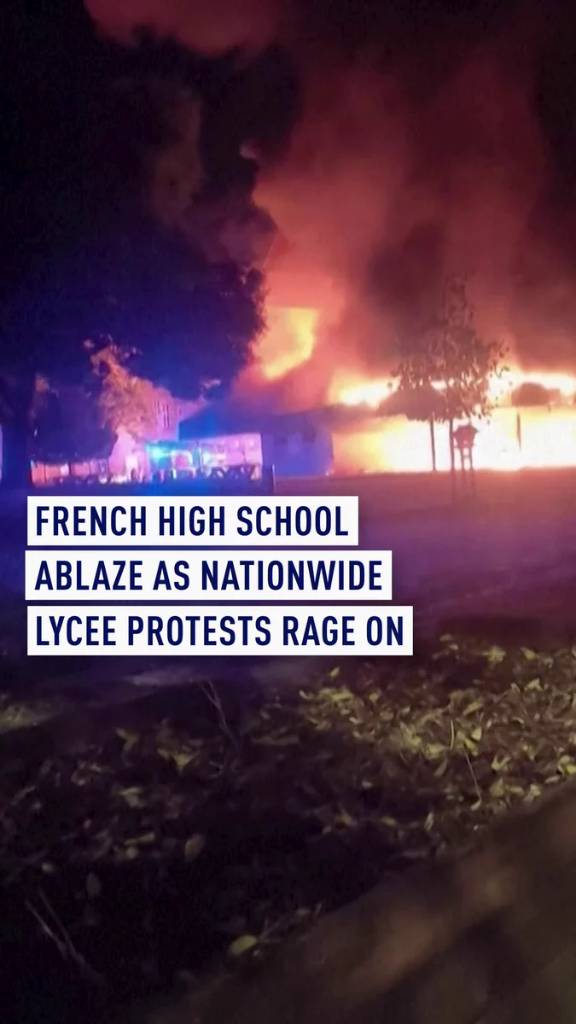
Rise of cost of living, Ukraine war contribution, no Russian gas, bad leadership, green agenda and you keep name it
Hundreds of thousands take to the streets for separate demonstrations, putting pressure on governments across the EU.
Hundreds of thousands of Europeans have taken to the streets in separate, uncoordinated demonstrations to protest against the rising cost of living in their countries.
Saturday’s wave of unrest in Belgium, France, Italy and Portugal has put pressure on governments across the European Union.

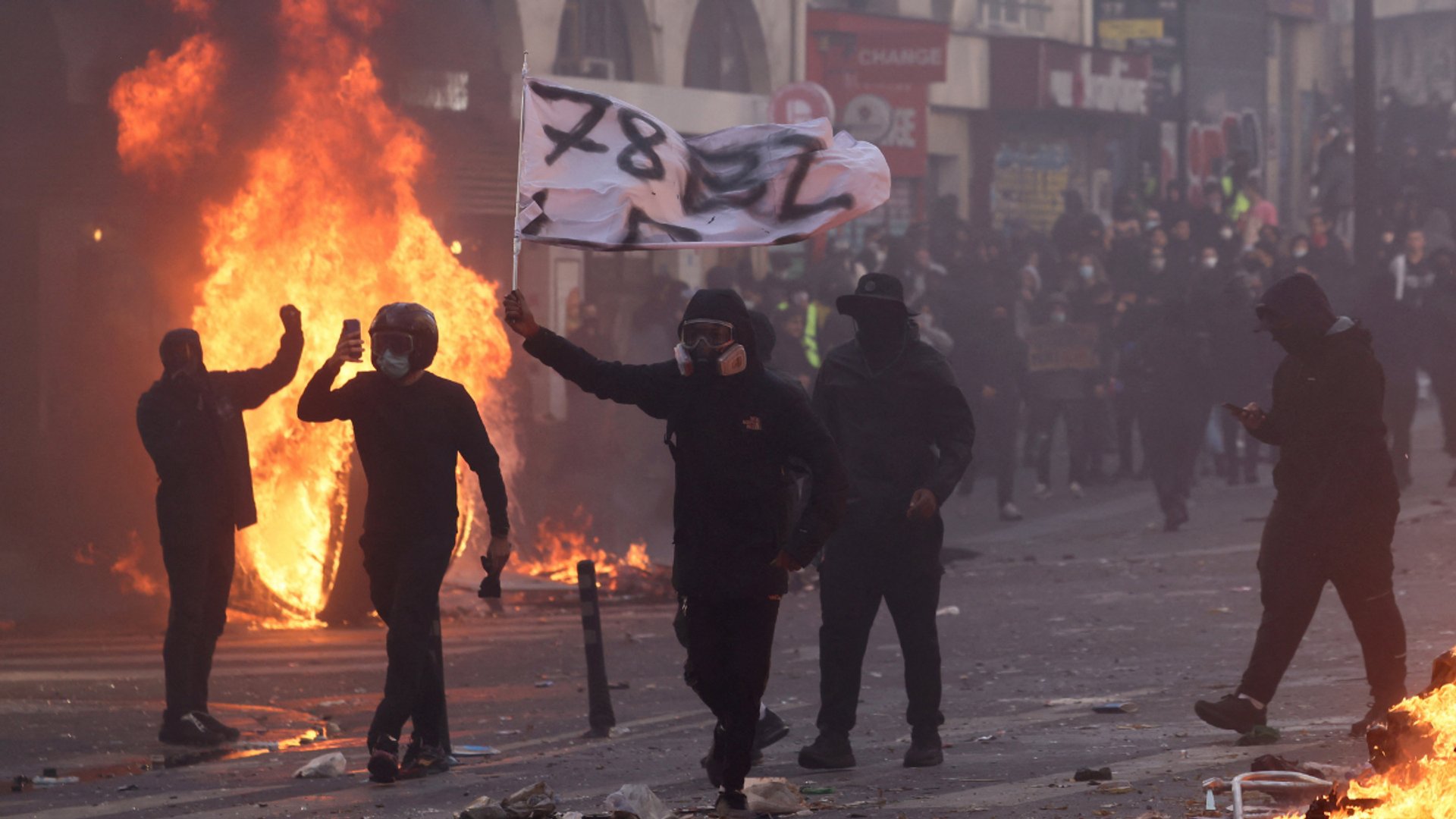
France experienced one of its most turbulent days of protests in decades, with more than 550,000 people joining demonstrations, according to the Ministry of Interior, and police facing off with protesters across the country.
The marches, which followed weeks of student protests, degenerated into clashes, looting and fires after violent fringe groups targeted public buildings, luxury boutiques and supermarkets, and attacked police vehicles and officers.
French Prime Minister Sebastien Lecornu said 1,200 people were arrested and 150 police officers were hurt. “It’s a miracle the toll wasn’t higher,” he said as he visited officers deployed in central Paris.
Dozens of shops were looted in Paris, Marseille, Nice, Nantes, Bordeaux, Limoges, Lille, Toulouse and Strasbourg, the French news agency AFP reported.
Whole streets in the capital “have been devastated”, Paris Mayor Emmanuel Gregoire said.
A fire set by masked protesters in Limoges largely destroyed the more than 140-year-old town hall, while city halls in Marseille and Lille were broken into and vandalised. In Lyon, protesters torched the city’s tourist office.
President Emmanuel Macron said on X that those responsible would be “prosecuted and punished”.
In Belgium’s capital, Brussels – which has already seen weeks of protests by students against university registration fees – police fired tear gas and water cannon to disperse protesters, whom they accused of launching missiles at them and setting fires.
In Liege, a smaller city east of Brussels, police also deployed water cannon to break up demonstrations. Police did not say how many people attended.
Meanwhile, in the Portuguese capital of Lisbon, an estimated tens of thousands of protesters marched against the cost of living crisis, low wages and an inability to access housing in major cities. House prices in Portugal have more than doubled since 2017, while rents for new leases have increased nearly as much.
Portuguese Parliamentary Affairs Minister Carlos Abreu Amorim said on Friday that the “government will not yield to shouts from the street”. Protesters said their leaders are “out of touch” with the problem.
Italy
In Milan, rioters clashed with police, looted stores and set property on fire in the city centre, emptying Piazza del Duomo and a luxury arcade that would usually be full of shoppers.
A march against wars and rising living costs began peacefully, but masked protesters threw stones, paving blocks and other objects at riot police and set fire to barricades made from bar tables.
Police used water cannon and tear gas to disperse the crowds.
At least two police officers were injured, and about 50 demonstrators, many of them minors, were detained, the Italian LaPresse news agency reported.
Italy’s Prime Minister Giorgia Meloni condemned the violence.
“Demonstrating is a right. Setting our cities ablaze is not,” she wrote on X, blaming “hooligans who exploit demonstrations to sow chaos”.
Milan’s centre-left mayor, Giuseppe Sala, said “the reasons for the protests were understandable. The violence against law enforcement and serious damage to the city are not justifiable.”
In Bologna, police also reported that, alongside peaceful rallies, protesters threw stones and clashed with officers.
![Demonstrators sit amid 40 tents set up to protest against housing shortage, soaring rents and low wages on Rossio square in central Lisbon on October 17, 2026. Thousands of people marched on October 17, 2026 through the centre of Lisbon at the call of the CGTP trade union to protest against increasingly difficult living conditions. The slogans and demands focus mainly on higher wages and pensions, as well as protests against the rising cost of housing and fuel. [Filipe Amorim/AFP]](https://www.aljazeera.com/wp-content/uploads/2026/10/AFP__20261017__D3LK2MC__v1__HighRes__PortugalPoliticsHousingDemo-1792267175.jpg?w=770&resize=770%2C513&quality=80)
French protests spill over
Although protests in the other countries did not reach the same scale as the rallies in France, they may be a sign of discontent spilling over, Alberto Alemanno, professor of EU law and policy at HEC Paris Business School, told Al Jazeera.
“France is the epicentre of this movement … and there are signs now that this is spreading beyond France,” Alemanno said.
He said Saturday’s protests may not be the last in many of these countries and new hotspots could emerge.
In Greece, Germany, and Austria, the “early stages” of a movement are emerging, with mobilisation expected “in the coming week”, he said.
The unrest comes at a crucial time for Europe, Alemanno said, as the continent prepares for an “unprecedented super-cycle of national elections” in the coming 12 months, with votes scheduled in Spain, France, Italy and Poland.
“Inevitably, all these protests, all these mobilisations, are going to be at the centre of the political conversation,” Alemanno said.
![Riot police uses a water cannon against demonstrators in Brussels during a youth protest [Nicolas Maeterlinck/AFP]](https://www.aljazeera.com/wp-content/uploads/2026/10/afp_6ad3d52b2c56-1792267563.jpg?w=770&resize=770%2C513&quality=80)

- Previous Hormuz straight impact: Iraq currency devalued – Bagdad need $6.7 bn per month just to pay salaris
- Next Rubio skips New Delhi for Mumbai: He will meet EAM Jaishankar and visit financial hub, and then visit an oil refinery in Jamnagar in the western state of Gujarat
You may also like...




Random news







About us
Our Newly established Center for study of Asian Affairs has
branches in Indonesia, Malaysia and Singapore, as well as freelances in some other countries.
For inquires, please contact: newsofasia.info@yahoo.com Mr.Mohd Zarif - Secretary of the Center and administer of the web-site www.newsofasia.net
Polls
 Loading ...