

No, It has 1.5 bn own consumers at home: Did India “missed the bus” on building up its manufacturing and industrial base in the 1980s?!
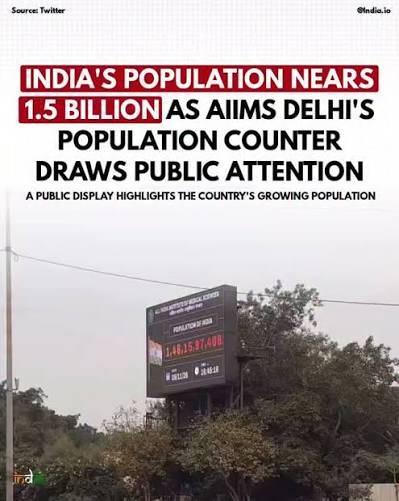
China’s continued industrial dominance and the AI threat mean India may need to follow a different economic model, analysts say
Indian External Affairs Minister Subrahmanyam Jaishankar‘s recent statement that his country “missed the bus” on building up its manufacturing and industrial base in the 1980s, when China was forging ahead, has reignited debate over how India can catch up with its neighbour.
Analysts say India still has room to expand its manufacturing sector, but China’s continued industrial dominance and the threat artificial intelligence poses to India’s service-led economy mean New Delhi may need to follow a different economic model.
At a Hindustan Times Leadership Summit on Saturday, Jaishankar referred to a visit by former prime minister Rajiv Gandhi as the inflection point when the two countries’ economic fortunes diverged.
Do you have questions about the biggest topics and trends from around the world? Get the answers with SCMP Knowledge, our new platform of curated content with explainers, FAQs, analyses and infographics brought to you by our award-winning team.
“When Rajiv Gandhi went to China in 1988, India and China’s economies were the same size. But China in the 1980s made a huge push towards modernisation and industrialisation. I’m sorry to say India in the 1980s simply missed the bus,” Jaishankar said.
He added that although India introduced economic reforms in the 1990s, it failed to sustain them across sectors and build industrial capacity at the required pace.
Jaishankar said India now needed to catch up with China by focusing on areas of competitive strength through a strategy of “leapfrogging”, rather than competing directly in every sector.
Through this strategy, India had ramped up manufacturing capacity in industries such as mobile phones, Jaishankar said.
External Affairs Minister Subrahmanyam Jaishankar says India has ramped up manufacturing capacity through a strategy of
China rapidly scaled export-oriented manufacturing, infrastructure and investment, pulling well ahead from the 1990s onwards. India has relied on services, IT and domestic consumption, with a larger share of its workforce still in agriculture and informal sectors.
“India is one of the fastest-growing major economies. It has unused productive resources, especially human resources, which, if well utilised, can maintain a high growth and reduce the gap with China,” said Amitendu Palit, an economist specialising in international trade and investment policies at the National University of Singapore’s Institute of South Asian Studies.
“However, India’s challenge will be to make the growth inclusive and increase per capita income.”
India reported GDP growth of 7.8 per cent year on year in the first quarter of the financial year that began on April 1, according to government data, remaining the world’s fastest-growing major economy despite challenges posed by soaring oil prices and trade tensions with the US.
However, India’s GDP per capita is substantially lower than that of two Asian economic giants, China and Japan – roughly 5.6 times lower than China and nearly 13 times lower than Japan, according to 2026 International Monetary Fund estimates.
Palit said several sectors in India, such as biotechnology, pharmaceuticals, semiconductors, edutech and tourism, “have good potential for growth” but would need to be “supported by strong regulations – on pricing, intellectual property and labour conditions”.
India’s trade deficit with China has also risen to record levels.
According to the Business Standard newspaper on Sunday, India’s trade deficit with China reached a record US$83 billion in the first seven months of the financial year that began April 1, up 30 per cent year on year, and is projected to hit US$150 billion for the full financial year.
Palit said the trade deficit would be difficult to address until China had a decisive cost advantage in goods that India did not produce enough of and ended up importing.
Containers are transported by train near the Deendayal Port in Kandla, in the western state of Gujarat. India’s trade deficit with China has reached record levels. Photo: Reuters
India’s key imports from China include electronics, industrial machinery, chemicals and pharmaceutical raw materials.
“India can hope to reduce the deficit only if it can increase exports to China,” Palit said.
Raw materials, intermediate goods and industrial inputs, alongside growing electronics and engineering products, are among India’s main exports to China.
Jamus Lim, an associate professor of economics at ESSEC Business School Asia-Pacific, noted that despite its GDP gains, India struggled to replicate China’s manufacturing-led rapid growth experience.
He pointed to two challenges with this approach.
“First, the Chinese economy has stubbornly refused to relinquish its low-value-added manufacturing base, despite high and rising unit labour costs; and second, rapid advances in AI threaten to undermine the business process outsourcing base that India has relied on as an alternative growth engine,” he said.
While China maintained its manufacturing edge through productivity improvements, Lim said that with sufficient government support, India “may yet be able to fill a niche” in manufacturing and assembly as Chinese business costs continued to rise over time.
India has actively pursued manufacturing growth as global companies adopted a “China Plus One” strategy amid supply chain disruptions during the Covid pandemic, combining policy incentives for a range of sectors and a large domestic market to attract investments.
N.R. Bhanumurthy, director of Madras School of Economics, said India could derive value from building up manufacturing and exporting goods despite scepticism about whether the same model that served China well in the eighties and nineties would work.
“India seems to be catching up in some of those areas,” he said.
India has seen rapid export growth in areas including electronics and smartphones. Photo: DigiTimes
India has seen rapid export growth in specific areas – particularly electronics and smartphones – alongside gains in sectors like pharmaceuticals, engineering goods and toys. However, this expansion often relies heavily on upstream Chinese components and machinery.
Bhanumurthy said the push towards manufacturing big-ticket items such as defence equipment and factory machinery would be important as revenue from the services sector, which India traditionally relied on, could decline due to AI adoption.
Other industry observers said a manufacturing boost alone could yield limited success for India.
“India should perhaps focus more on things higher up the value chain such as research and development and innovation, whether it be in food security, health or education,” said Samit Sinha, an independent brand consultant and industry veteran.
“That is where the country has a chance to come up with something the world needs”, but that would require a fundamental change in the education system to encourage creativity and innovation, Sinha added.
Biswajit Dhar, an independent development economist, concurred, saying the need for labour-intensive industries would lessen over time.
“You need to start with the education system. Skill formation is something we have not given enough attention to,” Dhar said. “It has to start from the roots to foster a culture of innovation.”

- Previous US to block China’s remote access to AI chips amid Nvidia scandal
- Next Yet Another Dot.com Bubble!? A record US$81.3 billion IPO for Anthropic
You may also like...





Random news





About us
Our Newly established Center for study of Asian Affairs has
branches in Indonesia, Malaysia and Singapore, as well as freelances in some other countries.
For inquires, please contact: newsofasia.info@yahoo.com Mr.Mohd Zarif - Secretary of the Center and administer of the web-site www.newsofasia.net
Polls
 Loading ...