

Beijing threatens Tokyo and Manila: Japan-Philippines ‘delimitation talks’ hype will only bring adverse consequences upon themselves!!!
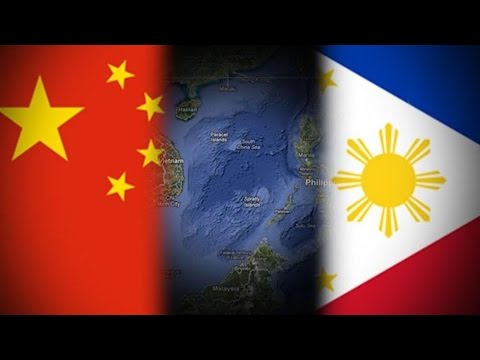
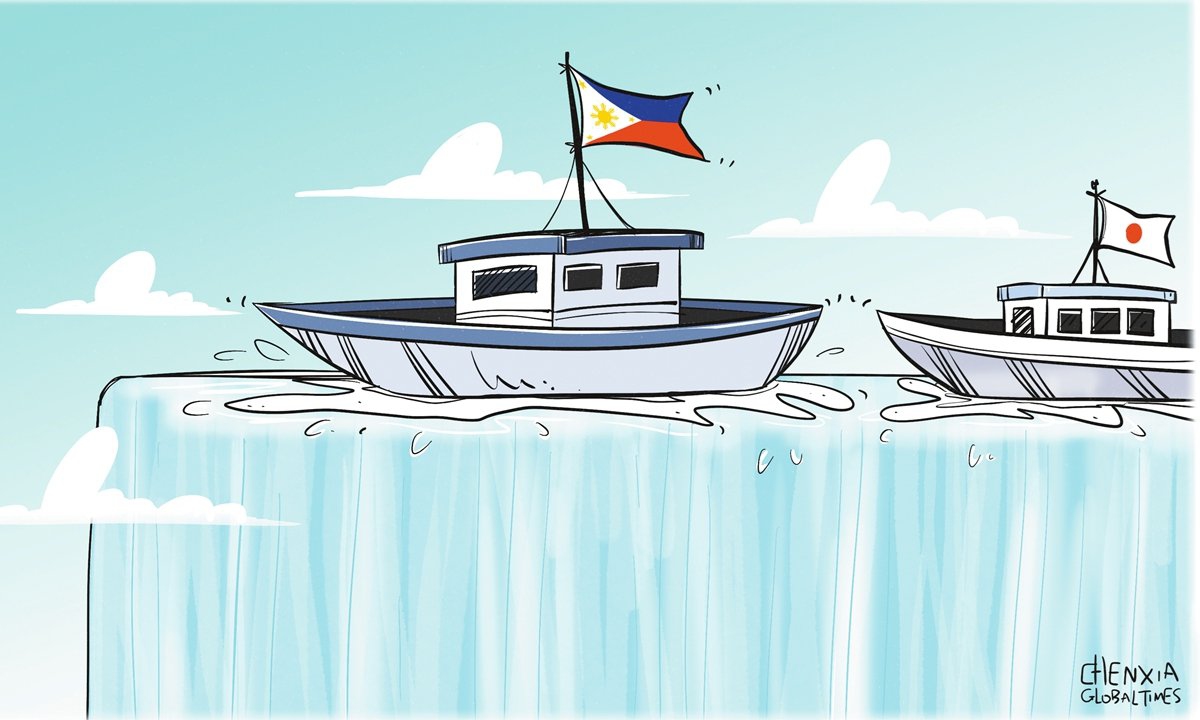
Illustration: Chen Xia/GT
On Monday, China Coast Guard’s Daishan vessel formation conducted routine law-enforcement patrols in accordance with the law in the waters east of China’s Taiwan island, directly targeting the illegal collusion between Japan and the Philippines. China made it clear that this was a necessary operation in response to the announcement by Japan and the Philippines on their own, to begin talks on maritime delimitation in the waters east of China’s Taiwan island, which seriously infringed upon China’s territorial sovereignty and maritime rights and interests. The message is unmistakable: Every step Japan and the Philippines take in advancing their illegal collusion on the so-called delimitation talks will be met with a corresponding increase in China’s countermeasures.
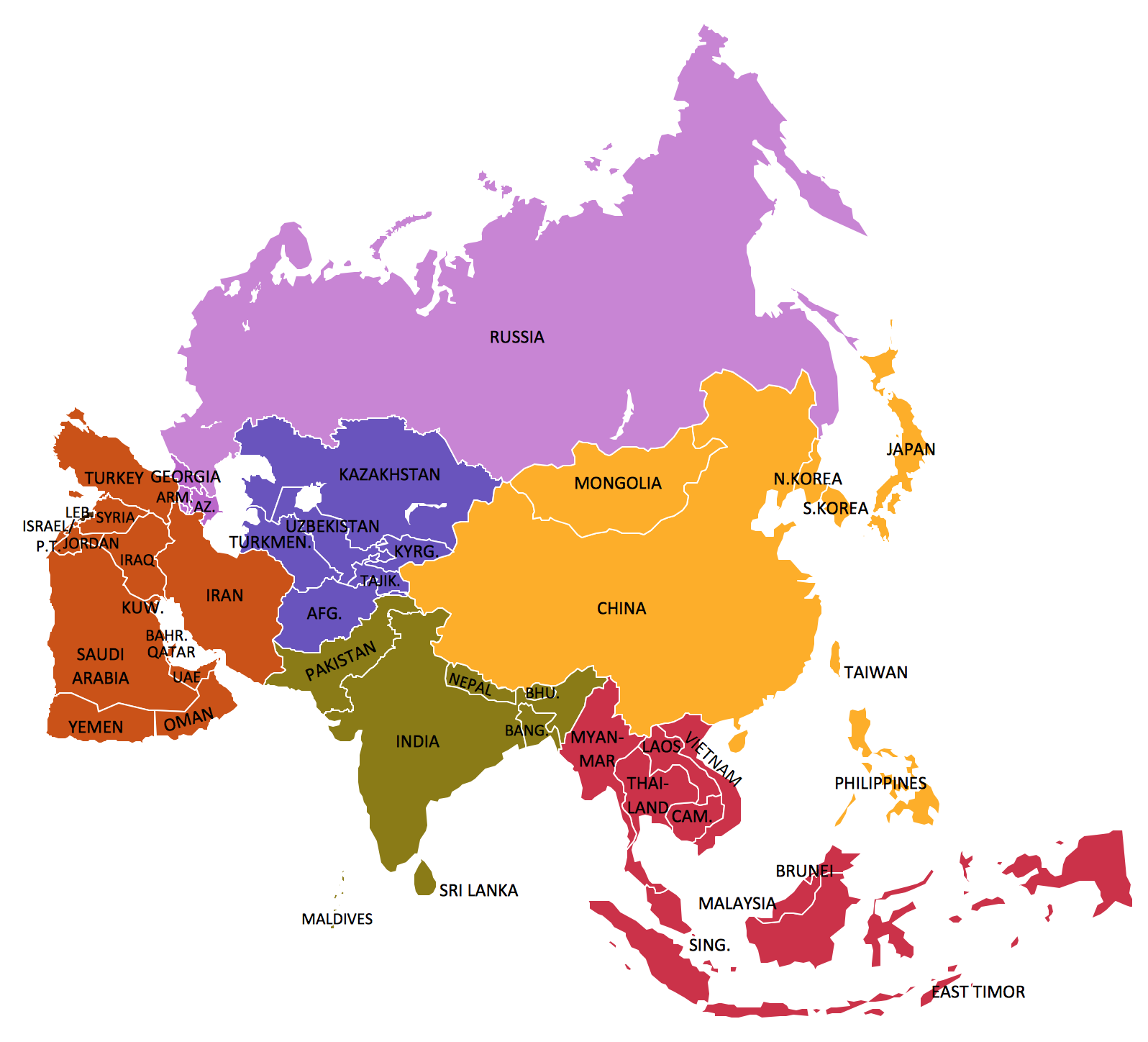
A basic prerequisite for international maritime delimitation is that two countries have adjacent or opposite coastlines and overlapping maritime claims. This is a fundamental principle widely recognized around the world. Japan and the Philippines, however, are not adjacent to each other and have no overlapping maritime claims whatsoever. Taiwan island and the waters to its east lie between them. The southern tip of China’s Taiwan region is only about 80 to 140 kilometers from the Batanes Islands, while its eastern and northeastern coasts are roughly 70 to 120 kilometers from Japan’s Yaeyama Islands. In other words, there is no maritime area between Japan and the Philippines where delimitation can be discussed. For the two countries to discuss “maritime delimitation” across China is an extraordinary and almost unprecedented absurdity. One might ask: Would Tokyo accept it if China were to negotiate maritime boundaries with South Korea across Japanese territory? Or would Manila tolerate China discussing maritime delimitation around the Philippines with Malaysia while bypassing the Philippines itself?
Ignoring basic principles of international law and objective facts, Japan and the Philippines have unilaterally initiated “delimitation talks” without notifying China or seeking its views. This is an attempt to disguise infringement under the guise of international law. It is akin to two neighbors sitting in your living room and discussing how to divide your backyard. Even if they were to reach an “agreement,” it would be neither legal nor capable of producing any legitimate effect. China’s foreign ministry said that such “talks” are completely illegal, null and void, and will have no effect on China’s claims to rights in the area east of the Taiwan island or exercise of China’s lawful rights. The CCG’s law-enforcement patrol in these waters is not only a firm defense of China’s territorial sovereignty but also a forceful response to unlawful maritime encroachments.
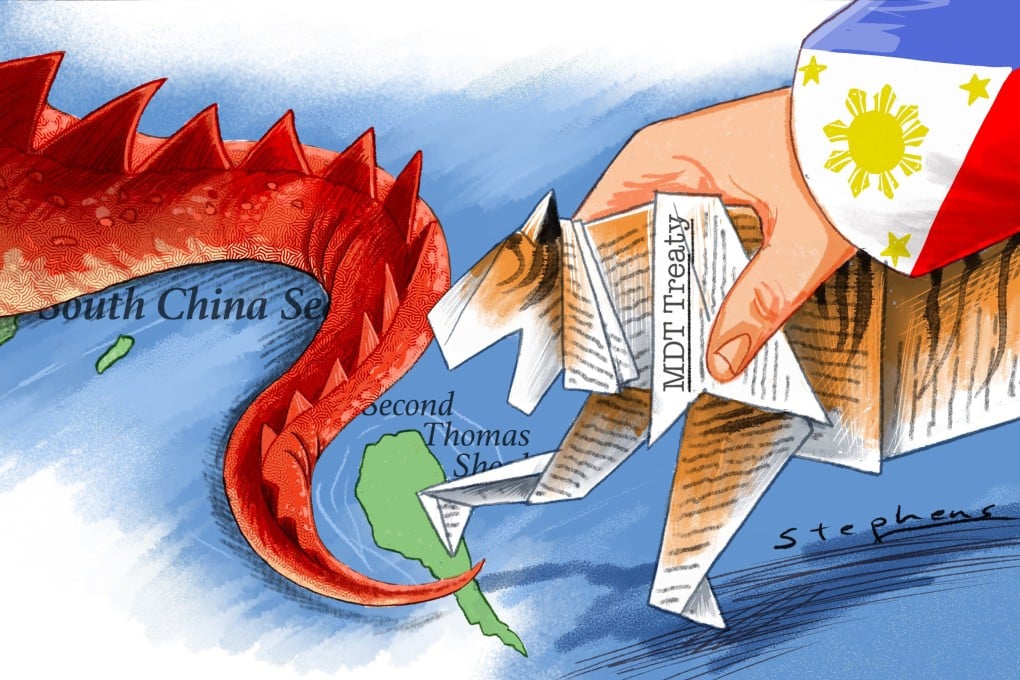
Japan and the Philippines are aware that these “talks” are illegal, null and void, yet they have chosen to proceed regardless, driven by geopolitical calculations. They appear to believe that by creating a new political issue, they can engineer a form of “three-seas linkage” involving the Taiwan Straits, the South China Sea and the East China Sea, thereby creating trouble for China and further complicating the security environment in the Asia-Pacific. For Japan, such maneuvering could provide an opportunity to erode the constraints of its pacifist constitution, expand defense spending, accelerate the development of long-range strike capabilities, and challenge the postwar international order. For the Philippines, the goal appears to be to disperse China’s resources devoted to safeguarding its rights and interests, reinforce Manila’s unlawful claims in the South China Sea and even create opportunities to chip away at China’s territorial interests. In short, both sides are pursuing their own hidden agendas.
Compared with the provocation represented by the illegal maritime boundary delimitation, the rapidly expanding military collusion between Japan and the Philippines poses a greater threat to regional security. During the talks between Japanese prime minister and Philippine president on May 28, the two sides agreed to launch talks on a General Security of Military Information Agreement (GSOMIA) to establish a bilateral mechanism for sharing classified intelligence. Together with the previously signed Reciprocal Access Agreement (RAA) and Acquisition and Cross-Servicing Agreement (ACSA), Japan and the Philippines have effectively built a comprehensive framework for military cooperation, displaying clear characteristics of a “quasi-alliance.” This is precisely another important step in Japan’s pursuit of becoming a “normal state” and advancing remilitarization. Having once suffered deeply under Japanese militarist aggression, the Philippines has now chosen to act as an accomplice to the “neo-militarism.” This is not only a betrayal of historical memory, but also a reckless gamble with the country’s future.
The Japan-Philippines “delimitation” farce is destined to be futile. China has an unwavering determination to safeguard its territorial sovereignty and maritime rights and interests, and possesses the full capability to exercise jurisdiction and defend its interests in the Taiwan Straits and surrounding waters. If Japan and the Philippines seek to continuously test China’s bottom line and create further instability, China will not stand by and allow such actions to proceed unchecked. The farther Japan and the Philippines go in their illegal collusion, the greater the consequences they will bear. It would also come as no surprise if China further advances its exercise of jurisdiction in waters east of Taiwan island in the future. This is part of the responsibility of a major country committed to maintaining regional peace and stability.
Notably, Taiwan’s Democratic Progressive Party authorities openly expressed approval of this blatant infringement upon China’s sovereignty, even stating that they look forward to the three parties jointly making concrete contributions to regional peace, stability, and marine ecological protection. Such remarks are astonishing and have sparked strong criticism within Taiwan. For the sake of their own political interests, “Taiwan independence” forces have once again betrayed the broader interests of the nation and the Chinese people. Describing them as “unworthy descendants” is hardly an exaggeration. Their actions further expose how “Taiwan independence” advocates stir up trouble under the banner of “peace.”
Japan and the Philippines have misjudged not only China, but also the broader trajectory of global developments. In May, both US President Donald Trump and Russian President Vladimir Putin visited Beijing, and important consensuses were reached in China-US and China-Russia relations, providing a significant source of stability for the current international landscape. Japan and the Philippines should recognize the realities of the region and refrain from acting against the prevailing trend toward peace and development. If they insist on going down this path, they will only bring adverse consequences upon themselves.

- Previous Russia signs military cooperation deal with Afghan Taliban in Moscow
- Next Beijing portrays its achievements: What US chip blockade brings to China
You may also like...





Random news














About us
Our Newly established Center for study of Asian Affairs has
branches in Indonesia, Malaysia and Singapore, as well as freelances in some other countries.
For inquires, please contact: newsofasia.info@yahoo.com Mr.Mohd Zarif - Secretary of the Center and administer of the web-site www.newsofasia.net
Polls
 Loading ...