

Bollywood today: Who calls them, how they earn and what celebs hide

India Today Digital spoke with Mumbai paparazzi to unpack how Bollywood sightings are planned, chased and sold. Their accounts reveal a business shaped by PR access, platform pressures and shifting celebrity boundaries.
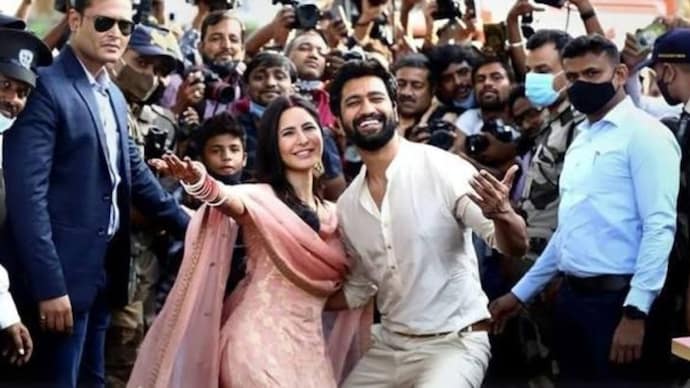

For a celebrity, being photographed outside a gym can look like a 10-second affair. For the person behind the camera, it can mean hours of waiting, a bike ride across Mumbai, a missed meal, a dead phone battery and sometimes an overnight shift outside a star’s home.
The paparazzi business has changed dramatically in the age of Instagram. What began largely with photographers clicking pictures for websites or magazines has become a fast-moving content economy, where a three-second video can travel across millions of screens, a celebrity’s airport look can become a headline and a seemingly random gym exit can turn into a viral Reel. But behind those “candid” moments is a fairly organised system of tips, locations, contacts, teams, salaries, paid promotions and, sometimes, carefully negotiated boundaries.
So, who actually calls the paparazzi? Who doesn’t? How much does a paparazzo make? Why do some celebrities walk past cameras without acknowledging them even when they may have called the paps themselves? And what happens when a star simply doesn’t want to be photographed?
India Today Digital did a deep dive and spoke to several Mumbai-based paparazzis who have been at the centre of this economy. You will find accounts of Vishal, who has been in the industry exploring his love affair with the lens for over eight years, with other paparazzi who spoke on condition of anonymity. Their accounts offer a look into a business that most Bollywood consumers see every day, but rarely understand.
It starts with knowing where the stars are
Paparazzi work is not quite as spontaneous as it appears on Instagram.
“Mostly every celebrity has a dedicated PR team nowadays, which calls us for spottings,” Vishal, who was the first to introduce 4K celebrity coverage, tells India Today Digital. “We go for these spottings and send the videos to our clients,” he adds. But waiting for a call is only one part of the job. Paparazzi also spend their days actively searching for celebrities.
Earlier, the search was concentrated largely around Bandra and Juhu. Andheri has now become another important zone, with paparazzi teams dividing themselves across these locations. They know which gyms celebrities frequent, roughly when they arrive and even which cars belong to which stars.
Vishal says his team will sometimes check whether a celebrity’s car is still outside their home before following it. Celebrity-favourite cafes are another hunting ground. In Bandra, paparazzi regularly make rounds around places where they know stars are likely to turn up.
“No one tells us if they are going to these cafes, but we know all their car numbers,” he says.
That knowledge is essentially the paparazzi’s version of a beat. The difference is that instead of waiting at a police station or court, they could be waiting outside a gym for five hours for one celebrity to walk out.
And one person cannot realistically cover Mumbai’s celebrity circuit alone.
Vishal heads a five-member team. The job has evolved with the platforms themselves. First came photographs for websites. Then came iPhone videos designed specifically for Instagram. Now, he says, the market has moved towards 4K close-up footage.
The appeal of 4K is obvious: it gives viewers an unusually detailed look at celebrities, right down to their makeup and skin texture. It is also precisely why the format has attracted criticism from some stars.
Vishal says celebrities including Karisma Kapoor and television actor Mahira Sharma have objected to such zoomed-in coverage. He claims he was the first to start shooting celebrities in 4K.
There is a catch. Unlike a phone, a professional 4K camera needs to be set up, making the paparazzi’s window much smaller. “For us, it is a game of three to five seconds,” he says, adding, “If we are able to capture the star for that duration, we are successful. If not, we do not get any footage.”
Rain, meanwhile, can effectively ruin the game.
One of the strangest things about modern celebrity culture is the deliberate lack of interaction. A celebrity may be photographed arriving at a venue, glance at the cameras, give a tiny wave and disappear within seconds. Sometimes the same celebrity may have been responsible for alerting the paparazzi to the appearance in the first place.
Vishal believes the culture has now become a trend in itself.
“Everyone is hopping onto this bandwagon of not posing properly, ignoring the paparazzi they called themselves and walking away from the cameras,” he says.
According to him, this was once largely associated with the biggest stars. Now even younger Bollywood actors have adopted the style because they believe such videos perform better online. There are exceptions. Salman Khan, he says, continues to be among the stars who will sometimes properly interact with photographers.
Vishal recalls being called to shoot Salman for a reality show. The actor told the paparazzi he would pose after finishing his shoot.
The economics of the job make that patience necessary. A paparazzo may spend five hours waiting for 30 seconds of footage. During Diwali, the waiting can stretch much further. Vishal says paparazzi can spend the night outside celebrity homes, sometimes from 7 pm to 7 am, as stars host multiple parties across consecutive days.
Manish Malhotra, Ramesh Taurani, Kareena Kapoor Khan, Malaika Arora and Ranbir Kapoor are among the regular names associated with such Diwali gatherings, according to him.
And yes, there are no holidays.
“Whether it is Diwali, someone’s birthday, any function or even a death ceremony, we get no holiday,” he says.
What actually goes viral?
If you assumed A-listers automatically generate the biggest numbers, the paparazzi business may surprise you.
Gym videos remain strong performers, but television and reality-show personalities can sometimes outperform Bollywood’s biggest names. Vishal says contestants linked to shows such as Lock Upp and Splitsvilla are currently getting high engagement.
At one point, Shehnaaz Gill and Sidharth Shukla were so sought-after that paparazzi would follow them outside Mumbai for footage. Later, Karan Kundrra and Tejasswi Prakash became strong performers.
Today, Vishal says, a video of someone like Akanksha Choudhary could potentially receive more views than footage of Alia Bhatt.
That tells you something important about the pap economy: it is not necessarily driven by stardom. It is driven by engagement.
Who pays the paparazzi?
This is where the seemingly chaotic world starts looking like a proper business.
Vishal says paparazzi and photographers work under established platforms and names such as Viral Bhayani, Manav Manglani, Yogen Shah, Varinder Chawla, Voompla, Filmy Gyan and Instant Bollywood etc. Some work as part of these organisations, while others operate independently or have working relationships with them.
Both Vishal and others explained that those working under established platforms can receive a fixed salary. Additional money can come from Instagram promotions, brand integrations and PR agencies.
There is another revenue stream that many social-media users may not immediately associate with paparazzi: film promotions.
Vishal says production houses including Dharma Productions, T-Series, Yash Raj Films and Spice (PR agency) pay for promotional content around posters, trailers and songs.
So the person standing outside a gym is not necessarily earning only from the photograph or video being sold. The larger ecosystem includes social media promotions and entertainment marketing as well.
But it is not necessarily a comfortable or secure profession.
Vishal says he personally worked with Manav Manglani for eight years before becoming independent, although he continues to receive work through his professional relationships. He also claims that eight people who had been working with Viral Bhayani for years were recently let go.
“Instagram promotions are not enough to sustain a lifestyle, and PR agencies do not entertain paps without credible backing,” he says.
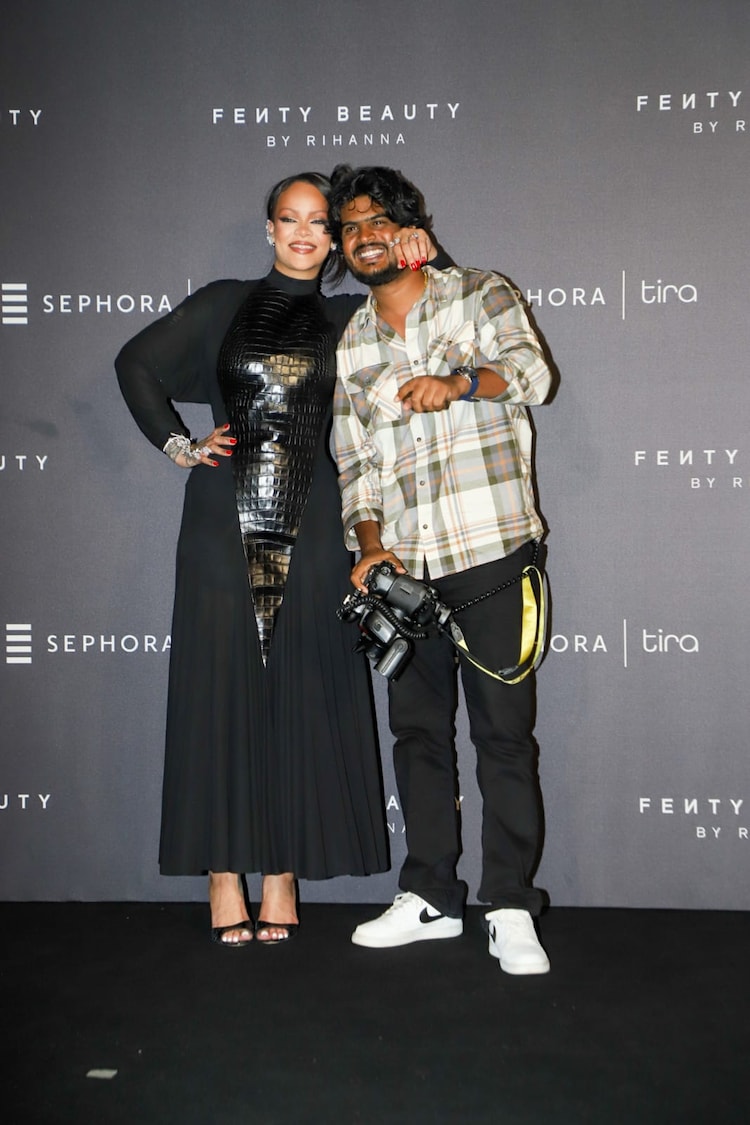
So, how much does a paparazzo actually earn?
The answer is considerably less glamorous than the world they cover.
Both Vishal and others estimate that the upper end of a paparazzo’s monthly earnings in Mumbai is around Rs 30,000-35,000, including a fixed salary and perks such as food, petrol or equipment, depending on the arrangement.
Vishal’s own maximum earnings have been around Rs 25,000, despite spending more than eight years in the business.
The people entering the profession also tend to be locals. According to the paparazzo we spoke to, established platforms generally prefer people from Mumbai who understand the geography, know celebrity addresses and are familiar with the city’s entertainment circuit.
Fans who happen to spot celebrities can sometimes send material, but being a professional paparazzo requires a very different kind of knowledge. “If they ask for selfies or autographs under the banner of the platform, the platform’s integrity is undermined,” says Ajay (name changed).
The job, in other words, requires knowing when not to behave like a fan.
The celebrities who want to be seen, and those who don’t
This is perhaps the biggest open secret in the business: not every celebrity sighting is equally accidental.
According to the paparazzi we spoke to, PR teams frequently call photographers for celebrity appearances. But the level of information shared can vary. Sometimes photographers are given an exact location. Sometimes they are told only that a celebrity will be at the airport. Sometimes they receive nothing at all.
Then comes the airport business.
At Mumbai airport, paparazzi typically work in two shifts, from 7 am to 5 pm and 5 pm to midnight. They look for arrivals and departures, while airport staff can occasionally alert them when a celebrity is spotted.
But many airport sightings are also tipped off.
Many paps named Bhumi Pednekar, Shehnaaz Gill and Anil Kapoor among celebs who have called paparazzi before airport appearances. Karan Johar has also tipped them off at odd hours when travelling.
The information given to paparazzi can be carefully controlled. For bigger stars, PR teams may only share the flight number with an airport manager rather than provide an exact exit or time.
And then there are celebrities who actively try to avoid the cameras.
Shah Rukh Khan, Aamir Khan, Aishwarya Rai and Salman Khan are among those paps say generally do not tip paparazzi off. Ranveer Singh and Deepika Padukone also do not routinely do so, although there have been occasions when Deepika’s team wanted her arrival to be photographed.
Shah Rukh, according to Vishal, goes several steps further. He recalls a recent instance when the actor returned from London with his family and had cars positioned at multiple airport exits to avoid photographers. The paparazzi waited across four exits, he says, but Shah Rukh left through another.
A-listers, it appears, know the game just as well as the people playing it from behind the cameras.
South Indian stars have their own patterns. Many paps agreed that Ram Charan has tipped paparazzi off in the past, while Yash, Mahesh Babu and Allu Arjun generally do not.
Priyanka Chopra and Nick Jonas do not call paparazzi when they come to India either. Sometimes, their own Instagram posts provide enough information for photographers to figure out where they are.
And then there are the “accidental” dates.
Not every important celebrity sighting comes from a PR call. Sometimes paparazzi work on information from their own sources and contacts.
When international celebrities visit Mumbai, photographers may track their hotels, restaurants and schedules through inside information. Vishal says different paparazzi platforms may have people positioned around the hotels where visiting stars are staying.

The Odyssey moment
Vishal cites Tom Holland’s Mumbai visit as an example, saying paparazzi knew he was staying at the Taj in Colaba and tracked his movements around the city.
He also recalls being the first to photograph KL Rahul and Athiya Shetty when they were dating, after spotting them leaving separately from Lower Parel late at night. He says he was also the first to photograph Hardik Pandya and Natasha Stankovic leaving the Bandra Kurla Complex years back.
Does breaking such stories damage relationships with celebrities? “Not really,” almost all of the paps agreed.
That answer captures one of the strange dynamics of the profession. The paparazzi can be the people a celebrity calls when they want publicity and the same people who break a story when the celebrity would rather not be seen.
The relationship survives because both sides understand the value of the ecosystem.
What happens when celebrities say: Don’t photograph this
The most sensitive part of the job involves children.
According to Ajay, several celebrity couples and families have personally approached paparazzi after the birth of their children and asked them not to photograph the baby. He says Deepika Padukone and Ranveer Singh, Athiya Shetty and Suniel Shetty’s family, and Rani Mukerji have all expressed such preferences.
He also recalls Virat Kohli sending hampers to paparazzi along with notes asking them not to photograph his children. In some cases, the arrangement is informal. In others, the consequences can become legal.
Ajay says paparazzi pages can receive copyright notices when unauthorised photographs of celebrity children are posted. He recalls the controversy around Ranbir Kapoor and Alia Bhatt’s daughter Raha, where the couple’s concerns over photographs led to legal notices.
Vishal recalls the same incident. His team, he says, tries to edit footage if a child appears accidentally, even for a moment.
“They eventually find out who photographed the baby,” he says, “and that can bring on numerous issues.”
This is also where the idea of mutual respect becomes important. Vishal says he had a meeting with Ranbir Kapoor and Alia Bhatt in which they asked that photographs be taken only when they were comfortable. His team now follows that understanding.
Ranbir, Ranveer, Varun: The stars who know the paps by name
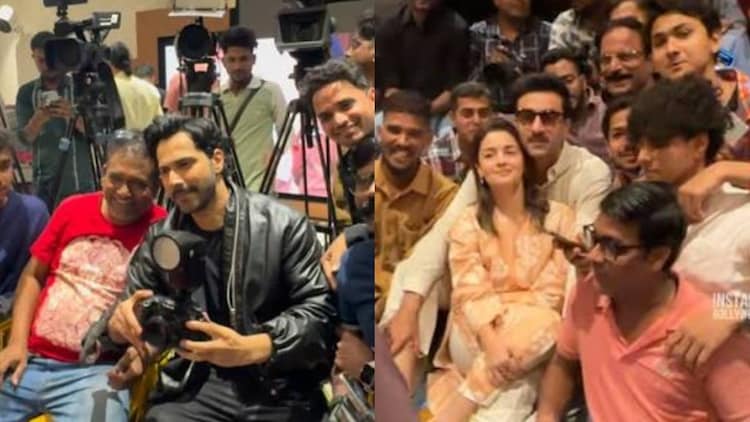
For all the complaints about paparazzi culture, there is also a personal relationship that develops between photographers and celebrities who see each other almost every day.
Varun (name changed), a third pap, describes Ranveer Singh and Ranbir Kapoor as particularly friendly. He says Ranbir sometimes stops to ask him about his family.
Varun Dhawan, Vishal recalls, once noticed that his phone had broken while he was following him for footage. The actor later invited him over and gifted him a new phone.
Zaheer Iqbal, he says, once noticed around 15 paparazzi waiting outside a cafe and sent coffee for them. Sonakshi Sinha, he says, has generally been cooperative and has even stopped her car to pose when photographers spot her.
These relationships can become surprisingly informal.
Paparazzi sometimes drop celebrities on their bikes, according to Vishal. Celebrities occasionally take their side when there are disputes. Over time, the people behind the cameras become familiar faces rather than anonymous photographers.
That familiarity can also explain why a celebrity’s anger can feel particularly personal.
Sonakshi Sinha, Jaya Bachchan and the question of boundaries
Sonakshi Sinha recently made headlines after appearing angry with paparazzi photographers. Varun, however, says the incident needs context.
He believes newer paparazzi sometimes continue filming even after celebrities specifically ask them not to. Most of the known his own team does not forcefully capture people.
His account of Sonakshi is notably different from the viral clip. He says she has generally been warm towards paparazzi and even coordinated with them on her wedding day, telling photographers when she would come outside so they did not have to wait indefinitely.
Jaya Bachchan is another complicated case.
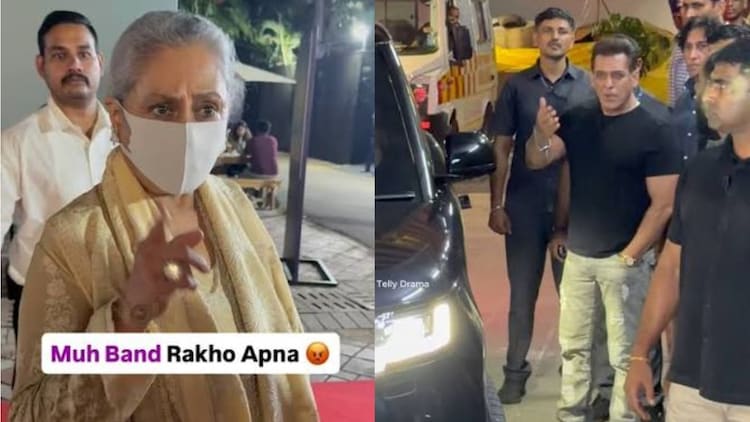
Her public confrontations with paparazzi have become a familiar part of celebrity culture. Varun does not entirely blame her, arguing that paparazzi can become noisy and intrusive, particularly at funerals and prayer meetings.
But he also acknowledges that some of her remarks towards photographers cross a line. And then comes an unusual revelation: both Vishal and Ajay say paparazzi have collectively stopped photographing her.
They claim the decision followed pressure from her family and PR team after videos of her angry interactions began attracting attention. They also say paparazzi have received threats over the issue.
“Now, if we see her anywhere, we greet her with our phones and cameras down,” they say.
The incident raises an uncomfortable question: if paparazzi can collectively decide not to photograph a celebrity, does that mean the industry has its own informal rules about who is “off limits”?
Apparently, it does.
The hospital, the funeral and the content nobody wants to own
Paparazzi face some of their fiercest criticism when they photograph celebrities during moments of grief, illness or death. Varun, Ajay and Vishal argue that the photographers themselves are often blamed for the way the footage is packaged online.
He points to the coverage of Sushant Singh Rajput’s death, saying paparazzi captured material but did not themselves create the narratives that later spread across social media.
The same question came up during the death of Sidharth Shukla and later around Shefali Jariwala.
Vishal’s defence is straightforward: other forms of media also cover funerals and public gatherings, while paparazzi are often singled out for doing the same thing.
But the distinction between capturing a moment and monetising it is increasingly blurred on social media. A photographer may simply record a video, while another page crops it, adds a headline, selects an emotional thumbnail and turns it into a viral story.
The person who presses record and the person who builds the narrative are not always the same.
When the camera becomes part of the controversy
The same argument is now playing out around the trend of filming actresses from behind or from the side and asking viewers to identify them.
Paps say back shots existed earlier too, but the newer trend is designed specifically for engagement. He claims professional paparazzi generally avoid posting such material themselves in an inappropriate manner because they have to maintain relationships with the celebrities they encounter repeatedly.
“Big agencies know that the content you mentioned will get them views,” Ajay says.
His argument is that the paparazzi shoot the raw material, while social-media pages decide how it is framed.
But that distinction is becoming harder to maintain. Once a photographer knows that a particular angle will be turned into sexualised or suggestive content, the question of where responsibility begins becomes harder to ignore.
The pap economy is no longer just about taking photographs. It is about knowing which photograph will perform.
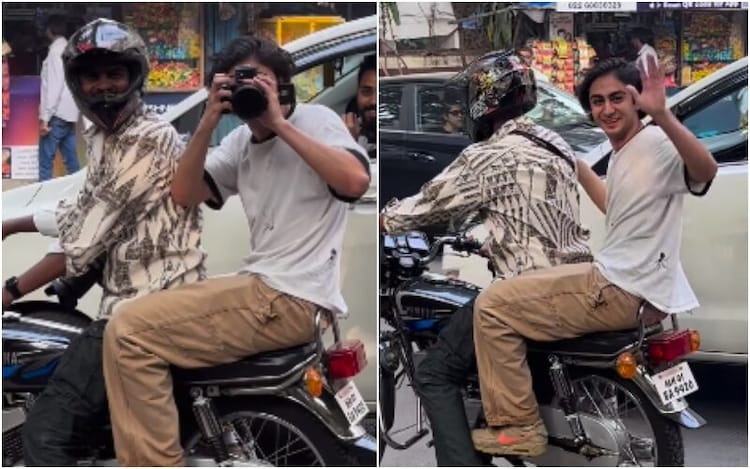
The myth about star kids
If social media is to be believed, Bollywood’s star kids are often arrogant, inaccessible and uninterested in the people photographing them.
Vishal’s experience is considerably different.
He describes the younger generation as “really sweet” and says many are actually cautious because their parents have warned them about being photographed and because they are aware of the abuse they can receive online.
He names Sohail Khan’s son Nirvaan, Malaika Arora’s son Arhaan and Agastya Nanda among those who have interacted politely with him. He also says Suhana Khan has been down to earth in his interactions with her.
The bigger problem, he believes, is fear.
“They are just a little bit scared as they have been pressured by their parents to not be papped, and they receive a lot of negativity,” he says.
That may also explain why some celebrity children seem visibly uncomfortable around cameras. For a generation that grew up with paparazzi culture, being photographed is not necessarily a harmless part of fame. It is a permanent digital record.
Paparazzi routinely wait five or six hours for a single photograph. They work 12-hour shifts, sometimes overnight, travel around Mumbai on bikes and continue working through heavy rain. Phones glitch, cameras fog up, food and water are not always available. If they leave their position even briefly, they risk missing the very celebrity they have been waiting for.
“People think it is as simple as clicking pictures,” Varun says. But, he adds, the job comes with its own risks and exhaustion. A paparazzo can spend an entire day chasing one moment that may ultimately last only three seconds.
And yet, for all the complaints, controversy and uncertainty, there is a strange sense of attachment to the profession. Both Ajay and Varun say they have become “too invested” in the business to imagine doing anything else. For them, a good day is still a day when the team gets good content.
It is easy to dismiss the people behind the cameras as an intrusive army chasing celebrities around Mumbai. It is equally easy to imagine every photograph as a carefully planned PR exercise. The reality, according to the paparazzi we spoke to, sits somewhere in between.
There are PR calls and there are genuine catches. There are celebrities who want to be seen and those who will go to great lengths to avoid being photographed. There are informal agreements, legal notices, friendly relationships, collective bans and moments when the camera crosses a line. There is also a business underneath it all, powered by salaries, paid promotions, film marketing, social-media views and the constant demand for the next viral moment.
That is why the paparazzi economy has become so difficult to look away from. Bollywood is no longer simply selling films, stars and glamour. It is selling access – sometimes real, sometimes manufactured, sometimes carefully controlled.
The audience sees a celebrity walking out of a gym, boarding a flight or stepping into a car. The paparazzi see a potential story. The PR team sees visibility and the social-media page sees views.

- Previous Trump says he may declare Strait of Hormuz ‘territory of the United States’
- Next Kuala-Lumpur: India envoy urges Malaysian Indians to preserve roots
You may also like...



Random news




About us
Our Newly established Center for study of Asian Affairs has
branches in Indonesia, Malaysia and Singapore, as well as freelances in some other countries.
For inquires, please contact: newsofasia.info@yahoo.com Mr.Mohd Zarif - Secretary of the Center and administer of the web-site www.newsofasia.net
Polls
 Loading ...