

Emmanuel Todd: The US under Donald Trump appears heading toward a “third defeat,
INTERVIEW/ Emmanuel Todd: ‘Madness’ under Trump pushing U.S. to third major defeat
By SHINICHI IKEDA/ Staff Writer
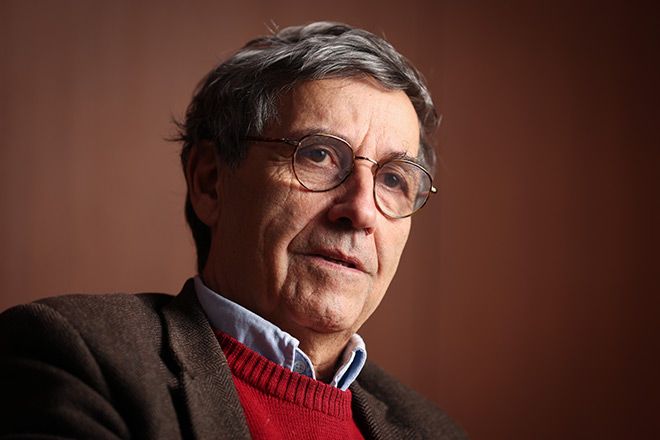 Emmanuel Todd, an anthropologist and historian (Jin Nishioka)
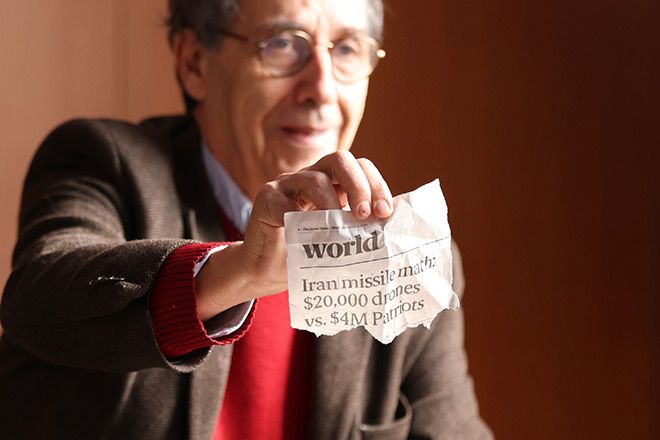
The United States under Donald Trump appears heading toward a “third defeat,” which originated from his attempt to divert attention away from his two previous losses, French anthropologist and historian Emmanuel Todd says.
In a recent interview in Tokyo, Todd said the reckless behavior of the United States, including attacks against Venezuela and Iran, underscores the madness of an “empire” that is reminiscent of Nazism.
He also warned of the dangers of Japan falling into “imaginary nationalism” concerning its relations with China.
Excerpts from the interview follow:
***
Question: What are the effects on the world of the attack by Israel and the United States on Iran?
Todd: As a historian, I want to start from a bigger picture. This war in Iran follows two major defeats already experienced by the United States.
The first defeat is, as I told you in our interview in February 2025, the virtual defeat of the United States against Russia in Ukraine.
The United States, with its declining manufacturing base, turned out to be unable to provide the Ukrainians with sufficient weapons and munitions, revealing the fact that the American industrial system cannot sustain a major war.
The second defeat, which became apparent afterwards, is even more important: the defeat against China.
U.S. President Donald Trump threatened China with tariffs, but when the Chinese threatened the United States back with an embargo on rare earths, he very quickly had to back down.
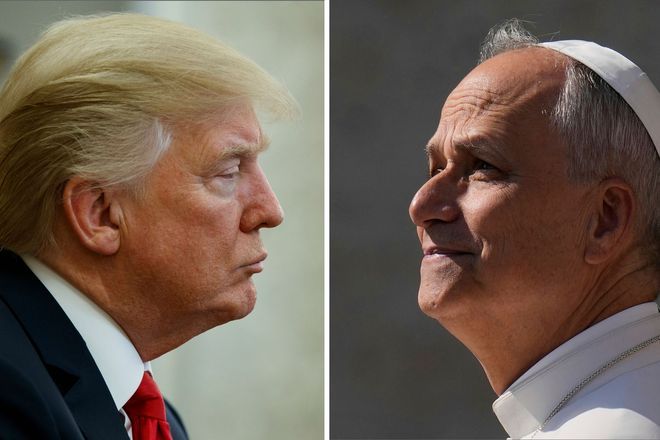
Therefore, you can understand that everything he does now is a diversion to make us—and himself—forget about these major defeats.
Q: During your last visit to Japan last autumn when you took part in the Asahi World Forum, you indicated the possibility of a U.S. attack on Venezuela. Well, that has now happened, and the U.S. has shifted its focus of attack to the Middle East. What are your thoughts?
A: Yes. The attack on Iran by Israel and the United States started in the same way. But since Iran didn’t collapse, things got out of hand, and it might turn out to be the third major defeat for the United States.
Q: Where will the U.S. attack on Iran lead the world?

A: The root cause of this war is, as I also mentioned in February 2025, the disintegration of American society, specifically the state of “zero religion.” The moral and spiritual discipline and values that once integrated society have been lost.
In this decadence and emptiness, “nihilism” is spreading, where they seem to simply enjoy destruction and killing itself. This applies to Israel also.
If an Iranian leader does not align with U.S. intentions, they eliminate him. Eliminating, one by one, the leaders of another country—this should never be allowed.
This is not the world of common-sense modern politics; it is the result of madness. The French, the Japanese, the Chinese, everybody in the world must agree. This is Hitler’s way.
Q: Isn’t that an extremely harsh expression?
A: Exactly. I am now talking as a Jew. I want to convey clearly to Japanese readers that I, myself, a Frenchman with a Jewish background, am criticizing their madness and recklessness more strongly than anything else.
Originally, “war” was supposed to be a fight between armies. But look at what the United States and Israel are doing now. Isn’t it “assassination,” targeting individuals and killing them? The leading role in American foreign policy seems to have shifted not to the State Department or the Pentagon, but to the CIA.
Q: Are you saying that the political system itself of the United States, a democratic nation that will celebrate the 250th anniversary of its founding in July, has transformed?
A: Yes. I have to say that it is no longer the traditional “Republic” consisting of the Congress, the president and the Supreme Court.
From what I see, the United States today has transformed into an “empire” consisting of the president, the Pentagon and the CIA. Congress and the Supreme Court seem to be nothing more than consulting bodies.
In a U.S. foreign policy, which relies on targeted assassinations of individuals, the CIA has become the most important institution. This is proof that the United States as a nation has degenerated into a “nihilistic assassination state.”
TAKAICHI’S STANCE TOWARD CHINA
Q: In last year’s interview, you said Japan should not become involved in the confrontations that would likely be triggered by the United States but should cautiously observe what is taking place. What are your thoughts now that Japan has its first female prime minister?
A: I cannot yet evaluate what kind of change in Japanese society this embodies. However, generally speaking, the first female head of state or prime minister often acts like a man to prove that there is no difference between men and women.
I hear Prime Minister Sanae Takaichi admires former British Prime Minister Margaret Thatcher, but I must point out that this is dangerous. Although Thatcher was an interesting character, I do not admire her. She is the one who destroyed the British working class and industrial system.

I don’t know the details of what exactly Prime Minister Takaichi admires about Thatcher. However, her hard-line stance against China is, I think, a typical example of what I call “imaginary nationalism.”
Q: What do you mean by that?
A: In this era, nationalism itself is being questioned, but I think the idea that “being hostile to China equals Japanese nationalism” is strange.
Traditionally, the ideology of nationalism is based on the idea of increasing the population and expanding the sphere of influence. True Japanese nationalism should be seeking Japan’s sovereignty.
From that perspective, isn’t it more important for Japan to first think about its relationship with the United States, rather than getting into a conflict with China? That should be obvious to anyone when thinking about Okinawa.
If you stand from the perspective of a “true” nationalism, not an “imaginary” one, it is natural to fight for your nation’s sovereignty and independence, and to take back the foreign bases inside your country.
I believe that being taken in by the American strategy of “divide and rule” and getting into a conflict with China at Washington’s will is never in Japan’s interest.
Q: Not only Takaichi, but isn’t a sense of crisis over the situation in Taiwan in the background to the hard-line stance toward China by Japan’s conservative elements?

A: I pride myself on being one of the few Frenchmen who know about Shinpei Goto, who led Japan’s colonization of Taiwan. I understand that the Japanese colonization of Taiwan, partly due to the achievements of people like Goto, was a rare success story in the history of global colonization. It is a very rare thing that even some local people have good memories of Japan, the ruling side.
But still, that is something of the past. Regardless of whether one approves of what the Chinese Communist Party says, Taiwan cannot be discussed (while) ignoring its relationship with China, both culturally and in the reality of international politics.
It is dangerous to cover up reality with nostalgia for the past. In other words, it is dangerous to bring a positive evaluation of past historical facts into modern realpolitik.

The days when Taiwan was a Japanese colony ended 80 years ago, and holding the illusion that “having a bad relationship with China is nationalism” is exactly imaginary nationalism.
THE PATH FORWARD FOR JAPAN
Q: What is your take on what is occurring in the world?
A: What is happening now is not limited to the United States possibly experiencing its third defeat. It might be the collapse of a huge empire itself.
The ideals and structures that we have been familiar with and that have supported the world for a long time are collapsing with a loud crash.
Q: In such a world, what path should Japan take?
A: The three East Asian countries—Japan, China and South Korea—face a common structural challenge: severe demographic decline.
They also share a Confucian cultural background and hold overwhelming industrial power, accounting for about 90 percent of the world’s shipbuilding across these three countries. Their similarity is also extremely remarkable in terms of an export-led growth model.
The path Japan should take is to look closely at these characteristics of its own, quietly distance itself from the United States and peacefully deepen understanding and relationships with Asian countries, including China.
We may be entering an era of great turbulence. But if Japan takes such a path, many countries, including China and Russia, will accept Japan’s existence in a multipolarizing world.
***
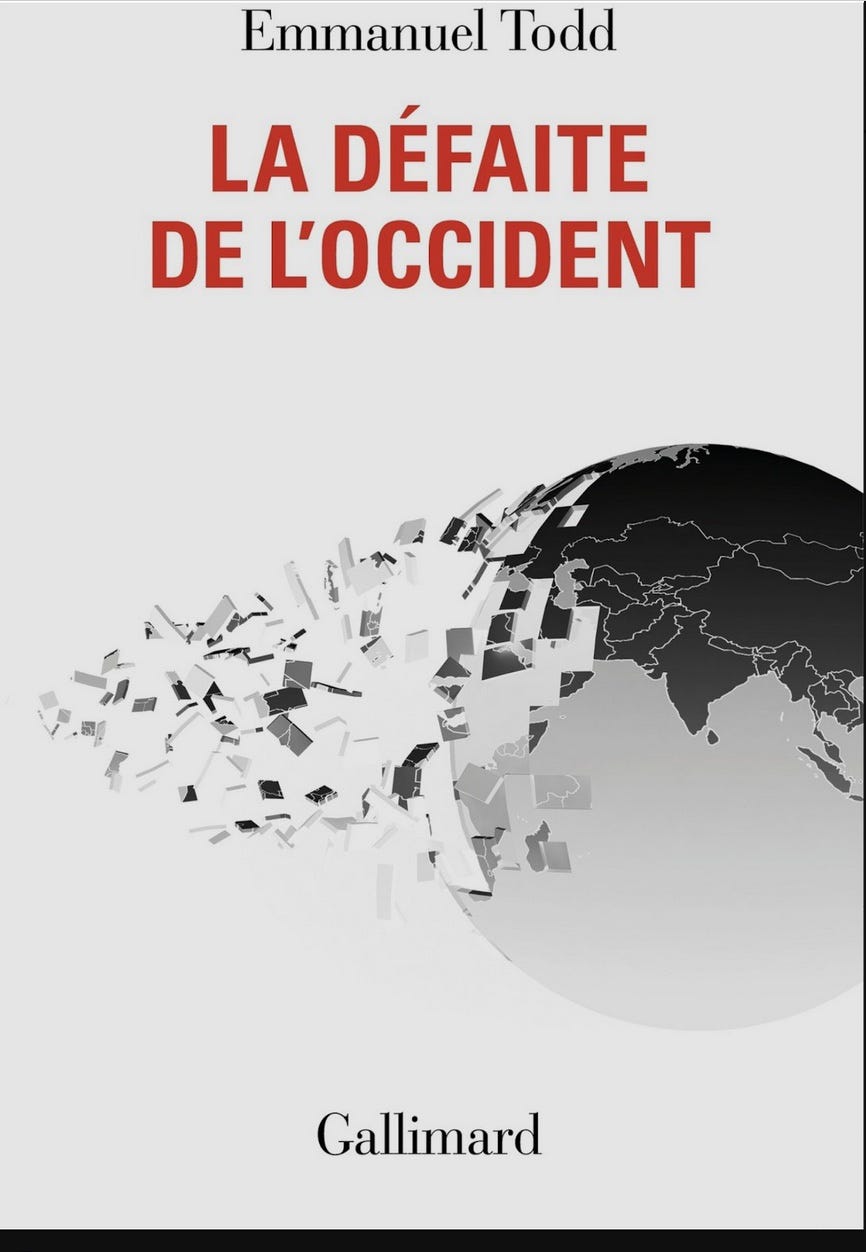
Emmanuel Todd was born in 1951. Through his analysis of society based on the family system, the literacy rate and demographic changes, he predicted the collapse of the Soviet Union, Britain’s exit from the European Union and the emergence of Trump in the United States. Among his many works are “The Defeat of the West.” He also co-authored “2030: The Coming World.”

- Previous Canada’s premier: ties with US have turned into ‘weaknesses’ that must be corrected
- Next Japan’s army to shrink due to manpower base erosion
You may also like...






Random news













About us
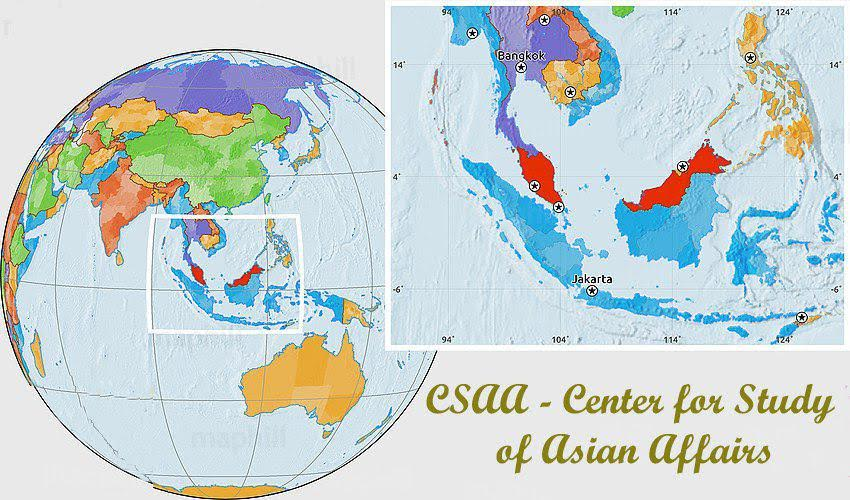
Our Newly established Center for study of Asian Affairs has
branches in Indonesia, Malaysia and Singapore, as well as freelances in some other countries.
For inquires, please contact: newsofasia.info@yahoo.com Mr.Mohd Zarif - Secretary of the Center and administer of the web-site www.newsofasia.net
Polls
 Loading ...