

Ex-Hiroshima mayor Takashi Hiraoka about war, A-bomb, hibakusha
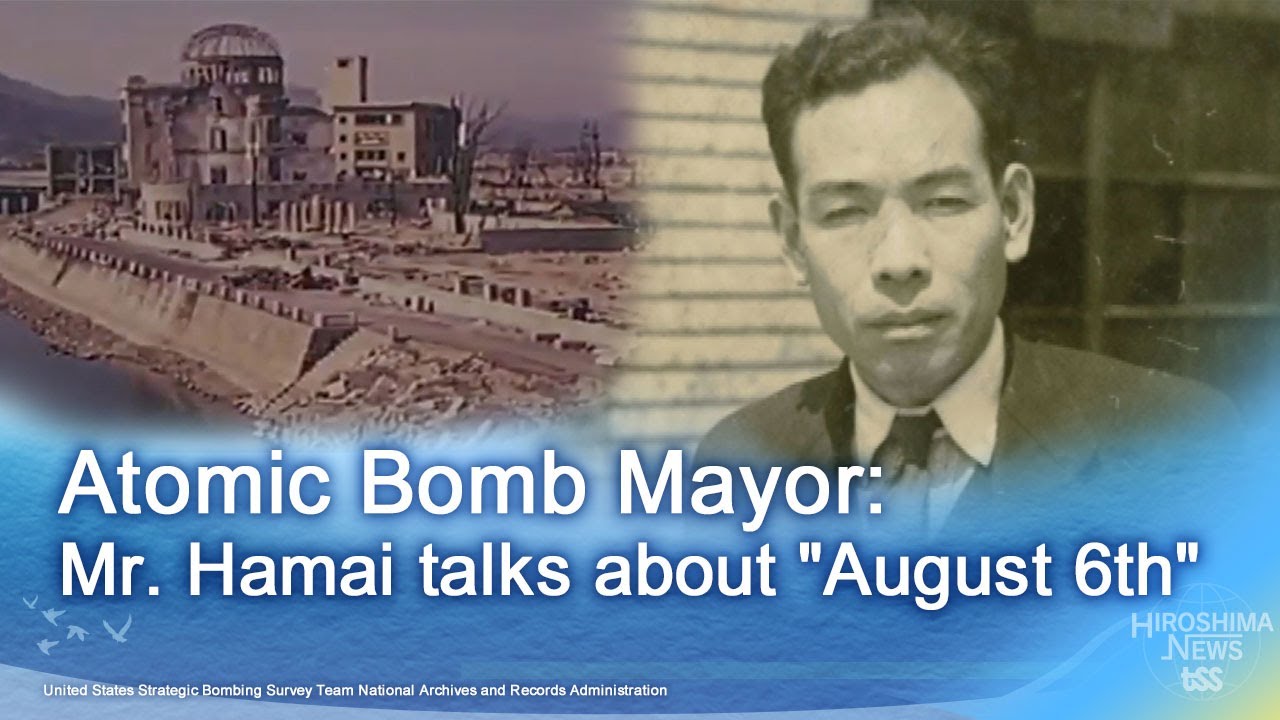
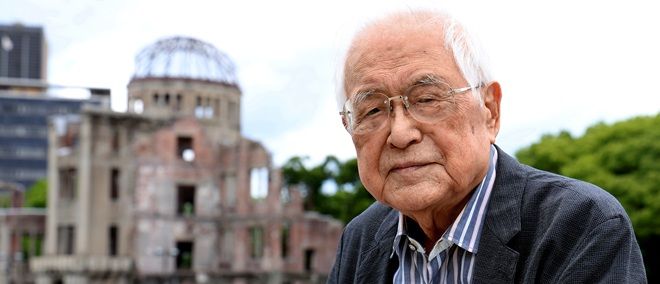 Takashi Hiraoka, former mayor of Hiroshima, in the city on July 2 (Photo by Toshiyuki Hayashi)
HIROSHIMA–A former longtime journalist who went on to serve as Hiroshima mayor said he believes that Japan, reborn as a pacifist nation after World War II, is at a crossroads now.
In a recent interview with The Asahi Shimbun, Takashi Hiraoka, 98, shared his views of Japan as seen through the eyes of someone who knows the years before, during and after the war.
Hiraoka was an expat in Japanese Korea when the war ended and became a Hiroshima-based journalist before going on to serve as mayor of the city during his life of nearly a century.
The interview was conducted ahead of the 81st anniversary of the dropping of the atomic bomb on the city.
Excerpts of the interview follow:

***
Question: You continue to work energetically, at the age of 98, to speak before audiences at lecture sessions and meetings.
You are giving talks on a variety of subjects, including the state of Japanese society and solidarity with the rest of Asia. What motivates you to do so?
Hiraoka: I don’t have a long future ahead of me any longer.
I won’t decline proposals and requests as long as the strength is still in me.
I just don’t want young people to experience war.
We were supposed to have pledged, when Japan was defeated in the war, to renounce relying on military power and build a society where everybody can live with a peace of mind.
That’s what we were supposed to pursue under the Constitution of Japan.
All that, however, is apparently falling into oblivion. I have a strong sense of alarm about that.
Q: Can you elaborate?
A: The political leaders are putting effort only on legislation that would strengthen control of the public, such as the bill to penalize desecrating Japan’s national flag (which went on to be approved on July 17).
An anti-espionage law, if there were going to be one, could substitute the (notorious) Peace Preservation Law of bygone years (1925-1945).
You could be branded (under such a law) as a spy serving the interests of the enemy if you criticized the government. That would be a repeat of what things were like before and during the war.
Q: Japan has lifted its self-imposed ban on arms exports and is increasing its defense spending. How do you view that?
A: I doubt the political leaders are really caring about the public.
Japan should not wage war, and absolutely cannot afford to wage war. That was true before and during the war, and that remains true today.
We don’t have resources, so we have to acquire energy and food through foreign trade.
Japan should face up to that reality and engage in diplomacy for averting war. In fact, however, the nation is seeking to possess military power beyond its means at the behest of the United States.
BEFORE MAYORSHIP
Q: Where were you when the atomic bomb was dropped on Hiroshima on Aug. 6, 81 years ago?
A: I was a student being mobilized to work for a chemical plant in today’s Hungnam in North Korea.
I had moved to live in Keijo, today’s Seoul, earlier because of my father’s work. I was a student with a university preparatory course when Japan was defeated in the war.
Before I went to live in Korea, I lived in Hiroshima, the seat of my mother’s family home.
I was a militarist boy. I believed a divine wind would blow to help Japan (as was the case during the Mongolian invasions of the 13th century, according to legend), and I would call out “banzai, banzai” when I saw off soldiers who were leaving for the front.
I thought the war on the Asian continent had nothing to do with me. I wasn’t aware that we were doing horrible things to other Asians.
I took it for granted that Japan had colonies.
I remember how a Korean student said, immediately following Japan’s defeat, how humiliating it had been for Koreans to be forced to change their names into Japanese ones and be using Japanese all the time. I didn’t understand how they felt.
Q: How did the militarist boy in you change his thinking?
A: What we had been told by the government and the rulers underwent an about-face in 1945.
My family and I were driven out of our home because Japan was defeated, and we were repatriated. We lived in poverty, but that didn’t stop me from reading books. I continued reflecting on how much control those in power may have over people’s lives and what a state is.
Q: You became a reporter for The Chugoku Shimbun, a regional newspaper based in Hiroshima, in 1952. What led you to do so?
A: I liked the printed word, and I wanted to be in the world of journalism. I had hoped to work for a publishing house in Tokyo, but that was a hard time to find a job.
Q: You were a pioneer in covering the issue of hibakusha (atomic bomb survivors) who lived in South Korea.
We have been told that Koreans who were exposed to the atomic bombing in Hiroshima after coming to the city under Japan’s colonial rule suffered, after they returned to South Korea, from anxiety about the aftereffects, poverty and prejudice. Could you share what you did and what you learned?
A: It all started when The Chugoku Shimbun received a letter from a South Korean hibakusha, who said he wished to undergo a medical checkup in Hiroshima. I thought I had to go and cover his story.
Q: Anti-Japanese sentiment remained very strong in South Korea at the time. Is that right?
A: Yes. I began going to South Korea frequently after the country normalized diplomatic relations with Japan in 1965.
A clue came from a list of hibakusha’s names that South Korea’s institute of radiological and medical sciences was compiling.
You could not use Japanese openly in South Korea at the time. On one occasion, I narrowly escaped being arrested for holding an “illegal meeting” while I was interviewing people in the countryside.
Q: How were you, a reporter from Hiroshima, received by the local people?
A: They had been abandoned by the governments of both countries, and by South Korean society as well.
They were initially happy about my visit. During my repeated visits, however, one of them once yelled at me and said, “Get out of here! You can earn wages by writing articles about us, but we are getting nothing from that.”
I think they vented upon me their pent-up anger toward the hardships of their lives and the lack of understanding from society.
The driving force behind my news covering efforts was my anger over the unreasonable way those people were being treated. My doubts about the Japanese state, which left those people neglected, grew bigger and bigger.
The state was responsible for having waged this war, but it had yet to atone properly for the consequences.
DURING MAYORALTY
Q: You were elected mayor of Hiroshima in 1991 and served two terms over eight years. What made you run for mayor?
A: I couldn’t make up my mind when I was sounded out as a candidate.
I received encouragement, however, when I asked someone for advice and I was told, “You can save people’s lives directly by being a politician yourself.”
Q: You referred, during your first Aug. 6 Hiroshima Peace Declaration, to the responsibility and apology for Japan’s aggression to the rest of Asia. Were there any repercussions?
A: Sound trucks crowded around the city hall and kept yelling all day, “Come on out, mayor!” There were likely also some near my home.
Q: Why did you touch upon the relations with the rest of Asia at the risk of arousing angry reactions?
A: It had been decided that Hiroshima would host the 1994 Asian Games.
Hiroshima was home to many military facilities before and during the war, so it was a base for Japan’s invasion of the continent.
Many in the rest of Asia believed that the atomic bombings of Japan had led to their emancipation.
I thought that Hiroshima should not be just complaining about how it suffered but should also be facing up squarely to the rest of Asia.
Q: But you stopped mentioning an apology halfway through your mayorship. Why is that?
A: In 1995, Prime Minister Tomiichi Murayama (1924-2025) released a statement, in which he expressed remorse over Japan’s colonial rule.
I thought that, given the central government’s apology, a local government like ours no longer had to keep saying the same thing.
I should have continued steadily to say that, however. I am saying this because there are now backlash moves against facing up to the history of Japan’s aggression to the rest of Asia.
Starting in the Meiji Era (1868-1912), the Japanese began to say they were “quitting Asia and joining Europe” (as a famous catchword says) and came to look down, increasingly, on people in the rest of Asia, many parts of which had been colonized.
Such a sense has never totally been eliminated in the postwar years. I think it also lies at the root of hate speech (in Japan toward non-Japanese, which has been a serious social problem for some time now).
I feel ashamed on behalf of those of my generation, who, I think, may be responsible for what we are seeing now.
ON NUCLEAR ARMS
Q: How have you been facing the ravages of the atomic bombing of Hiroshima?
A: Everything started when a reporter, my senior, told me to cover the realities of hibakusha.
“The atomic bomb is known for its power, but not for the human tragedies it has brought about,” he said. “You should go after human stories.”
I got to know people who were too weak to work because of the effects of radiation, even though they were willing to work, and suffered from being looked upon as lazy.
One vented anger on me, out of impatience at not being understood, and said, “You would learn if another atomic bomb were to be dropped.”
All this was beyond description, and brought home to me that those people had also been abandoned by the state.
Q: Did you find an answer to your question about what a state is?
A: A state is primarily a device for defending people’s lives and livelihoods. War sacrifices them all.
I cannot help but wonder if Japan today is a democratic state in the truest sense of the word.
The policies the most wanted by the public now are those for dealing with the rising commodity prices and for improving livelihoods. The government, however, is putting effort only on legislation that has nothing to do with livelihoods.
Q: If you look around the world, you see a critical situation where nuclear weapons could be used again. More than a few believe it would be impossible to abolish nuclear arms. What do you say to that?
A: Some in the ruling parties in power are calling for a review of Japan’s Three Non-Nuclear Principles (of not possessing, not producing and not permitting the introduction of nuclear weapons into its territory).
Citizens should raise their voices to change the political scene. In fact, the Treaty on the Prohibition of Nuclear Weapons (which totally bans, among other things, the manufacture, possession and use of nuclear arms) came into being that way.
The only thing we can do is to continue raising our voices without giving up hope.
Q: Aug. 6 is coming around again. What does that make you think of?
A: I cannot but think of those who were killed by the atomic bombing and to the United States’ responsibility for dropping the bomb. The victims would not attain eternal rest unless the United States were to admit to its error.
Q: You have been arguing that nuclear weapons could not be abolished unless the United States were to apologize for its use of the atomic bombs. Can you elaborate?
A: The United States argues it used the atomic bombs to end the war, thereby saving many lives. But that reasoning could justify the limitless use of similar arms.
Q: Can you share your thoughts on current world affairs?
A: Young people are staging demonstrations outside the Diet building, calling on Prime Minister Sanae Takaichi to step down. Similar moves are spreading across Japan.
I think the participants are motivated by this serious sense of alarm that their livelihoods could be sacrificed if nothing were to be done.
Their desire to change the state of things is showing itself in those demonstrations. That gives me a flash of hope.
I want to tell young people that war is an absolute no-no. There is nothing good about it. I want them to put up resistance firmly to any moves for heading toward war.
(This article is based on an interview by senior staff writer Hideki Soejima and editorial writer Kiyohide Inada.)
***
Born in Osaka in December 1927, Takashi Hiraoka was in Korea under Japan’s colonial rule when World War II ended. He served as head of the editorial bureau of The Chugoku Shimbun newspaper and president of RCC Broadcasting Co. before serving as mayor of Hiroshima from 1991 through 1999.
Hiraoka is author of books including “Muen no Kaikyo” (Assistance cut short at the strait) and “Kibo no Hiroshima” (Hiroshima in hopes).

- Previous Malaysia: Selangor state targets to attract RM8b from business summit
- Next After Ukraine shut out of Black Sea, Erdoğan, wants Putin to let Kiev to sea trade at SCO summit
You may also like...
Random news




About us
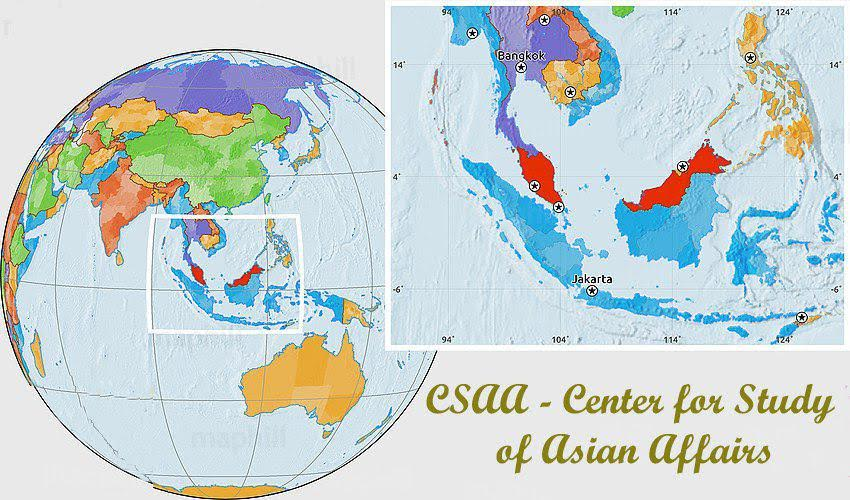
Our Newly established Center for study of Asian Affairs has
branches in Indonesia, Malaysia and Singapore, as well as freelances in some other countries.
For inquires, please contact: newsofasia.info@yahoo.com Mr.Mohd Zarif - Secretary of the Center and administer of the web-site www.newsofasia.net
Polls
 Loading ...