

India analyzes: How Gulf countries paid $142 billion to US for a leaky THAAD umbrella
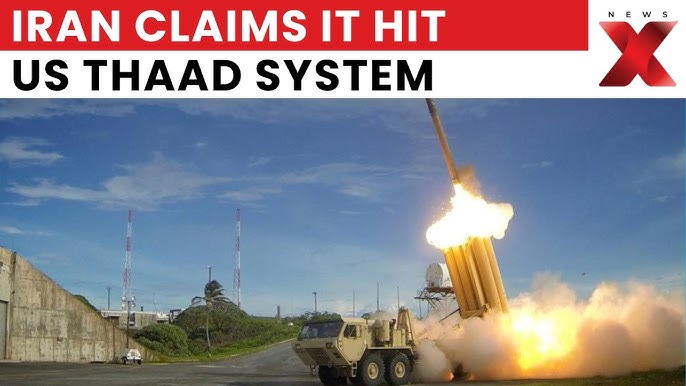
Gulf countries poured billions into American missile defences designed to stop Iran’s arsenal. Yet when retaliation came, sheer volume and cost asymmetry turned the equation. The Middle East countries were left with charred THAAD systems and a costly lesson.
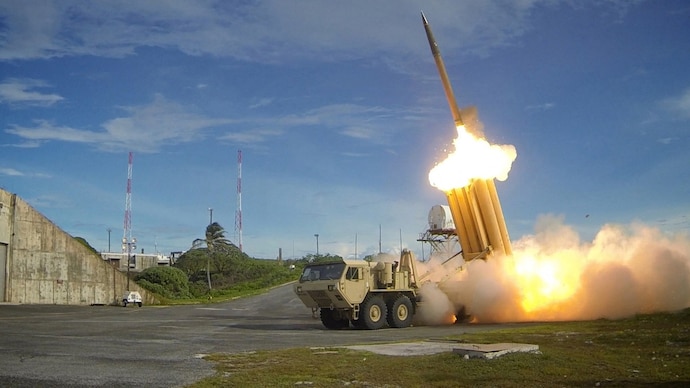
The centerpiece of America’s security umbrella that it promised for the Gulf countries was always its vaunted missile defence systems, especially, Lockheed Martin’s Terminal High Altitude Area Defense (THAAD), paired with Patriot PAC-3 batteries. In the US, defence companies shape the government’s priorities. So, these systems were sold as the gold standard — high-altitude interceptors capable of knocking out ballistic missiles in their terminal phase, layered with lower-tier Patriots to handle shorter-range threats and drones. For years, Gulf states poured tens of billions into these systems, convinced they would neutralise missile threats that have loomed since the Tanker-War era.
These systems were put to the test just nine months later, when the US and Israel launched joint military strikes on Iran, and Iran hit back, instantly.

The very Iranian retaliation the Gulf had paid so dearly to defend against materialised on cue. And the American shield failed, spectacularly, and publicly. The images of burning hardware speak for themselves.
The Gulf states had seen the writing on the wall long before the first missile flew. Even while accepting delivery of the American systems, they hedged aggressively.
In March 2023, Saudi Arabia and Iran restored full diplomatic relations in a landmark deal brokered by China in Beijing — reopening embassies, reactivating a long-dormant 2001 security cooperation agreement, and easing seven years of proxy conflict. Its significance was highlighted by The New York Times, that Riyadh was diversifying its security options and reducing exclusive dependence on Washington.
When US preparations for strikes intensified early this year, Gulf leaders again tried a diplomatic approach. Saudi Arabia flatly refused to let Washington use its airspace or military bases for attacks on Iran and complained that the US had failed to share basic plans or objectives. Several other GCC countries blocked access over legitimate fears of Iranian retaliation.
These were the same governments that had just invested fortunes in THAAD radars and Patriot launchers marketed specifically to counter precisely this scenario.
But US and Israeli actions forced the Gulf countries to discover whether these hardware actually worked. And the nightmare unfolded.
Over 400 ballistic missiles and nearly 1,000 drones targeting US and allied assets flew from Iran, across all six GCC states — Bahrain, Kuwait, Qatar, Saudi Arabia, Oman, and the UAE. Strikes slammed into urban areas, energy facilities, airports, and civilian infrastructure.
Satellite imagery released by CNN revealed direct hits on THAAD’s critical AN/TPY-2 radars — the “eyes” of the entire battery — in Jordan, Saudi Arabia, and the UAE.
At Prince Sultan Air Base in Saudi Arabia, a shelter housing a THAAD radar was left as charred wreckage. In Jordan’s Muwaffaq Salti Air Base, the radar site showed blackened debris and impact craters. In the UAE, structures at a THAAD battery near Al Ruwais suffered multiple direct strikes.
Patriot systems also struggled with the volume of incoming projectiles. While some intercepts occurred, the sheer scale of Iran’s low-cost drone swarms and ballistic missiles quickly strained magazines. Decades of operational history — from the 1991 Gulf War onwards — had already exposed Patriot’s limitations against saturation attacks, and this barrage amplified them. The UAE, which had previously publicised high interception rates against Houthi threats, stopped releasing detailed success percentages after a noticeable decline around mid-March.
US Secretary of State Marco Rubio noted that Iran was producing “over 100 of these missiles a month. Compare that to the six or seven interceptors that can be built a month,” he said.
To compensate for the shortfall, the Pentagon began urgently relocating THAAD batteries from South Korea to the Middle East. South Korean President Lee Jae-myung voiced objections but could not prevent the move, which has effectively weakened deterrence against a nuclear-armed North Korea to patch holes created by a war his country had no stake in.
Today, the Gulf countries, particularly Saudi Arabia, are facing a harsh reality. The nine-figure invoices (in dollars), and an angry Iran’s monthly missile output versus America’s trickle of replacements have made them very anxious.
What was sold as an ironclad shield has proven leaky at best. The THAAD dropped with a thud, just like a billion-dollar dud.

- Previous Iran says it hit US navy ships after American forces targeted Iranian vessels in Hormuz
- Next Canada’s premier: ties with US have turned into ‘weaknesses’ that must be corrected
You may also like...



Random news




About us
Our Newly established Center for study of Asian Affairs has
branches in Indonesia, Malaysia and Singapore, as well as freelances in some other countries.
For inquires, please contact: newsofasia.info@yahoo.com Mr.Mohd Zarif - Secretary of the Center and administer of the web-site www.newsofasia.net
Polls
 Loading ...