

Japan wants cheap meat in South American Mercosur 4 states
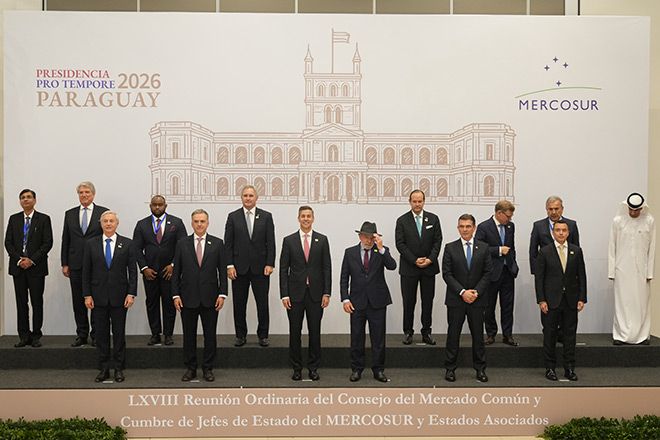 Leaders of Mercosur and guests pose at the end of the Mercosur Summit in Asuncion, Paraguay, on June 30. (AP Photo/Jorge Saenz)
Hoping to ease the burden of soaring prices on households and diversify supply chains, Japan started negotiating an economic partnership agreement (EPA) with Mercosur, the South American trade bloc that includes agricultural powerhouse Brazil.

The talks could lead to lower tariffs on products like beef and chicken but are expected to face strong domestic opposition and may be prolonged.
Mercosur, which also includes Argentina, Paraguay and Uruguay, is an economic bloc that unifies trade rules across the region and boasts a combined GDP of $3 trillion (about 480 trillion yen).
If an EPA is concluded, Japan would likely lower its tariffs to levels comparable with its existing trade agreements.
Brazil, the bloc’s largest economy, is particularly keen to expand its exports of beef and chicken. While the United States is the world’s largest beef producer, Brazil is the top exporter.
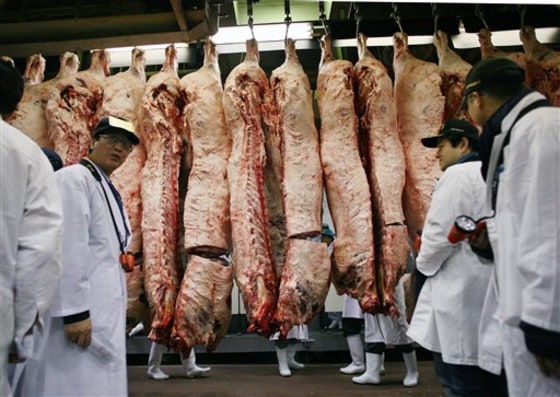
At present, Japan applies a 38.5-percent tariff on raw beef imports under World Trade Organization rules, so a reduction could be a significant boon for Japanese consumers.
However, imports of Brazilian beef have been negligible until now, a legacy of strict restrictions imposed after an outbreak of foot-and-mouth disease in the 1990s.
With no outbreaks confirmed in recent years, Brazil is pushing for these restrictions to be eased alongside tariff cuts.

For chicken, another key Brazilian export, the impact may be less significant. Its price is already low due to efficient mass production, and the current tariff is a maximum of about 12 percent.
Brazil is also a top exporter of pork and sugar, and increased imports could drive down market prices in Japan.
Furthermore, the potential EPA may offer a strategic opportunity for Japan to secure rare metals essential for industry from other South American nations and to expand exports of Japanese products, like auto parts.
POWERFUL FARM LOBBY
For years, Japan’s industrial sector has demanded negotiations with South America, calling it the “last frontier” after Tokyo secured EPAs with nations in Asia-Oceania and the West.
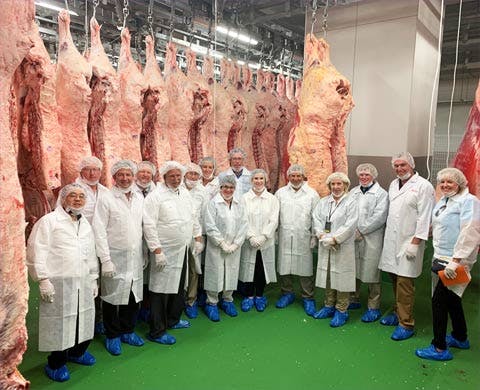
But these efforts have long been blocked by powerful agricultural organizations and the ruling Liberal Democratic Party’s “agriculture tribe”—lawmakers backed by the farm vote.
This faction, which fiercely opposed the Trans-Pacific Partnership (TPP) trade agreement, has been led by Hiroshi Moriyama, a former farm minister who served as LDP secretary-general under the Shigeru Ishiba administration.
Two factors created the political opening for talks with Mercosur.
First, China’s “weaponization of the economy,” including export restrictions on critical minerals, has made diversifying supply chains a pressing national security issue.
Second, the influence of the agriculture tribe centered on Moriyama has weakened under the Sanae Takaichi administration, clearing a path for negotiators.
Despite this political shift, consumers should not expect immediate relief since the negotiation process could be lengthy.
For example, the Regional Comprehensive Economic Partnership (RCEP), a 15-country pact including China and South Korea, took eight years to finalize.
(This article was written by Shinya Takagi and Sho Ito.)

- Previous QUAD members Japan and India vow again cooperation on security and the economy
- Next NATO meets today in Ankara: what is in stake!?
You may also like...



Random news


About us
Our Newly established Center for study of Asian Affairs has
branches in Indonesia, Malaysia and Singapore, as well as freelances in some other countries.
For inquires, please contact: newsofasia.info@yahoo.com Mr.Mohd Zarif - Secretary of the Center and administer of the web-site www.newsofasia.net
Polls
 Loading ...