

Official Beijing Top News: Xi’s upcoming state visit to US draws broad expectations for greater strategic stability, dialogue and cooperation
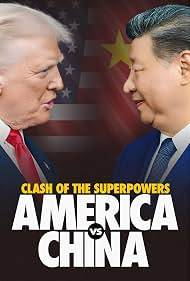

Guo said head-of-state diplomacy plays an irreplaceable role in providing strategic guidance to China-US relations, and the exchange of visits by the two presidents within the span of half a year will mark a milestone of historic significance. He noted that China will work with the US to enrich the dimensions of the China-US constructive relationship of strategic stability, strengthen dialogue and cooperation, and properly manage differences, so as to deliver greater benefits to our two peoples and further contribute to world peace, stability and prosperity.
The visit comes just months after Trump paid a state visit to China in May, making the two-way presidential visits within half a year a notable development in bilateral ties. During Trump’s May visit, the two presidents agreed on a new vision of building a constructive China-US relationship of strategic stability, providing strategic guidance for bilateral relations over the next three years and beyond.Far-reaching significance
Against an international landscape profoundly different from that surrounding Xi’s previous US state visit in 2015, experts from both China and the US reached by the Global Times said that the significance of the upcoming visit extends well beyond any single issue on the bilateral agenda.
Xin Qiang, deputy director of the Center for American Studies at Fudan University, told the Global Times that the visit is crucial for both China-US relations and global stability.
He said that the visit will continue the momentum in bilateral engagement following Trump’s trip to China in May while demonstrating a willingness to keep the relationship stable despite differences.
Robert Lawrence Kuhn, chairman of The Kuhn Foundation, told the Global Times that regular meetings between the top leaders of China and the US send an important signal that both sides want to maintain a stable relationship.
Stability does not mean that the numerous problems between the two countries have disappeared, nor does it guarantee long-term certainty; however, in an increasingly unsettled international environment, the willingness of the two leaders to meet demonstrates their commitment to maintaining a stable relationship, he noted.
“It’s a dangerously different world in which we’re living. This is especially why stable US-China relations are critical: to keep the world from getting any worse,” Kuhn said.
Geopolitical differences will continue to exist and need to be contained, he said, noting that the two countries should seek practical progress in areas that are non-strategic, non-threatening and non-sensitive.
Even relatively small positive steps could represent meaningful achievements under the current circumstances, he remarked.
Voices of the youth
Expectations for more stable relations are not confined to political and strategic circles. At the people-to-people level, ongoing exchanges have also emphasized the need for more communication between the two societies.
According to Xinhua on Monday, Xi recently replied to students from 10 US universities who wrote to him after attending youth exchanges in China. Xi said he was pleased to hear that the students expressed in the letter their appreciation for Chinese civilization, their hope for friendly cooperation between China and the US, and their willingness to act as envoys of friendship bridging the Pacific Ocean.
Young people from China and the US, Xi said, share the same planet Earth and jointly shoulder the mission of the times.
He expressed hope that the students would join the vast number of young people in both countries in striving to carry forward, uphold, and advance China-US friendly cooperation, and work together to foster mutual understanding and affinity between the two peoples and to ensure the steady and long-term development of bilateral relations, so as to contribute the vitality of youth to building a better world.
The importance of that space for communication becomes clearer when viewed through the experiences of young Americans who have traveled to China.
For these young Americans, such exchanges have offered a perspective on the relationship that differs from the often-presented lens of geopolitical competition.
Maddox Cherry, a senior at Clarksburg High School in Maryland, described his two-week visit to China in April as “the best 14 days of my life.”
Traveling through Shanghai, Shenzhen and Beijing, Cherry said he was struck by how quickly American and Chinese students could find common ground.
When asked whether frequent US media coverage of tariffs, semiconductor restrictions and high-tech competition had affected his view of China, Cherry acknowledged that such reporting inevitably shapes impressions at home.
However, he emphasized that direct contact produced a very different experience.
“Once you’re over in China and you’re actually making friends, it all just disappears,” Cherry told the Global Times.
Ryan Corkery, a student at the University of Maryland, had a similar experience. His first visit to China in April 2025 was also his first trip outside the US.
“It was really life-changing,” Corkery said. “It opened my eyes to how big the world is, and to how people of different cultures, backgrounds and languages can come together and form strong friendships.”
That experience brought him back to China three times this year, including a three-week solo trip during which he traveled through several Chinese cities.
Although he arrived alone, Corkery said he rarely felt that way because he was constantly meeting friends and making new ones.
More room for dialogue
Such people-to-people experiences are unfolding against a bilateral relationship that is still battered by differences. Trade, technology and security issues remain sources of friction, and competition between China and the US in advanced technologies has not disappeared. However, dialogue has also been expanding.
Chinese and US economic and trade officials held talks on Sunday local time on economic and trade issues of mutual concern, with artificial intelligence (AI) also among the topics discussed, Xinhua News Agency reported on Monday.
Guided by the important consensus reached by the two heads of state and upholding the principles of mutual respect, peaceful coexistence and win-win cooperation, the two sides engaged in candid, in-depth and constructive exchanges on major economic and trade issues of mutual concern, including the implementation of the consensus reached during previous economic and trade consultations and the promotion of bilateral trade and investment. The two sides also held a dialogue on issues related to artificial intelligence.
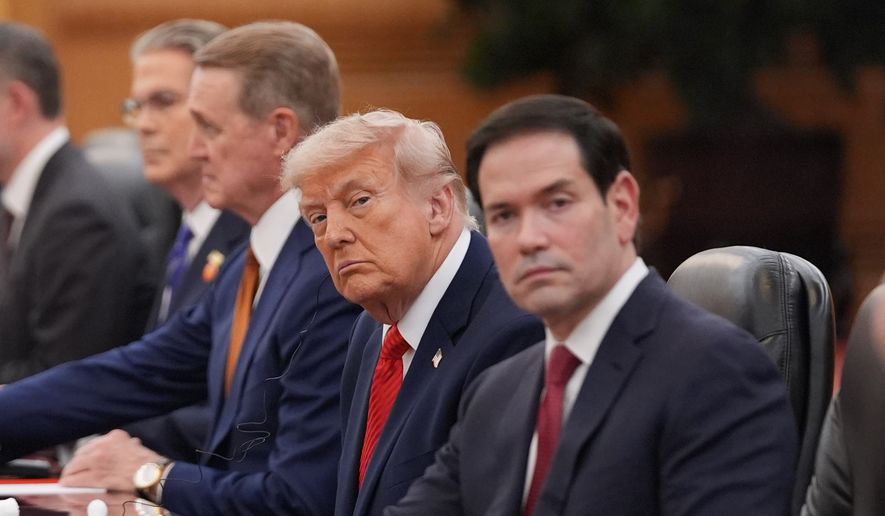
A Chinese expert noted on Monday that one key signal from the latest China-US economic and trade talks is that both sides remain committed to existing agreements and to turning the consensus reached by the two heads of state into concrete action.
“In trade and investment, China and the US share many common concerns and interests, while differences remain on several issues, which makes continued consultations necessary to build consensus, reduce trade disputes and frictions, and create better conditions for normal business and commercial activity. This also reflects the central role economic and trade ties play in the broader China-US relationship,” Zhou Mi, a senior research fellow at the Chinese Academy of International Trade and Economic Cooperation, told the Global Times on Monday.
On Thursday, Chinese Foreign Minister Wang Yi spoke by phone with US Secretary of State Marco Rubio. During the talks, Wang said that for some time, China-US relations have generally moved along the path toward a constructive relationship of strategic stability set by the two heads of state, which is conducive to responding to the expectations of the international community.
Ahead of the meeting, expectations voiced by experts and young people on both sides clearly indicate that stronger communication at the top is expected to provide greater certainty for the overall relationship while creating more room below for businesses to cooperate, scholars to communicate and ordinary Chinese and Americans to engage with one another.
Political differences may continue to dominate headlines, but the experiences of young Americans who have traveled to China suggest that direct exchanges can offer another perspective on the relationship – one shaped less by geopolitical competition and more by personal contact and mutual understanding.
As Cherry put it, even with an ocean between the two countries, some friendships can still “feel kind of like family.”

- Previous Curse of Ukraine hits and hurts Kazakhstan a lot: In 2026 it lost about 3.5 million tons oil production capacity: It will take 6 month back to normalsy
- Next South Korea and Japan on alert: North Korea says tested new weapon system
You may also like...




Random news














About us
Our Newly established Center for study of Asian Affairs has
branches in Indonesia, Malaysia and Singapore, as well as freelances in some other countries.
For inquires, please contact: newsofasia.info@yahoo.com Mr.Mohd Zarif - Secretary of the Center and administer of the web-site www.newsofasia.net
Polls
 Loading ...