

Pak plans to deploy submarines in Bay of Bengal, a first since 1971 lost war in Bangladesh
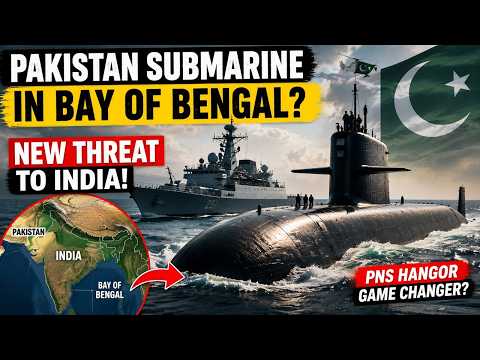
Even as Pakistan’s China-built Hangor-class submarine arrived in Karachi, senior naval officers spoke of using it to maintain a presence in the Bay of Bengal. The ambition is significant because Pakistan has had little meaningful naval presence in the Bay of Bengal since its defeat in the 1971 war and the creation of Bangladesh.
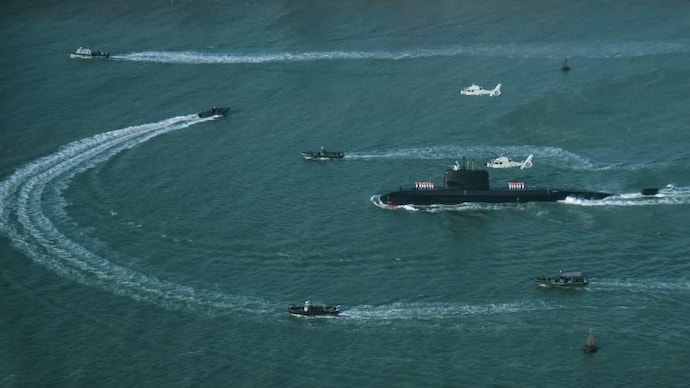
The name Hangor evokes history. In 1971, Pakistani submarine PNS Hangor sank India’s INS Khukri during the India-Pakistan war. That was the first instance where an Indian Navy warship sank in wartime since Independence and one of the Pakistan Navy’s most celebrated naval strikes. However, the sinking of INS Khukri did little to alter the 1971 war’s outcome. Pakistan suffered a crushing defeat, as Indian forces on land, air and sea crushed the Pakistanis and helped secure Bangladesh’s liberation.
Fifty-five years after the 1971 bloody nose, which wiped out the Pakistani presence in the Bay of Bengal, another Pakistani Hangor is making headlines. Pakistan’s first Hangor-class submarine, after being commissioned in China in April, arrived in Karachi last week. And, senior Pakistani naval officers are already talking about a role far beyond Pakistan’s naval front yard, the Arabian Sea.
According to a senior Pakistan Navy officer, the submarine could give Islamabad the ability to maintain a presence in the Bay of Bengal, a region far from home, where Pakistan’s naval footprint has been negligible since the 1971 war, when Islamabad lost half its territory.
The revelation of this Pakistani ambition by the senior Pakistan Navy officer comes amid improving civilian and military ties between Pakistan and Bangladesh and a wider naval competition unfolding across Indian Ocean states, including India.
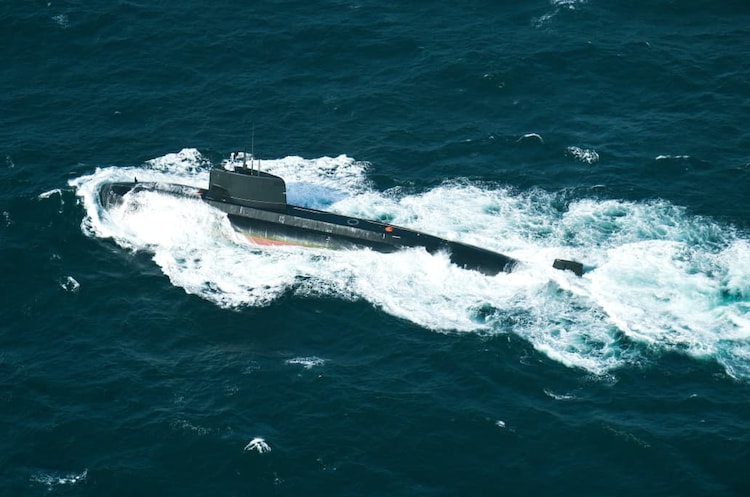
‘NEW HANGOR SUBMARINE WILL HELP PAK MAINTAIN BAY OF BENGAL PRESENCE’
Since Pakistani forces, including its Navy, were defeated by the Indian military in 1971, the Pakistani naval presence was largely restricted to the northern Arabian Sea.
The Bay of Bengal, by contrast, has traditionally been an area where India enjoys significant geographical and strategic advantages. Home to India’s Eastern Naval Command in Vishakhapattnam and close to the Andaman and Nicobar Islands, the Bay of Bengal has become increasingly important for goods and energy trade between India and Bangladesh.
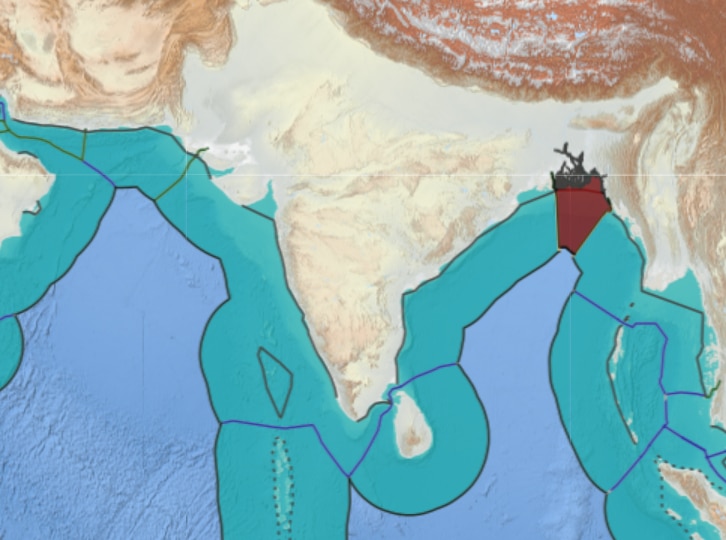
The water body, whose littoral states are India, Bangladesh, Myanmar, Thailand, Malaysia, Indonesia, and Sri Lanka, has also assumed geopolitical importance amid a rise of competing naval powers in the Indo-Pacific.
That is why the remark made by the senior Pakistani Navy officer earlier this month in Sri Lanka is significant.
According to Colombo-based news outlet The Morning, Commodore Omer Farooq, commander of the flotilla escorting the new submarine home, said the induction of the Hangor-class would give Pakistan the reach to maintain a presence in the Bay of Bengal.
Farooq described the submarine as a “game changer” and noted that Pakistan planned to induct eight submarines of the class, reported The Morning on June 7.
Farooq had stopped in Sri Lanka on his way to Pakistan from China. The comments were made at an event onboard Pakistani frigate PNS Taimur at the Colombo Port.
Before PNS Hangor’s arrival, the Pakistan Navy operated five submarines. The new Chinese-built Hangor-class submarines are intended to replace ageing Agosta submarines.
A few points to remember here. The Bay of Bengal is not the territorial sea of any one country. Under international law, coastal states exercise sovereignty over a territorial sea extending up to 12 nautical miles (22 km) from their coastline and sovereign rights over an Exclusive Economic Zone (EEZ) extending up to 200 nautical miles (370 km).
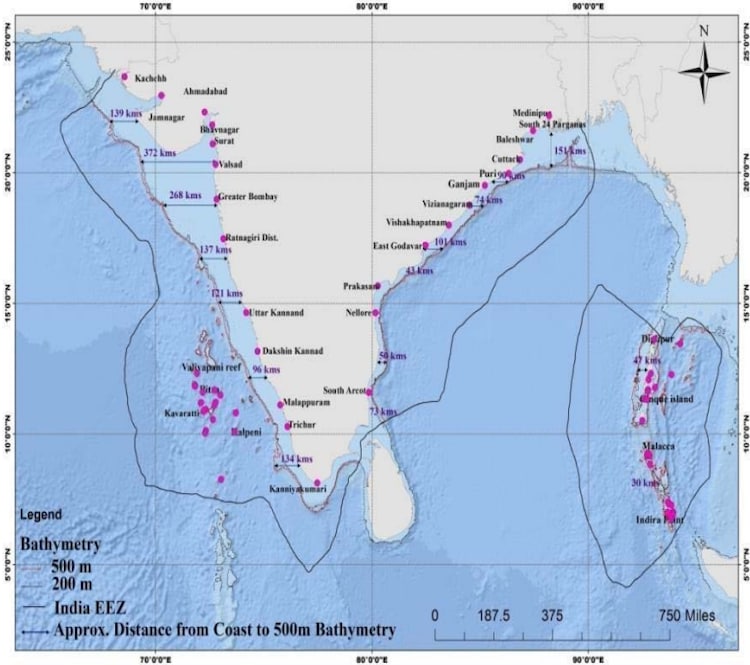
Beyond those limits lie international waters, where even military vessels of foreign origin are largely free to roam.
THE BANGLADESH FACTOR IN PAK’S BAY OF BENGAL AMBITION
The timing of the new Hangor submarine and the revelation of Pakistan’s ambition in the Bay of Bengal are equally important. It comes amid a visible improvement in relations between Pakistan and Bangladesh, including military-to-military engagements, which started during the interim regime of Muhammad Yunus in Dhaka.
For decades after the 1971 Liberation War, ties between Dhaka and Islamabad remained strained. However, after PM Sheikh Hasina’s government was pulled down by an Islamist-backed plot, Pakistan started making inroads in Bangladesh.
Direct Dhaka-Karachi flights have resumed after decades. The flight operated by Biman Bangladesh uses Indian airspace for the two-hour flight.
Since Hasina’s ouster, Urdu shayari mehfils have been conducted at Dhaka University. Rahat Fateh Ali Khan performed in Dhaka.
Muhammad Yunus met PM Shehbaz Sharif twice. Foreign Minister Ishaq Dar visited Dhaka. A 27% surge in bilateral trade between August and December 2024 followed by a 20% year-on-year increase by December 2025 was reported. They signed a memorandum on trade aiming for $1 billion in agreements and investments, according to The Diplomat, a Washington DC-based news magazine.
Following the Hasina regime’s fall in 2024, direct sea trade between Karachi and Chattogram resumed for the first time since 1971. Pakistani vessels have been provided with allowances at Mongla port. Visa relaxations have been made.
PAK WARSHIP DOCKED IN BANGLADESH IN NOV 2025, FIRST SINCE 1971
Clearly, the recent flurry of diplomatic, military, commercial and cultural engagements and exchanges points to a tectonic shift in relations between Pakistan and Bangladesh.
This also raises the possibility of Pakistani naval assets operating frequently in the eastern Indian Ocean. This naturally raises questions if the warming ties could eventually facilitate greater Pakistani naval visibility in waters where it has historically had limited presence.
While there is no indication that Bangladesh has agreed to host Pakistani naval assets or provide military facilities, reports suggest that Dhaka is negotiating a mutual defence agreement to institutionalise military cooperation, intelligence sharing, and joint exercises with Islamabad.
Therefore, strategic experts are not just cognisant of the capabilities but also of the possibilities of the emerging nexus.
However, it should be noted that ties between India and Bangladesh have seen new warmth since Tarique Rahman became the Prime Minister in February.
WHY IS THE HANGOR-CLASS SUBMARINE IMPORTANT FOR PAKISTAN?
The Hangor-class is central to Pakistan’s largest naval modernisation effort which has come after decades of neglect. Pakistan plans to induct eight Hangor-class submarines in total. The PNS Hangor that arrived in Karachi this month is the first of the eight submarines.
Built in China, the submarines would reportedly be equipped with Air-Independent Propulsion (AIP) technology. Unlike conventional diesel-electric submarines that must periodically surface or snorkel to recharge batteries, AIP-equipped submarines can remain submerged for extended periods. This feature makes these submarines harder to detect and track.
We told you that the name, Hangor, evokes history and has symbolism. During the 1971 India-Pakistan war, PNS Hangor torpedoed INS Khukri in the Arabian Sea, killing 176 Indian sailors, including Captain Mahendra Nath Mulla, who went down with his ship and was later awarded the Maha Vir Chakra.
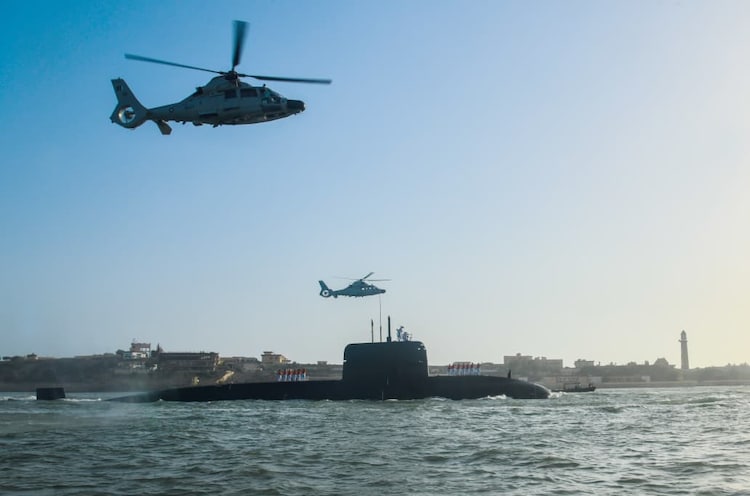
While Pakistan went on to lose in the 1971 war, its decision to revive the Hangor name for its new submarine class suggests that its military establishment attaches a symbolic value to the legacy. But the strategic environment in the Indian Ocean Region today is vastly different from that of 1971.
The Indian Navy has expanded considerably over the past five decades. It operates nuclear-powered submarines, two aircraft carriers and long-range maritime surveillance assets. India also maintains a strong presence in both the Arabian Sea and the Bay of Bengal.
So, while Pakistan might not be able to alter the balance in the Bay of Bengal, its presence could be seen as an irritant by India. This even as India is expanding its naval capabilities in and around the Andaman and Nicobar Islands.

- Previous Central Asia’s Critical Minerals Moment
- Next Trump and Pezeshkian digitally sign US-Iran MoU to end war
You may also like...





Random news












About us
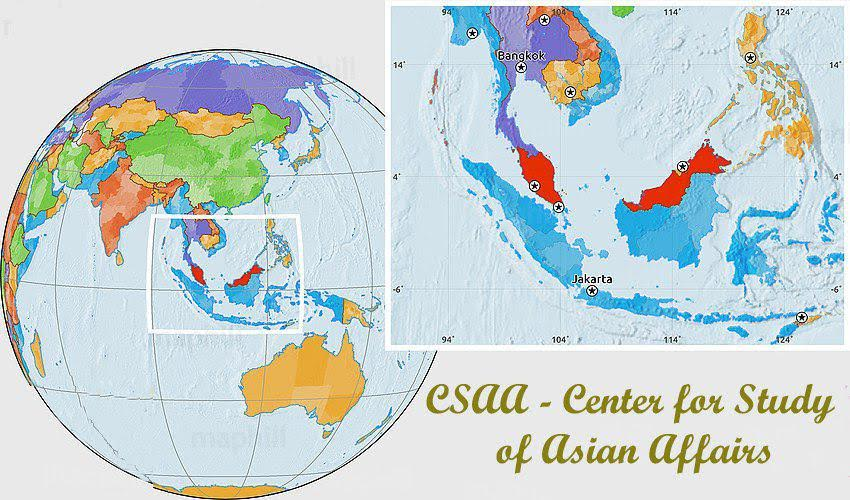
Our Newly established Center for study of Asian Affairs has
branches in Indonesia, Malaysia and Singapore, as well as freelances in some other countries.
For inquires, please contact: newsofasia.info@yahoo.com Mr.Mohd Zarif - Secretary of the Center and administer of the web-site www.newsofasia.net
Polls
 Loading ...