

Pakistan’s 4 Security Threats: Balochistan, Khyber Pakhtunkhwa, TTP and Afghan border

Trouble for Pakistan on four fronts. Is a new nation on the horizon?
From Balochistan and Khyber Pakhtunkhwa to POK and the Afghan border, Pakistan is facing four distinct but increasingly interconnected crises. Together, they reveal the erosion of state authority and the limits of Asim Munir’s security-first approach. A former Afghan leader suggests that a new country might be taking shape.
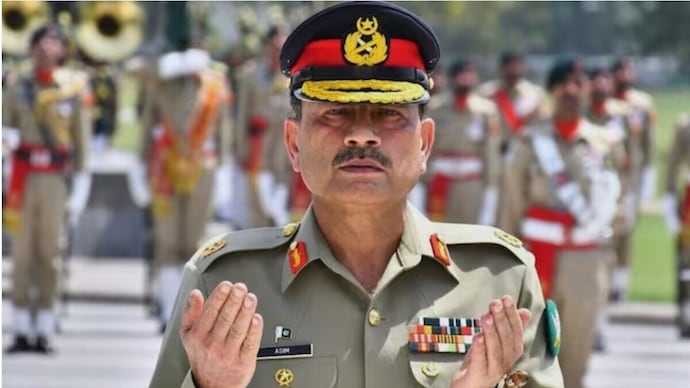

Pakistan is battling fires on multiple fronts. One is an insurgency, another an uprising. Across the border, unrest is simmering, and then, there is also one that Islamabad has effectively turned into an undeclared conflict.
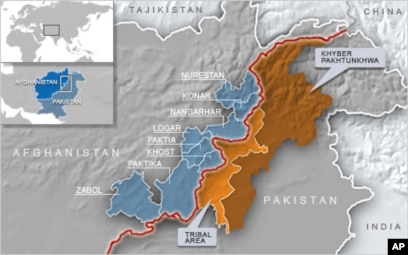
From Balochistan and Khyber Pakhtunkhwa (KP) to Pakistan-Occupied Kashmir (POK) and the Afghanistan border, the Pakistani establishment, led by military chief Asim Munir, is facing four distinct but increasingly interconnected crises. Armed Baloch rebels are demonstrating greater reach and coordination in their attacks. The Tehreek-e-Taliban Pakistan (TTP) is hammering Pakistani security forces in KP and expanding into Pashtun areas of Balochistan. In POK, a movement over political representation, rights and resources is surviving arrests, killings and communication blackouts, even as the establishment has pushed in at least 8,000 personnel into the disputed and occupied Indian region.
According to the Global Terrorism Index 2026, 1,139 “terrorism-related” deaths in 2025 (the highest since 2013) were reported in Pakistan. Although attacks declined in June 2026, the Islamabad-based Pakistan Institute for Conflict and Security Studies (PICSS) recorded 118 attacks, 112 fatalities and 148 injuries during the month.

While terrorism is indefensible, many of these armed groups are blowback from Pakistan’s decades-long pursuit of “strategic depth” in the region.
“Daily attacks, one day it is KP, next day it is Balochistan and then again next day KP. We are now facing a total war-like situation in two of our four provinces,” Bahawalpur-based entrepreneur Bilal Khalid said on X.
He did not identify the territory he was referring to. But the Pakistani establishment is taking a beating almost every other day, and the signs are far from what Munir would want to see. The simultaneous crises have revived questions, even from quarters in Pakistan, about whether its establishment would prefer to remain buried.
Strategic affairs expert Brahma Chellaney, in a post on X on Thursday, said Pakistan was confronting a “widening crisis of state authority” as protests and insurgency exposed a shared pattern of marginalisation and political disenfranchisement. Their problems, he argued, exposed the limits of Islamabad’s “security-first approach” and its weakening ability to govern through “consent rather than brute force”.
BALOCHISTAN’S TWO-HEADED INSURGENCY
In Balochistan, which Pakistan illegally annexed after betraying and forcing the Khan of Kalaat to step down in 1948, is facing the worst brunt of armed resistance. Rooted in long-standing grievances over political exclusion, resource exploitation and enforced disappearances, armed resistance has been a mainstay in Balochistan. At the same time, peaceful activists such as Mahrang Baloch have faced arrests and life imprisonment sentences. Others have been forcibly disappeared.

Two days later, Balochistan Liberation Army (BLA) militants ambushed a Pakistan Army convoy in the Bela-Winder area of Lasbela district, killing 11 soldiers, including a junior commissioned officer. Along with another attack near Quetta that killed four civilians, the violence left at least 38 Pakistani security personnel and four civilians dead in four days.
Recently, the chief of JUI-F, Maulana Fazlur Rehman, dared Asim Munir to “remove his uniform and contest elections“. At the same rally, Rahman said, “Even today, the writ of the Pakistani government does not exist in Balochistan.”
What makes the crisis in Balochistan particularly difficult for Islamabad is that it is fighting two ideologically distinct enemies, according to experts. The BLA seeks an independent Balochistan, while the TTP wants to impose its version of Islamic rule on Pakistan.
“As Baloch areas continue to face BLA attacks, TTP is now expanding its presence in Balochistan’s Pashtun region,” Waziristan-based conflict journalist Ihsanullah Tipu Mehsud wrote on X. This, he said, had forced the state to confront “two ideologically distinct militant fronts: an ethnonationalist and an Islamist” one.
Recently, an X account, named Mir Yar Baloch, which claims links to the Baloch liberation movement, asserted (without offering verifiable evidence) that Baloch groups, rather than the Pakistani State, controlled 85% of the province.
Pakistani economist R Kakar described the situation as the “gravest security crisis” in Balochistan’s modern history, even as its coverage in “Pakistan proper remains negligible”.
Security analyst Muhammad Amir Rana, writing in the Pakistani daily Dawn, claimed that the insurgents had remained “geographically dispersed, operationally flexible and strategically deliberate”. He added that fewer attacks in a particular month could represent tactical recalibration rather than the weakening of the insurgency.
KHYBER PAKHTUNKHWA BLEEDS AS THE TTP ADAPTS
If the BLA is stretching the capabilities of the Pakistani establishment across Balochistan, the TTP is keeping Rawalpindi’s forces tied down in adjoining KP, particularly the former Federally Administered Tribal Areas (FATA).
Attacks, ambushes and targeted killings have become routine across North and South Waziristan, Bannu, Bajaur, Khyber and Dera Ismail Khan. On Wednesday, three policemen were killed and at least 20 injured in an ambush in Upper Dir and a suicide attack on a police station in Bannu, reported the Associated Press.
TTP militants have also expanded their use of commercial quadcopters for attacks on police stations and checkpoints. The tactic, first seen frequently around Bannu and North Waziristan, has spread to other districts.
“The country is no longer dealing with a single-dimensional terrorist threat,” Security analyst Muhammad Amir Rana wrote in Dawn, pointing to a layered contest involving militant drones, cross-border sanctuaries, retaliatory strikes and information warfare.
In May, the US, citing security concerns, announced that it would shut its Peshawar mission.
The Pakistani state refers to the TTP as “Fitna al-Khawarij” and frequently announces large militant casualties in intelligence-based operations. But repeated Pakistani operations have not prevented the TTP from regenerating after the collapse of its ceasefire with Islamabad in November 2022.
The group is also no longer confined to its old tribal strongholds. Its attacks in Ziarat and presence around Quetta show that the KP and Balochistan theatres are beginning to overlap. It appears that the Pakistani military is being forced to divide intelligence, personnel and air assets between distant districts.
The challenge in POK is different for the establishment. It is not primarily an armed insurgency but a mass political movement that the Pakistani establishment has increasingly treated as a security threat.
For more than a month, the Jammu Kashmir Joint Awami Action Committee (JAAC) has mobilised people over inflation, electricity and flour prices, political rights and the 12 legislative seats reserved for refugees from Jammu and Kashmir settled elsewhere in Pakistan. Protesters argued that these seats allow Islamabad to influence the regional assembly at the expense of local representation.
The movement has survived arrests, internet suspensions and the proscription of JAAC under anti-terrorism laws. At least nine people were killed in clashes on July 14, according to Reuters.
Ahead of a proposed march from Rawalakot to Muzaffarabad, around 4,000 Rangers, police and Frontier Corps personnel were deployed. Cities were sealed, while journalists were reportedly prevented from entering Rawalakot amid what was described as an undeclared media blackout. JAAC leaders claimed that 40,000 people planned to join the march.
JAAC leader Sardar Aman Khan has accused Pakistan of first arming Kashmiris for its strategic objectives and now branding protesters terrorists. His attack and rhetoric on the establishment has sharpened as the crackdown has intensified, even as the movement’s stated demands are centred on representation, resources and rights.

The unrest in POK might automatically not be read as a secessionist movement. However, pro-India slogans and the inability of the establishment to settle civic and constitutional grievances without paramilitary force has deepened alienation in an illegally-occupied region it projects as content with Pakistani control.
THE AFGHAN BORDER HAS BECOME A BATTLEFRONT
Pakistan once celebrated the Taliban’s return to Kabul as a strategic victory. Remember the visual from the Serena Hotel? Five years later, its border with Afghanistan has become an active military front.
Islamabad has accused the Taliban government of sheltering TTP leaders. Kabul denied this and described the violence as Pakistan’s internal problem. The disagreement has moved beyond routine demarches.
After an attack on the Rangers’ headquarters in Karachi in June, Pakistan conducted a ground operation near Bajaur and air strikes in Afghanistan’s Paktia, Paktika and Kunar provinces. Islamabad said 29 militants were killed. UN figures cited by Reuters said at least 28 civilians were killed and 49 injured.
But, even as the superior Pakistani forces have hit several targets in Pakistan, the Taliban has hit back with whatever resources it has had. Back in February, the Taliban-led Afghan military, dismissed as fragmented and under-equipped, claimed it carried out air and drone strikes on multiple Pakistani military targets, including sites near Islamabad.
As a result, the Durand Line now serves both as a conventional border and a point of repeated armed confrontations. Pakistan bombs suspected “terror sanctuaries”, but every strike risks retaliation from the Taliban and further strengthens anti-Pakistan sentiment across the border, and also in the Pathan-dominated KP across the border.
FOUR FIRES IN PAK. IS A NEW NATION LOADING?
Former Afghan vice-president and intelligence chief Amrullah Saleh’s suggestion of a new country makes for an arresting question, especially when Baloch rebels are displaying unprecedented operational reach and POK protesters are openly challenging Islamabad. It should not, however, be taken for an intelligence assessment or evidence (on Saleh’s part) of an approaching redrawing of borders in South Asia.
It must be noted that the four crises facing Pakistan do not form a single rebellion. The BLA, TTP, JAAC and Afghan Taliban have different identities, objectives and methods. Some are even hostile to one another. What connects them is their common ability to expose the limits of Pakistani state power and bring things to a standstill.
Even Pakistan Defence Minister Khawaja Asif has offered an extraordinary diagnosis recently. “I want to warn the powerful quarters… The country has fallen apart. Today, separatist movements are active in two provinces of Pakistan,” he said in Pakistan’s National Assembly.
Indian strategic-affairs analyst Sushant Sareen believes Pakistan’s internal pressure could produce danger beyond its borders. Pakistani generals, he warned, might resort to external “military adventurism” to divert attention and rally the country.
But Pakistan’s current predicament and the challenges confronting its establishment make Saleh’s question conceivable and difficult for Islamabad to dismiss.

- Previous Clown Milei says ‘getting closer’ to reclaiming Falklands: If now him, islands need to be de-colonized and belongs to Argentine
- Next PM Modi mocks old engineers: Skyroot missile launch led by 28-year-olds, not some young 56-year-old
You may also like...





Random news


About us
Our Newly established Center for study of Asian Affairs has
branches in Indonesia, Malaysia and Singapore, as well as freelances in some other countries.
For inquires, please contact: newsofasia.info@yahoo.com Mr.Mohd Zarif - Secretary of the Center and administer of the web-site www.newsofasia.net
Polls
 Loading ...