

Resource Base Depleted: Kazakhstan’s Critical Minerals Promise Is Running Out of Time
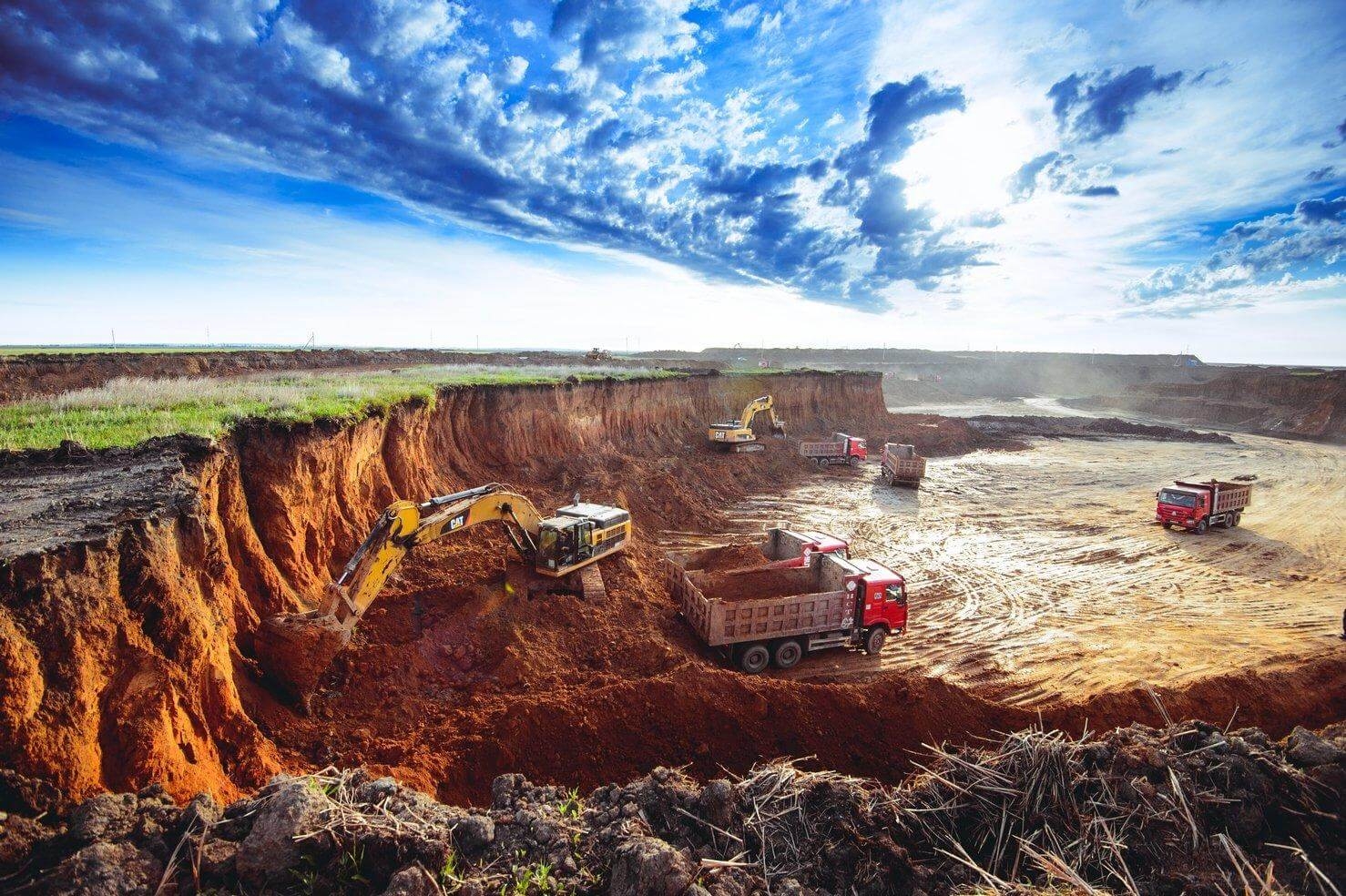
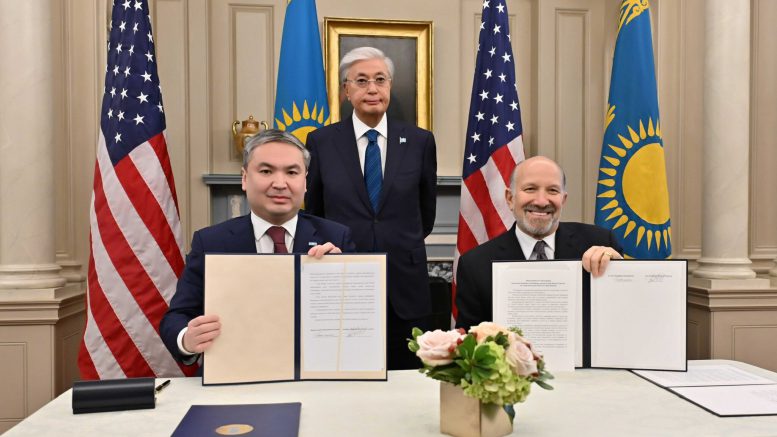
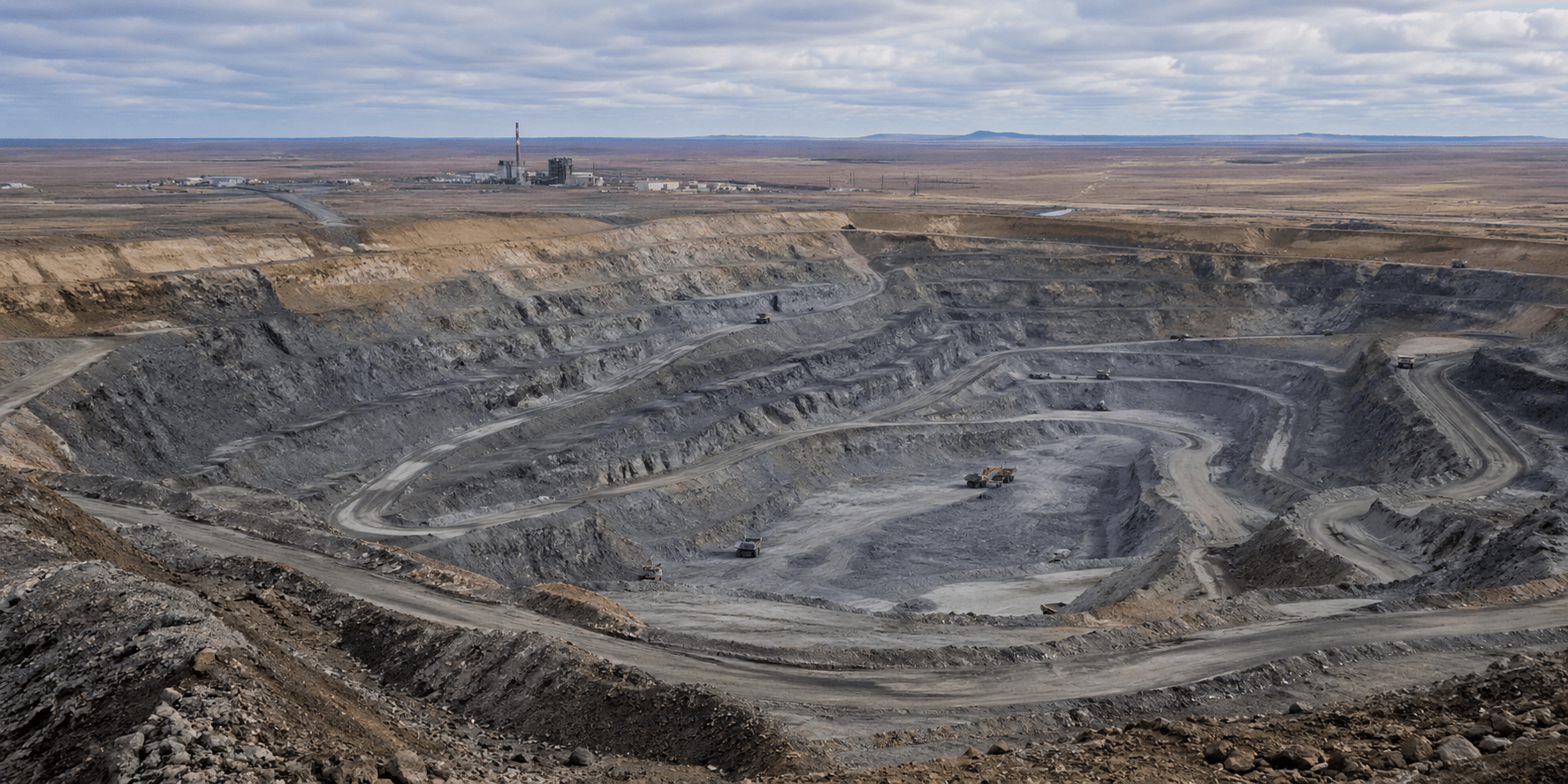
Image: TCA
Kazakhstan has long been defined by what lies beneath its soil. Oil, uranium, copper, zinc, lead, chromium, gold, and other minerals have shaped the country’s post-Soviet economy and supplied the budget, export revenues, and industrial base that supported three decades of state-building.
That model is now entering a more complex phase. In the first quarter of 2026, Kazakhstan’s industrial output slipped as mining and quarrying fell by 11.4%, with crude oil production down 19.8%, natural gas output down 20%, and other mineral extraction down 15.1%, according to figures reported from the Bureau of National Statistics. The oil decline also reflected specific disruptions. Kazakhstan’s energy minister said oil and gas condensate production fell 20% year-on-year in the first quarter, while production at Tengiz had only recently resumed after an outage linked to a fire at a power unit. Reuters reported that the field’s restart was gradual.
Those short-term shocks should not be confused with the whole story. They expose a deeper vulnerability: Kazakhstan has been highly successful at extracting known deposits, but far less successful at replacing them. The World Bank’s mining sector diagnostic put the problem plainly. Kazakhstan is underexplored, greenfield exploration has been almost non-existent for about 30 years, and much of the geological data inherited from the Soviet period is incomplete or outdated.
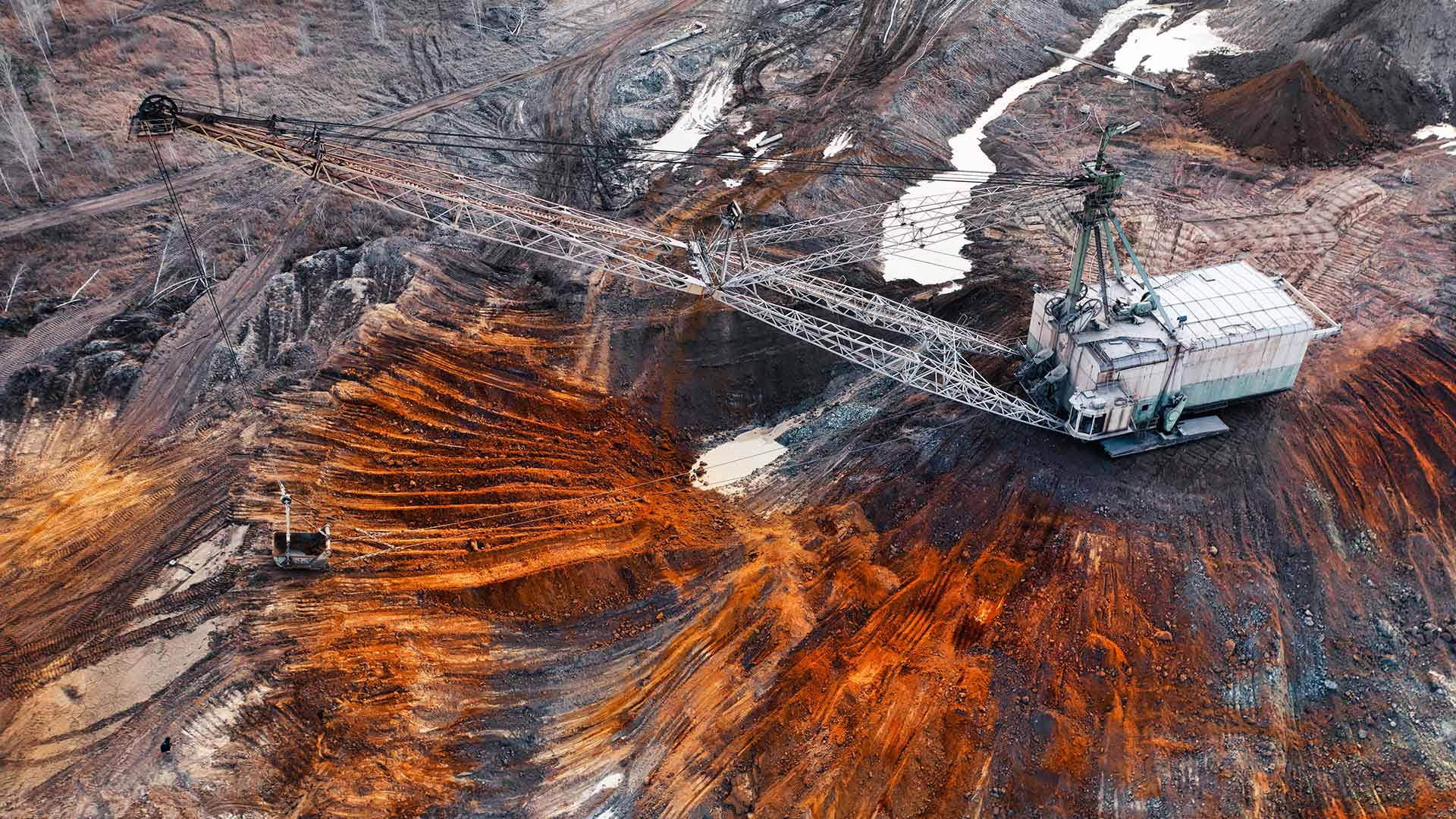
This is not a story of geology alone. It is a story of institutions, incentives, and time. Deposits deplete whether governments plan for it or not. The difference between a mature resource economy and a vulnerable one is whether exploration, processing, regulation, and regional diversification keep pace with extraction.
The Arithmetic of Depletion
Kazakhstan still has one of the strongest mineral endowments in Eurasia. President Kassym-Jomart Tokayev has described rare and rare-earth metals as having “essentially become new oil,” and told the government to expand geological and geophysical exploration from 1.5 million square kilometers to at least 2.2 million by 2026, according to Akorda.
OECD analysis published in 2026 underlines why the stakes are high. Kazakhstan’s metals mining sector accounted for 12.1% of GDP in 2024. The country is the world’s largest uranium producer, can currently export 21 of the 34 critical raw materials on the European Union’s official list, and has some of the world’s largest reserves of chromium, zinc, and lead.
Yet reserve strength on paper does not remove the operational pressure at existing mines. In 2022, Kazakhstan’s prime minister warned that reserve growth for many minerals had not been compensated and that major metal deposits in eastern Kazakhstan, including Orlovskoye, Maleyevskoye, Tishinskoye, and Ridder-Sokolnoye, could be mined out within the next decade, according to the government’s own account of its 2023-2027 geology concept.
Gold shows a similar tension between headline potential and mine-level pressure. Industry reporting has linked a fall in Kazakhstan’s 2025 mining output targets partly to changes at Vasilkovskoye, one of the country’s largest gold deposits, where operations are shifting from open-pit to underground mining as easily accessible ore becomes harder to extract. MINEX Forum reported that the transition reduced production volumes and lowered the sector’s physical output index. Underground mining can extend a deposit’s life, but it changes the economics and raises costs.
Oil adds another layer. Kazakhstan remains heavily dependent on a small number of large fields and on export infrastructure that runs through Russia. The Caspian Pipeline Consortium remains the main artery for Kazakh crude exports, and The Times of Central Asia previously reported that Kazakhstan pumps roughly 80% of its oil exports through the CPC system. Geological concentration and route dependence, therefore, reinforce each other. When production or export infrastructure is disrupted, the effect reaches far beyond the energy sector.
Institutional Challenge, Not Geological Fate
It would be easy to describe depletion as inevitable. That would be too simple. The sharper problem is that Kazakhstan has historically relied heavily on known reserves and is now seeking to strengthen the exploration pipeline for the next generation of deposits.
The World Bank diagnostic found that the country’s mining industry faces a double challenge: depleting reserves and insufficient exploration investment to replenish them. It also noted that few new mining projects had been developed over the previous 30 years, apart from open-pit copper and gold. In other words, the system became better at producing from known assets than at generating future ones.
Regulation has improved, but slowly. The 2017 Subsoil and Subsoil Use Code introduced a more modern licensing framework for solid minerals. EITI notes that the system moved mining licenses toward a first-come, first-served model, replacing earlier direct negotiations for many mineral rights. The World Bank also described the code as a major improvement because it separated solid minerals from hydrocarbons and uranium and simplified procedures.
Still, investors in exploration do not respond only to laws on paper. They respond to predictability. Regulatory changes, uncertainty over taxes and royalties, limits on contract transparency, and uneven implementation can raise the perceived risk of long-cycle projects. Exploration may take years. Commercial extraction can take 15 to 20 years from the first serious geological work. A country that waits until depletion becomes visible may lose valuable time.
The Critical Minerals Paradox
Kazakhstan is now being courted because the world needs exactly the minerals it may be best placed to supply. Copper, lithium, cobalt, nickel, tungsten, rare earths, uranium, and other inputs are central to electrification, batteries, defense industries, and clean-energy infrastructure.
Western interest has risen quickly. Kazakhstan joined the Minerals Security Partnership Forum in July 2024 alongside several other resource-rich states. In April 2025, Reuters reported that Kazakhstan had announced the discovery of a major rare earth metals deposit estimated at more than 20 million metric tons. The finding, if commercially developed, could strengthen the country’s claim to a larger role in global supply chains.
But critical minerals are not an opportunity simply because they exist underground. They become an opportunity only when a country can explore them accurately, certify reserves to international standards, finance development, process materials locally, and connect production to buyers. Kazakhstan’s challenge is not the absence of potential. It is the gap between potential and bankable, processed, export-ready supply.
That gap carries a familiar risk. Without more processing capacity, Kazakhstan will continue to export raw or semi-processed materials while other countries capture more of the value through refining, component manufacturing, and technology supply chains. The country can be a supplier of strategic minerals, or it can become a strategic industrial player. Those are not the same thing.
Reform Has Started, But the Clock Is Ticking
The government has begun to respond. The 2023-2027 geology concept focuses on replenishing the mineral resource base, digitizing geological information, improving infrastructure, and developing human resources. The government has also created the National Geological Service and the Kaznedra information platform to improve access to geological data.
Exploration investment is rising from a low base. The Times of Central Asia previously reported that Kazakhstan plans to invest more than $470 million over three years in the study of mineral resources, its most ambitious geological exploration program in more than 15 years. Government-linked reporting in April 2026 said new exploration activity had added reserves of 136 tons of gold, 152 tons of silver, 75,000 tons of copper, and 1.3 million tons of phosphorites, while around 3,000 solid-mineral exploration licenses had been issued. Qazinform also reported that companies including Rio Tinto, Teck, Fortescue, Barrick Gold, First Quantum, and Ivanhoe had been attracted to the sector.
These are real gains, but they do not erase the problem. New reserve additions help, but they do not instantly replace aging mines, solve processing bottlenecks, or shorten the long geological timetable between discovery and production. Nor do licenses alone guarantee investment. Companies will commit capital only if rules on taxation, royalties, environmental standards, infrastructure, and dispute settlement remain stable across political and budget cycles.
Fiscal reform is therefore not a technical side issue. The Mineral Extraction Tax has long been criticized by industry because it can penalize lower-grade and harder-to-recover deposits. A better-designed royalty system, combined with predictable incentives for technically difficult reserves, could make more deposits commercially viable. But any reform must be durable. Investors can adapt to strict rules more easily than to unstable ones.
The Social Risk Beneath the Geological One
The depletion debate is often conducted in the language of reserves, licenses, and tax codes. That misses the human geography of Kazakhstan’s resource economy. Mining regions are not abstract production zones. They contain towns where the mine is the dominant employer, the tax base, and often the anchor for roads, schools, hospitals, and local services.
When a mine in East Kazakhstan loses its reserve base, the issue is not only lost output. It is whether the local economy has a credible replacement. Production declines can place pressure on municipal budgets, employment, migration patterns, and public services. Kazakhstan’s recent history shows the importance of addressing socioeconomic pressures in resource-dependent regions early, before they become more difficult to manage.
That is why geological policy cannot be separated from regional development policy. If Kazakhstan wants to avoid a managed decline in its mining regions, it needs more than new maps and more licenses. It needs retraining, local industrial diversification, infrastructure investment, and credible plans for single-industry towns before depletion forces the issue.
A Narrower Window Than It Looks
Kazakhstan still has advantages many countries would envy: mineral wealth, a strategic location between Europe and Asia, a growing critical-minerals profile, and rising international interest. But the strongest warning in the current moment is that geological potential is not the same as readiness. A deposit that is unmapped, uncertified, unfinanced, or unprocessed cannot support the budget, employ workers, or shift the country up the value chain.
The opportunity of the 2000s was to use high commodity revenues to finance a broad geological revival. Much of that opportunity was not converted into a sustained exploration revival. The task now is more urgent and less forgiving: to prevent today’s reserve pressure from becoming a deeper structural crisis in the 2030s and 2040s.
Kazakhstan does not lack resources. It now faces a narrower window to turn geological potential into industrial strength.
The views expressed in this article are those of the authors and do not necessarily reflect the official policy or position of the publication, its affiliates, their institution, or any other organizations mentioned.

- Previous To Last For Only About Two Years!? Finally Japan and South Korea Together
- Next Iran warn “zionist nest” – Emirates – to think wisely, drones target oil facility in UAE’s Fujairah
You may also like...





Random news




About us
Our Newly established Center for study of Asian Affairs has
branches in Indonesia, Malaysia and Singapore, as well as freelances in some other countries.
For inquires, please contact: newsofasia.info@yahoo.com Mr.Mohd Zarif - Secretary of the Center and administer of the web-site www.newsofasia.net
Polls
 Loading ...