

‘Sealed in blood’: China-North Korea alliance stands strong after 80 years
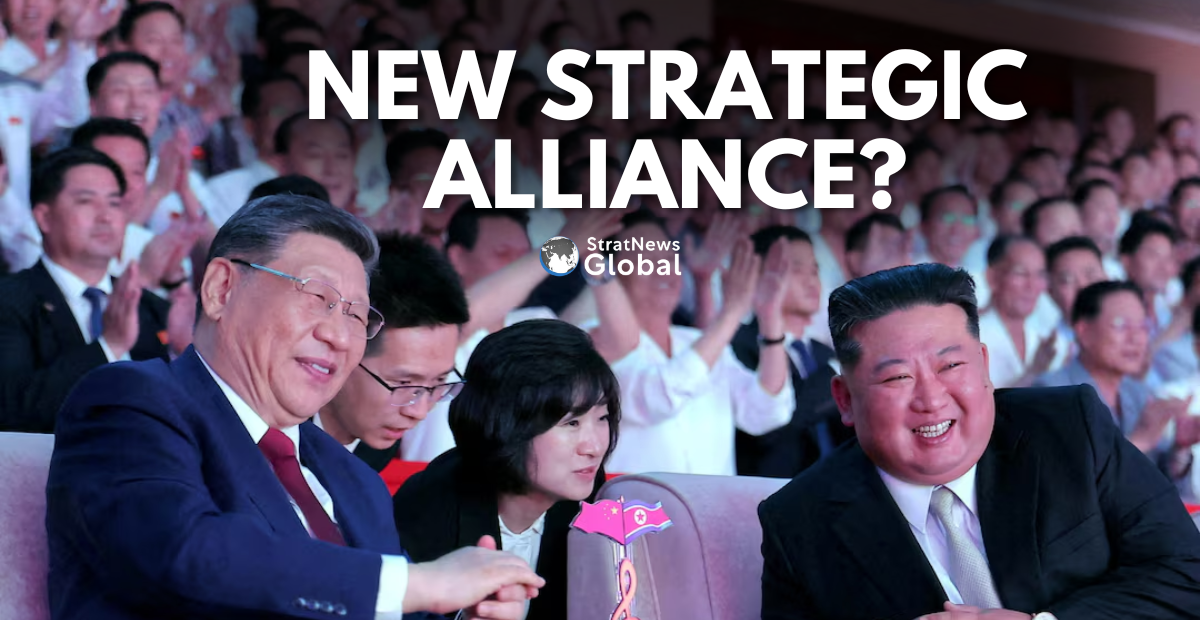
China and North Korea are celebrating the 65th anniversary of a friendship treaty, but relations between the two countries remain complicated.

Chinese leaders often describe Beijing’s relationship with North Korea as close “as lips and teeth”, but as warm as bilateral ties appear, this is a relationship underscored above all by strategic necessity.
On July 11, 1961, then Chinese Premier Zhou Enlai and North Korean leader Kim Il Sung signed the Treaty of Friendship, Cooperation and Mutual Assistance in Beijing. Sixty-five years later, the treaty remains in force, containing a mutual defence clause committing either side to assist the other if one comes under armed attack. It is China’s only formal military alliance, underlining the treaty’s importance, but much has changed since it was signed.
A sign of the continued importance of this treaty came this week, with a three-day visit by North Korea Premier Pak Thae Song to Beijing to celebrate the friendship treaty.
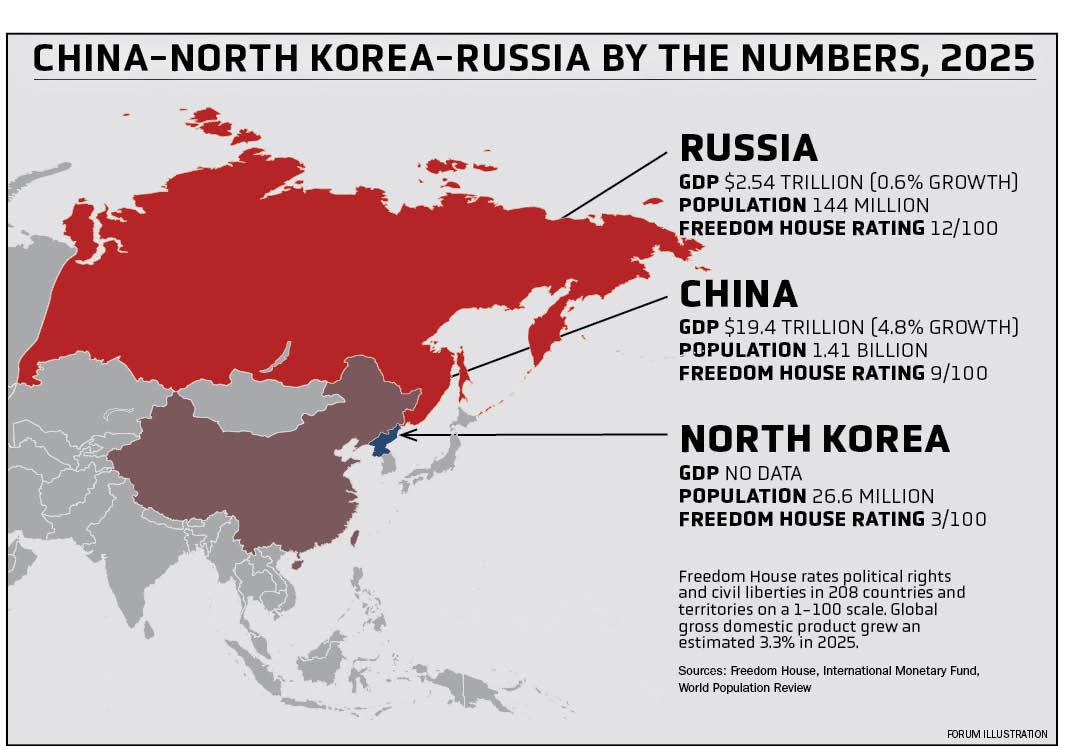
But during the past 65 years, China has transformed itself from an impoverished revolutionary state into the world’s second-largest economy, while North Korea remains isolated and heavily sanctioned.
Yet their alliance has survived the Cold War, China’s economic opening to the world, the collapse of the Soviet Union and decades of tension over Pyongyang’s nuclear weapons programme.
Why has it lasted through these? Neither side can afford to let it fail.
China wants stability
The China-North Korea relationship was forged during the Korean War, when United States-led forces advanced towards China’s border in 1950, and Beijing sent hundreds of thousands of troops into North Korea.
Their ideological values broadly align. Both are socialist one-party states deeply suspicious of Western power, and both oppose the presence of American troops on the Korean Peninsula. Both accuse Washington of using alliances, sanctions and military pressure to contain countries that refuse to accept its authority. But shared ideology only goes so far, with China embracing foreign investment, private enterprise and global trade.
Beijing increasingly portrays itself as a reliable international partner and leader of the Global South, while North Korea has largely shut itself off from the world. Beijing prizes predictability whereas Pyongyang often uses instability to gain attention, leverage or concessions.
Beijing also doesn’t want war, as this would disrupt trade in the region and potentially create a nuclear crisis on China’s doorstep.
This explains China’s sometimes contradictory position – in the past it has supported United Nations sanctions against North Korea’s nuclear and ballistic missile programmes, while opposing measures it believes could destabilise the government. It also continues to provide a vital economic lifeline to Pyongyang as its biggest trading partner. China wants the North Korean regime contained and healthy, not cornered or desperate.
North Korea wants options
For decades, China was North Korea’s main diplomatic partner and protector, but at the same time, Pyongyang does not want to depend entirely on Beijing.
Its growing relationship with Moscow has changed the balance, with North Korea and Russia in 2024 signing a comprehensive strategic partnership treaty, including a mutual defence provision. Since then, military and political cooperation between the two countries has substantially deepened.
For North Korea leader Kim Jong Un, Russia provides another powerful partner, more room to manoeuvre and potentially access to military technology, energy resources and hard currency. For Beijing, this is both useful and uncomfortable.
Russia can reduce the economic burden of supporting North Korea and strengthen a broader front against US influence. But closer military ties between Moscow and Pyongyang could also embolden Kim’s nuclear ambitions and create more instability in Northeast Asia – a region it considers its back yard. Crucially, China does not want to lose its influence over the North Korean government to Russia.
But the regional security situation is also pulling Beijing and Pyongyang closer, particularly as the US strengthens its military cooperation with South Korea and Japan, and the three countries regularly conduct joint exercises and share intelligence.

Tokyo is also increasing defence spending, much to the chagrin of China due to traditional fears about an expansionist Japan. Meanwhile, South Korea continues to host tens of thousands of American troops, which China sees as part of a US-led effort to contain it. North Korea sees these acts as preparations for war.
While China and North Korea’s threat perceptions are not identical, they do overlap, and because of this Beijing has focused on demonstrating a strong unified front with Pyongyang, even as it expands its ties elsewhere.
Necessity, not sentiment
This alliance is unlikely to look the same over the next 65 years. North Korea seems to be growing more confident by strengthening its relationship with Moscow and taking a less conciliatory approach to both South Korea and the US.
China is more powerful globally, but also has more to lose from instability on the Korean Peninsula.
That changing dynamic has become increasingly visible. In the past, Beijing publicly expressed frustration over North Korea’s nuclear and missile tests, while calling on Pyongyang to return to dialogue. More recently, however, China’s criticism has become muted.
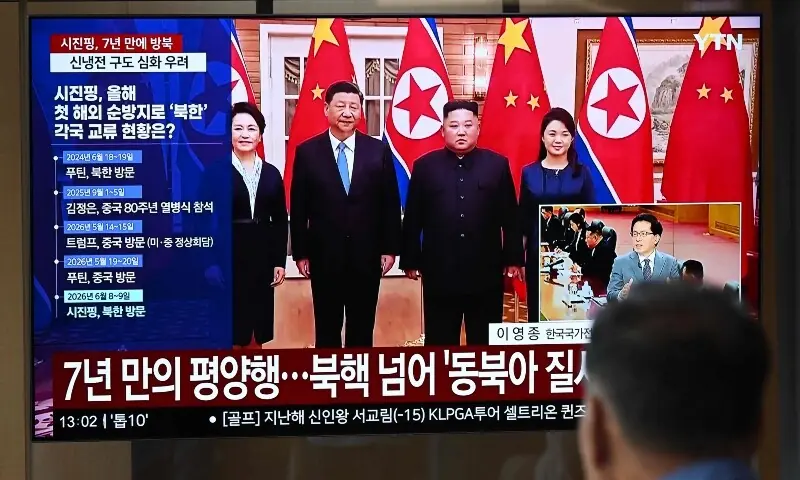
On his recent visit to Pyongyang, Xi Jinping did not mention nuclear weapons at all. Beijing appears increasingly reluctant to push Kim further into Vladimir Putin’s arms through criticising his weapons programme.
As China continues to build its diplomatic influence and pushes to reshape the world order into one where the US and its allies are less dominant, it must strike a delicate balance – stand alongside North Korea in opposing what it sees as Western hegemony, but distance itself from the very behaviours that make Pyongyang a pariah state.

- Previous Kim Jong-un “Exponential strengthening of nuclear force, vast plan finalized”
- Next Indonesia’s anti-graft prosecutor was himself a corrupted guy: police seized 74kg of gold bars and $20m cash in various currencies
You may also like...



Random news





About us
Our Newly established Center for study of Asian Affairs has
branches in Indonesia, Malaysia and Singapore, as well as freelances in some other countries.
For inquires, please contact: newsofasia.info@yahoo.com Mr.Mohd Zarif - Secretary of the Center and administer of the web-site www.newsofasia.net
Polls
 Loading ...