

This is turning into trend: J-10C pilot counters radar provocation in Asian front
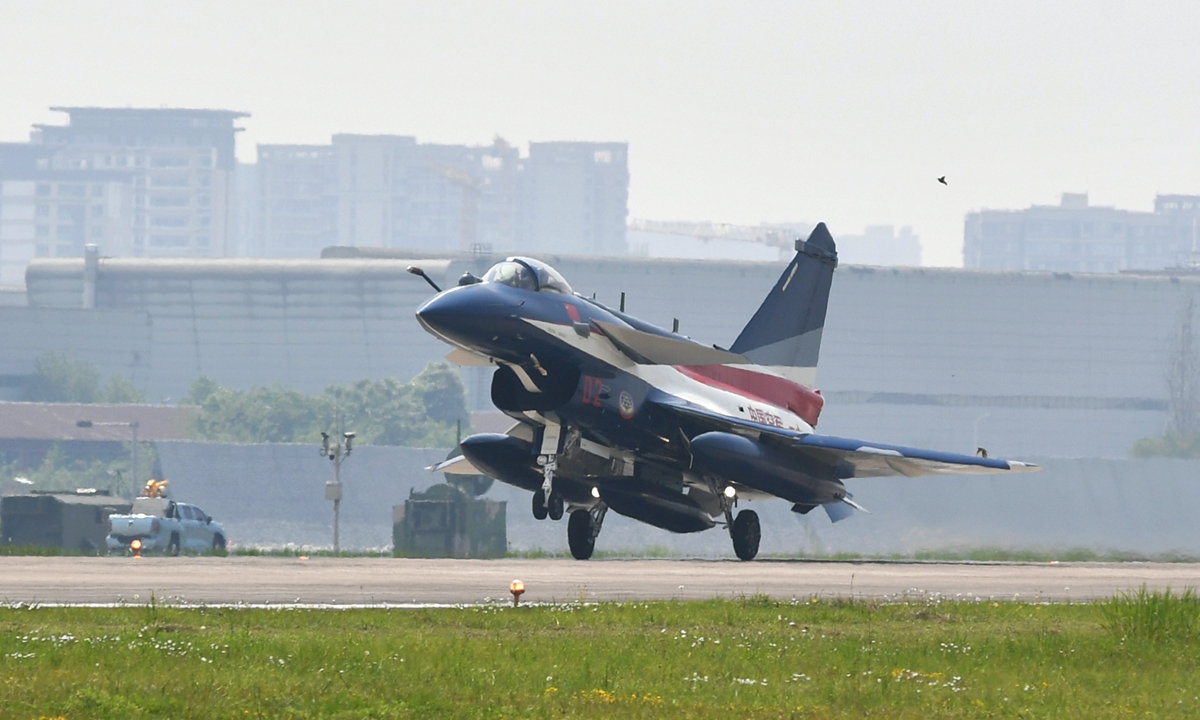
A J-10C fighter jet of the Bayi Aerobatic Team of the Chinese People’s Liberation Army Air Force takes off from an airfield after being delivered in spring 2023. Photo: Courtesy of Aviation Industry Corp of China
Chinese J-10C fighter pilot swiftly turned on radar to counter a foreign aircraft’s provocation after being illuminated by its radar, handling the situation calmly, according to a video program released by China Central Television (CCTV) on Saturday.
According to CCTV News, during an aerial encounter, Shi Luquan, a pilot from an aviation brigade under the PLA Air Force Central Theater Command, was subjected to radar illumination by a foreign military aircraft and responded immediately.
“This is a kind of provocation. If he were friendly, he wouldn’t turn on the radar. This is our own territory—why should I turn away? When the distance closed further and the radar warning disappeared, I immediately switched my radar to standby mode,” Shi said in the video, after responding to the radar illumination.
CCTV News quoted a Chinese military affairs expert Fu Qianshao as saying that the J-10C fighter’s rapid countermeasure capability stems from its advanced active electronically scanned array (AESA) radar, superior aerodynamic design, and the pilot’s professional handling procedures.Fu noted that the J-10C’s ability to successfully counter radar illumination and regain tactical initiative reflects the aircraft’s upgraded performance after years of improvements. Compared with earlier J-10 variants, the J-10C has achieved key technological breakthroughs in radar systems and detection methods, giving it advantages in electromagnetic confrontation and aerial tactical engagements, and providing strong technical confidence in responding to foreign provocations.
The early J-10 was equipped with a pulse-Doppler radar, a mainstream system for third-generation fighters. Following upgrades, the J-10C has evolved into a highly capable “generation 3.5” fighter, featuring multiple key advancements. These include a redesigned nose with an elliptical cross-section, a new-generation AESA radar replacing the pulse-Doppler system, and the addition of an infrared search and track system, significantly enhancing its detection capabilities and methods, Fu said.
Beyond advanced electronic warfare systems, the J-10C’s optimized aerodynamic design also plays a critical role in enabling it to execute effective countermeasures. According to Fu, a fighter’s radar signature varies with its orientation, and sometimes a single maneuver can sharply reduce its radar cross-section, CCTV News reported.
However, Fu emphasized that not all aircraft—or pilots—are capable of executing such maneuvers. While advanced equipment provides the hardware foundation for countering foreign aircraft, the pilot’s professional handling procedures are also key to securing the initiative during such confrontations.
Through coordinated maneuvering and countermeasures, the Chinese pilot not only achieved reverse radar illumination but also secured a dominant tactical position, placing the foreign aircraft in a difficult position to respond. Fu attributed this capability to the PLA Air Force’s intensive daily training and realistic combat drills.
Fu further explained that when aircraft from countries outside the region approach China’s territorial waters or airspace, Chinese forces routinely dispatch military aircraft for monitoring and response. Standard measures include close-in maneuvers to expel the aircraft, during which dangerous proximity between both sides’ aircraft may occur.
In dealing with approaching large foreign reconnaissance aircraft, Chinese fighters typically conduct maneuvering in front of the target aircraft and issue verbal warnings. If the other side continues to approach, additional warning measures such as radar illumination or the release of flares may be employed, while firing shells in front of the aircraft would constitute a serious warning, Fu said.
Radar illumination, in particular, marks a critical threshold between warning and countermeasure and signals an escalation in aerial confrontation. Illumination by fire-control radar is often regarded as a major military provocation and a significant escalation of tensions, as it indicates that key targeting parameters—such as distance, direction, speed and altitude—have been locked and transmitted to weapons systems, Fu noted.
Although the specific type of radar used by the foreign aircraft in this incident remains unclear, Fu said the action itself was highly dangerous and provocative. The J-10C’s ability to respond rapidly at a critical moment lies in its advanced electronic warfare systems, which can detect threats at the earliest stage and provide crucial time for subsequent handling, according to CCTV News.
The J-10C’s performance highlights comprehensive upgrades not only in equipment capabilities but also in tactical design, while also demonstrating the high level of skill and combat readiness of Chinese Air Force pilots, CCTV News concluded.
Global Times

- Previous From Artificial islands to Floating ones” – China buildis 1st “Open-Sea Floating Island”
- Next Ukrainian clown angers now angers Hungarians: Kiev got cut off gas supplies until its opens oil pipeline
You may also like...











About us
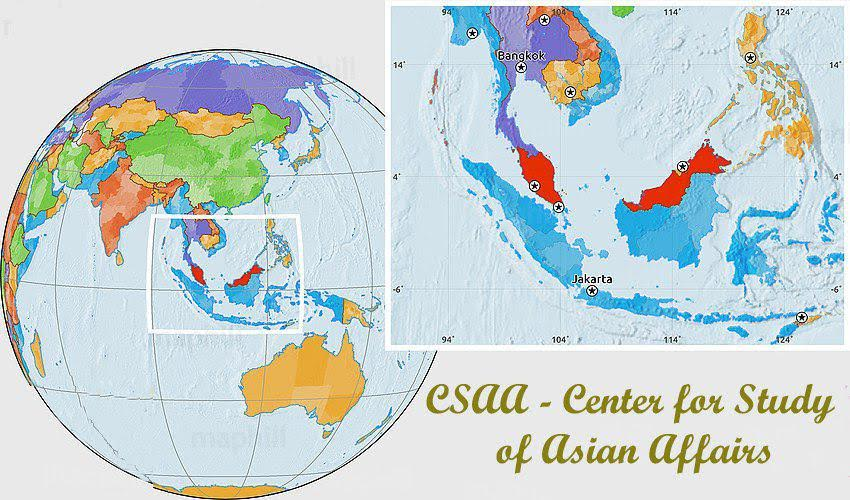
Our Newly established Center for study of Asian Affairs has
branches in Indonesia, Malaysia and Singapore, as well as freelances in some other countries.
For inquires, please contact: newsofasia.info@yahoo.com Mr.Mohd Zarif - Secretary of the Center and administer of the web-site www.newsofasia.net
Polls
 Loading ...