

India is pissed off with US upgrade of Pakistani F-16 fleet
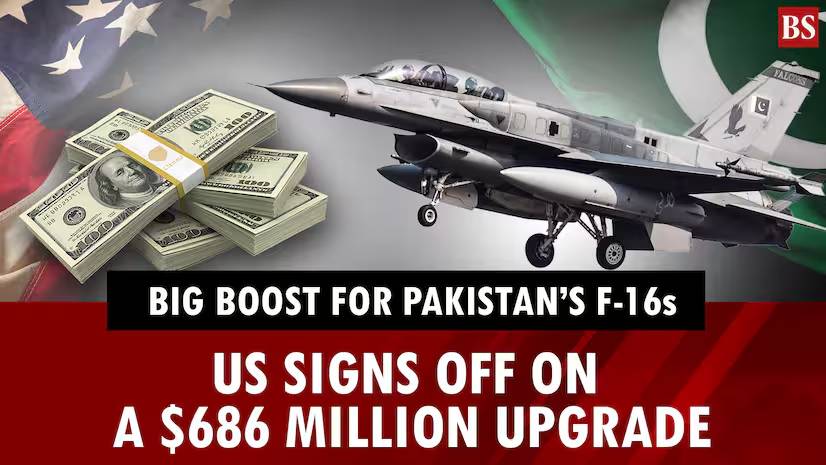
Although the package does not include nuclear weapons, analysts say that it could boost Pakistan’s nuclear strike capabilities against India
Washington’s decision to upgrade Pakistan‘s F-16 fighter jets has drawn accusations of double standards from critics in India, who question why the United States is strengthening a nuclear-armed ally while waging war against Iran over its nuclear programme.
Although the US$686 million military modernisation package does not include nuclear weapons, analysts say that improvements to the fighter jets’ navigation, communications and survivability could boost Pakistan’s existing nuclear strike capabilities against India.
Indian Defence Minister Rajnath Singh reportedly raised concerns about the F-16 programme with US Secretary of War Pete Hegseth on the sidelines of the Asean Defence Ministers’ Meeting in Cebu, Philippines, late last month.
Do you have questions about the biggest topics and trends from around the world? Get the answers with SCMP Knowledge, our new platform of curated content with explainers, FAQs, analyses and infographics brought to you by our award-winning team.
The package, approved by the US Defence Security Cooperation Agency (DSCA) last December, will upgrade Pakistan’s avionics, cryptographic systems and related support, extending the operational life of the country’s roughly 70 F-16 jets to 2040.
“The upgrade does not hand Pakistan a new nuclear bomb, but it meaningfully extends and modernises the very platforms that US intelligence has long assessed as part of Pakistan’s nuclear ‘delivery options’,” said Srinivaasan Balakrishnan, an analyst with New Delhi-based think tank Indic Researchers Forum.
“India sees a clear double standard. While the United States has applied intense pressure on Iran over a nuclear programme that has not yet produced a weapon, it is simultaneously sustaining and upgrading a Pakistani F-16 fleet that American agencies themselves have long viewed as nuclear capable and that is primarily oriented against India.”
The criticism comes despite growing defence ties between India and the US, highlighted by an upgraded 2025 Framework for the US-India Major Defence Partnership and several joint military exercises.
Delhi has also ordered or received approval to purchase key US military equipment, including Javelin anti-tank missiles, GE F404 aircraft engines, Apache helicopters and C-130J Hercules transport aircraft.
No change in balance
Washington has defended the upgrade package as a means of maintaining counterterrorism cooperation with Pakistan, rather than shifting the regional military balance.
In its notification to Congress last December, the DSCA said the upgrades would help Pakistan maintain its ability to operate alongside US forces in counterterrorism missions, extend the aircraft’s service life and address flight safety concerns.
“The proposed sale of this equipment and support will not alter the basic military balance in the region,” the agency said.
Nevertheless, the decision has prompted questions among Indian analysts about Washington’s differing approaches towards Iran and Pakistan.
“The contrast is stark: one country is punished for seeking a capability, another, a long-standing nuclear power with a history of proliferation concerns, receives life extension upgrades for its delivery aircraft,” Balakrishnan said.
According to Balakrishnan, India’s defence minister is believed to have conveyed this concern directly to US officials, and has warned that sensitive technology could leak to “third parties”.
India consistently accuses Pakistan of supporting, financing and easing cross-border terrorism, a charge Islamabad denies.
A central element of the talks between Singh and Hegseth reportedly was regional security and the fight against cross-border terrorism.
Last year in May, India launched a military campaign called Operation Sindoor involving precision air strikes and missile operations against nine alleged terrorist camps in Pakistan and Pakistan-administered Jammu and Kashmir. The action was a direct response to a terrorist attack in Pahalgam in April that killed 26 civilians.
Indian Air Force and government officials said Pakistan deployed its combat assets, including F-16s, during the 88-hour conflict and suffered losses. Pakistan has denied losing any aircraft and its military claimed that it relied primarily on Chinese-made jets such as J-10Cs and JF-17s.
The relationship between India and Pakistan has remained deeply strained since the military clash.
Looming threat
The US package would sharply improve the F-16 jets’ survivability, situational awareness and precision navigation, Balakrishnan said.
“In practical terms, it keeps a dual capable fleet combat-ready and harder to intercept, thus strengthening Pakistan’s air-delivered nuclear option against India even if the warheads themselves remain unchanged,” he said.
He pointed out that US assessments since the early 1990s had concluded that Pakistan had adapted F-16s to carry nuclear weapons.
Retired Indian Air Force air marshal Gurcharan Singh Bedi said the package fleet did not include new nuclear weapons or dedicated nuclear-delivery equipment “so, it will not by itself significantly raise Pakistan’s nuclear-bomb delivery capability”.
“However, better survivability, situational awareness and jam-resistant communications could make any existing aircraft-based nuclear delivery option more credible in a crisis,” he added.
India, which has a full range of nuclear weapons from missiles to fighter aircraft and submarines, officially maintains a No First Use nuclear policy, meaning it commits not to be the first to initiate a nuclear strike in a conflict.
The issue has highlighted the need for India to accelerate a programme for self-reliance in weapons manufacturing as well as building robust defence systems, according to the experts.
“India should strengthen layered air defence, long-range surveillance, electronic warfare and fighter and missile superiority, especially against F-16-launched stand-off weapons while expanding its own assured second-strike capability,” Bedi said.

You may also like...





Random news












About us
Our Newly established Center for study of Asian Affairs has
branches in Indonesia, Malaysia and Singapore, as well as freelances in some other countries.
For inquires, please contact: newsofasia.info@yahoo.com Mr.Mohd Zarif - Secretary of the Center and administer of the web-site www.newsofasia.net
Polls
 Loading ...