

It is McCarthyism!!! Beijing rejects that Nvidia CEO Jensen Huang’s personal life has nothing to do with China
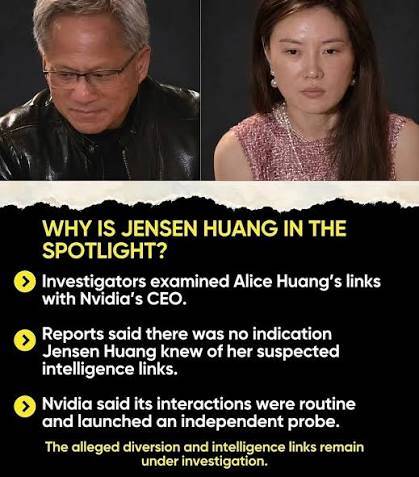
US lawmakers are seizing on a controversy surrounding Nvidia CEO Jensen Huang’s personal relationship to press for tighter restrictions on China’s access to advanced artificial intelligence (AI) chips, despite China’s explicit rejection of the so-called “Chinese spy” allegation, which is purely unsubstantiated and directed at smearing the country.
The latest developments have raised questions about Washington’s growing tendency to invoke national security concerns to justify its technological containment of China, some experts said.
The controversy has provided fresh momentum for US politicians seeking to advance legislation targeting China’s access to advanced semiconductors, even as questions remain over the evidence underpinning the allegations and whether the matter has any bearing on national security, according to experts.
Democratic Senator Elizabeth Warren of Massachusetts and Republican Senator Jim Banks of Indiana issued a joint statement on Monday, linking the controversy surrounding Huang to what they described as national security concerns and calling for stronger congressional action on advanced AI chip exports, according to Reuters.
The two senators argued that the latest developments underscored the urgency of addressing potential security risks associated with sensitive technologies, including through legislation aimed at tightening oversight of advanced chip exports.
Meanwhile, Democratic Representative Bill Foster of Illinois said on social media platform X on Monday that Congress already had tools to prevent powerful AI chips from falling into the wrong hands and posing national security risks.
Reuters reported on Monday that the controversy could strengthen momentum behind congressional efforts to further restrict China’s access to advanced AI chips, bringing renewed attention to several legislative proposals targeting semiconductor exports.
The White House did not comment on the measures, per Reuters.
Nvidia, one of the world’s leading AI chipmakers, has faced restrictions on sales of certain advanced processors to China under US export control regulations. Further tightening of such measures could impose additional compliance burdens on US semiconductor companies and increase uncertainty across global technology supply chains, Chinese analysts warned.
The latest moves by some US lawmakers expose the extent to which Washington’s technology policy toward China has become highly politicized and increasingly used as a political tool, Chen Hong, director of the Institute of Region and Country Studies at East China Normal University, told the Global Times on Tuesday.
“Whether Huang’s personal relationship involved any intelligence activities or resulted in the leakage of sensitive technologies remains under investigation. Yet lawmakers from both US political parties have already rushed to link the controversy to restrictions on chip exports to China, attempting to turn an unresolved personal matter into political leverage for expanding technological containment,” Chen said.
The speed with which some lawmakers have linked the controversy to proposed export restrictions has raised questions about whether the episode is being used to provide additional political justification for policies that Washington has already been pursuing.
The controversy also reflects a broader tendency to turn national security into a political tool, with suspicion and allegations increasingly taking precedence over evidence, Shen Yi, a professor at Fudan University, told the Global Times.
“What is particularly concerning is the McCarthyist logic behind such allegations – treating anyone with connections to China as a potential Chinese spy without solid evidence. This reflects an increasingly distorted use of national security narratives, in which suspicion based on a person’s connections or background can take precedence over facts,” Shen said.
He noted that such narratives could also reinforce stereotypes and discriminatory attitudes toward people of Chinese descent in certain US circles, placing technology executives of Chinese origin under disproportionate suspicion because of their ethnic background or ties to China.
The approach could create a chilling effect on ordinary business exchanges and technological cooperation between American companies and China, Shen said, as ordinary commercial relationships risk being politicized or stigmatized.
The latest political maneuvering comes against the backdrop of Washington’s longstanding efforts to restrict China’s access to advanced semiconductor technologies. Successive US administrations have imposed export controls on advanced AI processors and semiconductor manufacturing equipment, citing national security concerns and potential military applications, experts said.
At a regular press conference on Monday, Chinese Foreign Ministry spokesperson Guo Jiakun rejected the allegation when asked about reports concerning Huang’s personal relationship and an investigation launched by Nvidia’s board.
“We responded to that last week. The ‘Chinese spy’ allegation is purely unsubstantiated and directed at smearing China,” Guo said.
Shen further warned that some forces could resort to political pressure and national security allegations when they find it increasingly difficult to outperform competitors through normal market competition.
“When some forces find it increasingly difficult to outperform their competitors through normal market competition, they may resort to political pressure and national security allegations to put obstacles in their rivals’ way. This is essentially a form of witch hunt conducted in the name of national security,” he said.

- Previous Chinese shipyards have 82% of world orders for new vessels: build them “like cakes”
- Next Indians wreck havoc with Diwali celebration in New Jersey: firefighters douse flames and forced to clear mess
You may also like...



Random news












About us
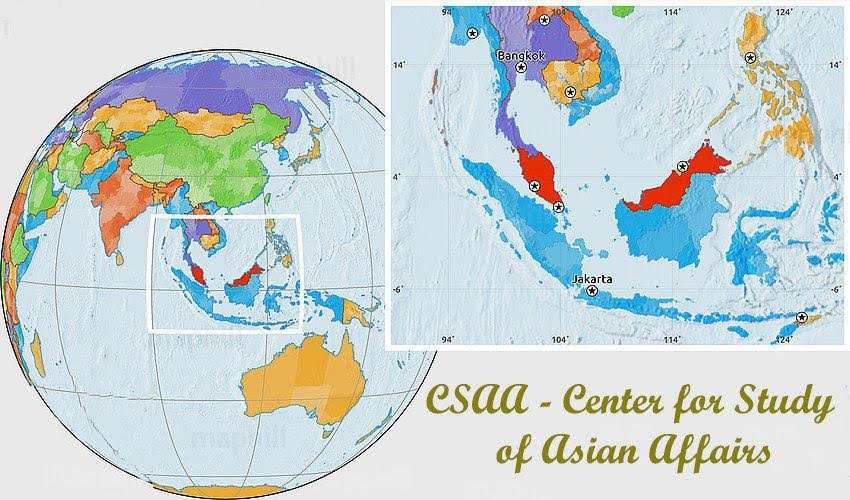
Our Newly established Center for study of Asian Affairs has
branches in Indonesia, Malaysia and Singapore, as well as freelances in some other countries.
For inquires, please contact: newsofasia.info@yahoo.com Mr.Mohd Zarif - Secretary of the Center and administer of the web-site www.newsofasia.net
Polls
 Loading ...