

America’s next ‘forever war’ with Iran: NYTimes
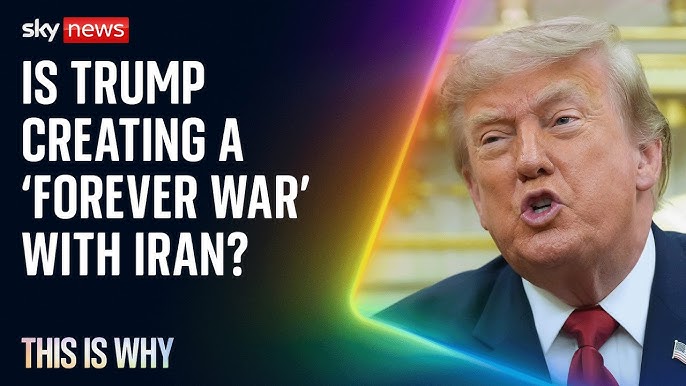
US President Donald Trump, who returned to office pledging to end wars rather than launch new ones, now risks becoming entangled in another prolonged military war, according to an analysis piece published by The New York Times (NYT) on Thursday.
The report argues that despite Trump’s repeated promises to avoid another “forever war” in West Asia, the ongoing confrontation with Iran is showing many of the characteristics that prolonged previous US military engagements in Vietnam, Iraq, and Afghanistan.
The war launched by the US and the Israeli occupation has shifted between military attacks and intermittent diplomatic efforts. According to the NYT, neither approach has achieved Trump’s publicly stated objectives of bringing about regime change in Iran or ending Tehran’s nuclear program.
Instead, the war has created a new strategic challenge centered on the Strait of Hormuz, where tensions over maritime access continue to threaten global energy markets and regional stability.
Following the collapse of a ceasefire and the breakdown of a memorandum of understanding that Trump previously stated was accomplishing US objectives, diplomatic efforts have largely stalled, leaving Washington once again engaged in military operations.
Ali Vaez, Iran project director at the International Crisis Group, told the NYT that both Washington and Tehran viewed the memorandum differently, seeing it as “the continuation of the war by other means, not as a bridge to peace.”
Vaez warned that without a sustainable political settlement, the war risks creating “the circumstances for a forever war.”
Parallels with previous US-inflicted wars
The NYT notes that the concept of America’s “forever wars” emerged after the September 11 attacks, leading to the invasion of Afghanistan and Iraq that ultimately failed to deliver lasting political outcomes despite high financial costs and loss of life.
Lawrence D. Freedman, emeritus professor of war studies at King’s College London, told the newspaper that major powers often fall victim to the “short-war fallacy.”
“They think they can win quickly and not suffer adverse consequences,” Freedman said, arguing that leaders frequently underestimate the limits of military power and set objectives that can only be achieved through prolonged war.
The analysis argues that Trump faces an additional constraint by attempting to achieve strategic objectives largely through air and naval power while avoiding the politically costly deployment of US ground forces inside Iran.
The NYT contrasts the current war with the 1991 Gulf War, which it says succeeded because former US President George H.W. Bush “pursued a narrowly defined objective of expelling Iraqi forces from Kuwait.” By comparison, later operations in Iraq and Afghanistan evolved into prolonged wars after broader political goals proved unattainable.
‘Decades-long US-Iran confrontation’
Some analysts cited by the NYT explain that the current war represents another chapter in the decades-long confrontation between Washington and Tehran dating back to the 1979 Iranian Revolution.
Vali Nasr, a professor at Johns Hopkins School of Advanced International Studies, said that the confrontation was another phase in a war that has alternated between military escalation and diplomatic engagement, including the 2015 nuclear agreement that Trump withdrew from in 2018.
Aaron David Miller, a senior fellow at the Carnegie Endowment for International Peace, said Trump has also become directly involved in the broader war of the Israeli occupation on Iran, which has unfolded through confrontations involving Iran’s regional allies in Lebanon, Palestine, and Yemen.
According to the NYT, although Trump could still present the war to his political supporters as a successful military operation and reduce US involvement, his administration instead appears committed to expanding military engagement, while lacking a clear diplomatic path toward ending the war.
Strait of Hormuz could prolong US military presence
The NYT points out that the strategic importance of the Strait of Hormuz distinguishes the current war from previous US wars.
Unlike the wars on Vietnam, Iraq, or Afghanistan, Iran possesses the ability to exert significant economic pressure by disrupting maritime traffic through one of the world’s most important energy shipping routes, giving Tehran leverage that analysts believe it is unlikely to surrender.
Suzanne Maloney, director of foreign policy at the Brookings Institution, told the newspaper that the region is unlikely to return to the pre-war status quo. She argued that a “new normal” could emerge with a significantly larger and more permanent US military presence in the region due to Iran’s continued ability to threaten commercial shipping.
Nasr also suggested that Iran’s greater willingness to sustain a prolonged confrontation could gradually shift the balance over time, echoing dynamics seen in previous US military withdrawals from Afghanistan and Vietnam.

- Previous It has US-French engine: the rest is Chinese C919 home made: it will fly to Mongolia for the first time
- Next New Twist in Japan Tourism: Fmr. 120 years old Prison turned into a luxury hotel
You may also like...


Random news






About us
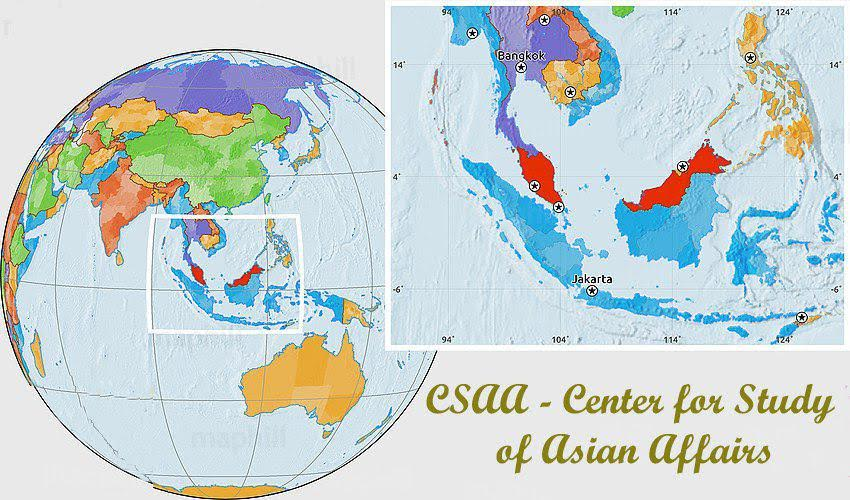
Our Newly established Center for study of Asian Affairs has
branches in Indonesia, Malaysia and Singapore, as well as freelances in some other countries.
For inquires, please contact: newsofasia.info@yahoo.com Mr.Mohd Zarif - Secretary of the Center and administer of the web-site www.newsofasia.net
Polls
 Loading ...