

New Twist in Japan Tourism: Fmr. 120 years old Prison turned into a luxury hotel
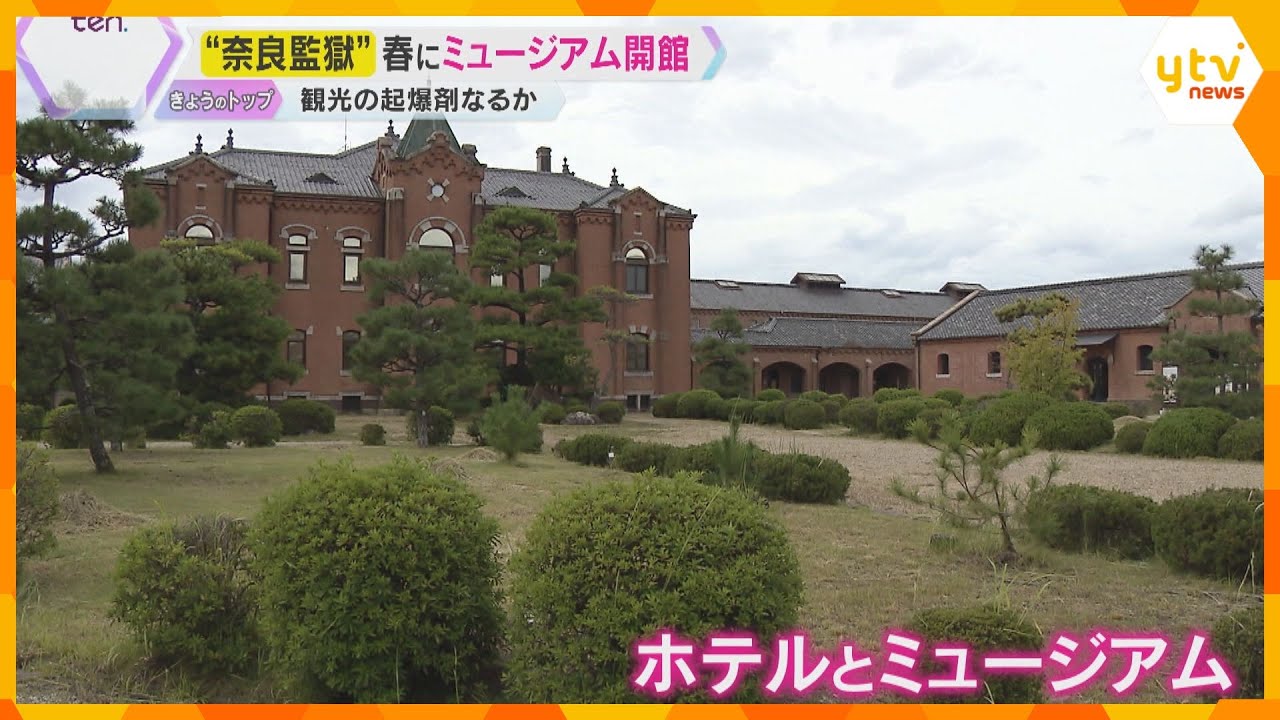
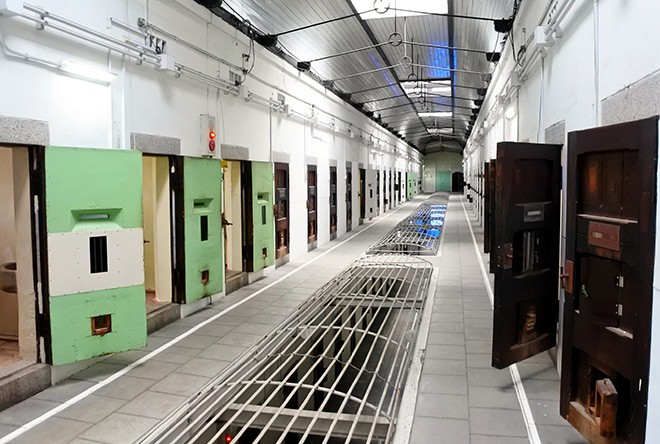
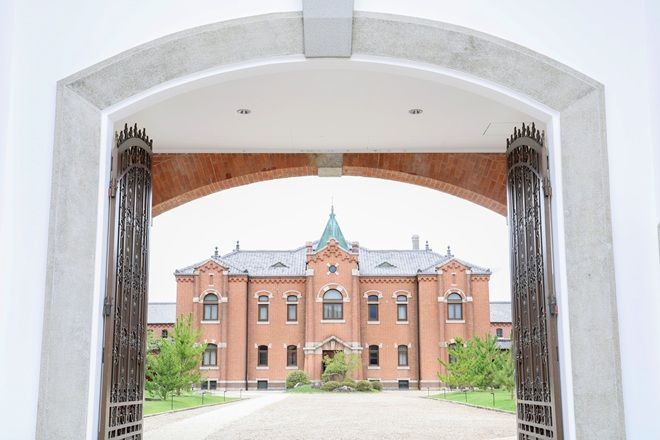 The Hoshinoya Nara Prison in Nara on June 23 (Toshiyuki Hayashi)
NARA—The historic Nara Prison from the Meiji Era (1868-1912) has at last reopened as a luxury hotel whose proceeds will go toward its conservation.
The state-designated important cultural property began accepting guests on June 25 as the Hoshinoya Nara Prison under Hoshino Resorts Inc. in the Hannyajicho district after a two-year delay.
Bringing one of the “five prestigious prisons of the Meiji Era” into the present demanded a tricky balancing act of deciding how much to alter, surprising its lead whose work will hopefully spell future boons for the site and wider city.
DIGNIFIED INTERIOR
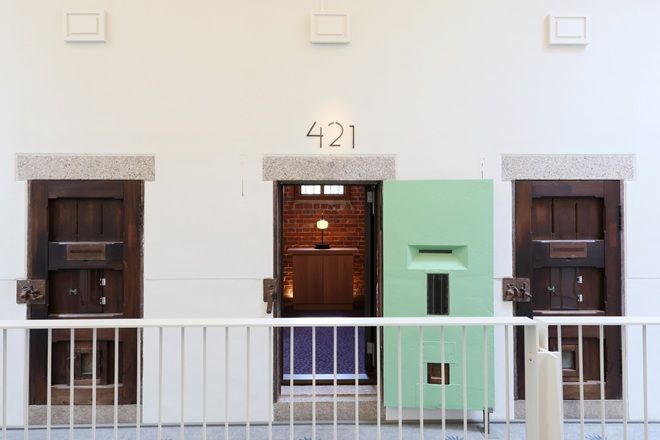
The imposing two-story facility of red brick has five cell blocks radiating outward from a central guard tower. Four blocks were converted into suites that around 60 reporters toured during a June 23 preview event.
Rather than evoking the oppressive atmosphere typical of a prison, the hotel now boasts an air of dignity similar to that of other ordinary historic structures.
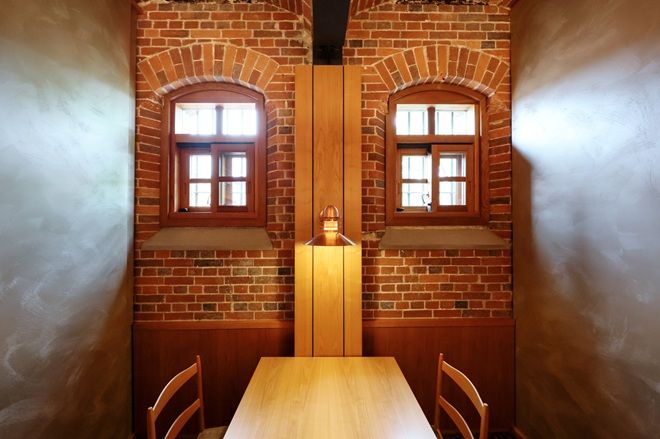
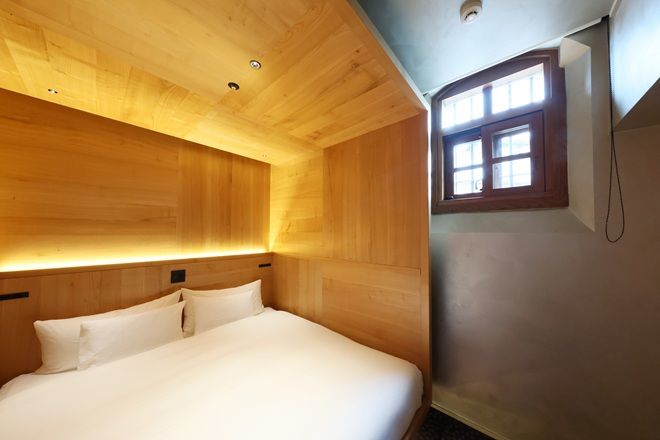
Repainted plaster walls, exposed brickwork, modern wooden furnishings and ambient lighting—alongside all sorts of other trimmings—seen on the tour lend to the harmony between time-tested solidity and a touch of splendor.
Each of the 48 suites is a combination of 10 individual cells that independently measured 5 square meters. The elongated spaces now feature a bedroom, living room and bathroom.
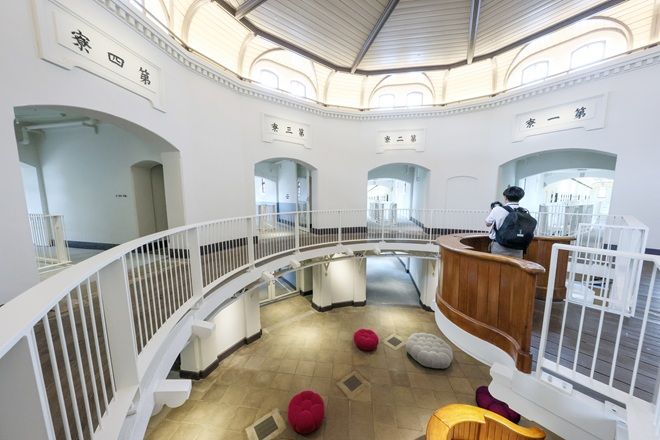
The main lounge is a remodeled assembly hall that sits north of the guard tower on the second floor, which once functioned as the principal guard station.
Its new design with an arched ceiling stretching 9.4 meters high is closer to a church with a relaxing ambience.
The room rate, including tax and service charges, comes to 147,000 yen ($910) per night. Meals are not included as part of the price.
The remaining cell block and the annex are now home to the Nara Prison Museum, shedding light on the lives of inmates and other aspects of the institution’s history.
FOUNDATION WELL-PRESERVED
Shinobu Matsushima, general manager of the Architectural Design Department Yasui at Architects & Engineers Inc.‛s Tokyo office, oversaw the prison‛s transformation.
Choosing to preserve as much as possible followed his astonishment at how well-designed it was.
“No serious structural deterioration was reported,” recalled Matsushima, 48. “I became similarly aware that its seismic resistance was far better than I had initially anticipated.”
Matsushima posited that despite the complex radial layout of the cell blocks for inmates, the structural strength could be attributed to the relatively small number of windows and openings as well as numerous walls separating the solitary cells.
The former Nara Prison is among five prominent jails from the Meiji Era. Its counterparts are in Kanazawa, Ishikawa Prefecture, and the prefectures of Chiba, Nagasaki and Kagoshima.
The one in Nara was completed in 1908 after no less than seven years of construction. Prisoners were among the laborers mobilized for its construction.
It was designed by architect Keijiro Yamashita (1868-1931), who worked on numerous courthouses and prison buildings for the then Justice Ministry.
In visiting and exploring prisons in Europe and North America, Yamashita finally decided to create a brick structure with solitary cells in Nara, taking into account the material’s excellent fire resistance.
One purpose behind the prison was to demonstrate Japan’s increasing national strength to Western powers. Developing its prison system was a way to highlight the country’s transformation from a feudal society into a modern state governed by the rule of law.
Passing through its impressive front gate crowned with domes reveals a succession of Romanesque-style brick buildings adorned with a series of small arches known as Lombard bands.
The Nara Prison would hold a spate of people arrested under the notorious Peace Preservation Law from the early Showa Era (1926-1989) through the duration of World War II; the law was meant to suppress political dissent.
It transitioned into Nara Juvenile Prison after the conflict, ultimately closing in 2017.
Matsushima learning there was scant damage to the facility despite its age was followed by another surprise.
The brickwork was exceptional compared to other Meiji Era structures he had previously renovated.
“I was stunned by how adeptly and precisely the bricks could have been laid in accordance with a hand-drawn blueprint,” he said.
Iron reinforcements observed within the walls and roofing framework were among the clues indicating there was an attempt to fully double down on structural strength using all the technologies and techniques available at the time.
With all this in mind, Matsushima paid due consideration to seismic reinforcement while trying not to alter the structure more than necessary; steel frames were used to support the walls in this attempt to retain the building’s “original form” as much as possible.
Similarly, Matsushima said they refrained from relying on high-pressure water jets to remove plaster from the brick walls. Brushes were instead used to gently scrape it away to prevent damage to the structure.
TO RENOVATE, OR NOT TO RENOVATE
This was not the end of the unexpected discoveries.
Excavating beneath the former prison’s grounds revealed the remains of a chimney that did not exist in the original blueprint. Comparing historical records led to the hypothesis that the chimney was related to the relocation of an underground boiler room, done in response to the growing prisoner population.
What was left of the chimney was reburied to preserve it in the end, underscoring how difficult it is to determine where to draw the line between renovation and preservation.
Matsushima emphasized that he constantly agonized over this issue throughout the project.
Another find occurred during work on the infirmary wing that once accommodated sick inmates.
A 13-by-15-centimeter wooden tablet was unearthed from dirt covered in roof tiles. On the tablet were hand-inked characters.
The message begins with the formal phrase, “I have respectfully read your honored letter,” suggesting that the author had received and checked a prior missive. It is likely an apology for a prolonged period of silence or lack of correspondence.
Why the tablet was left there remains unknown and no clues have emerged on the identities of the sender or the recipient.
BALLOONING MAINTENANCE COSTS
The rebirth of the former prison into a luxury hotel is part of a broader movement to preserve Japan’s historical architecture.
“The number of state-recognized cultural properties is growing on a continual basis,” said Kiyoshi Tatsumi, an arts management professor at Osaka Seikei University’s Faculty of Art. “Buildings, in particular, entail substantial costs for not only overhaul but also persistent maintenance.”
Based on the culture and tourism promotion law that went into effect in 2020, the Agency for Cultural Affairs is amping up its efforts to promote a model where cultural properties earn and allocate revenue toward preservation for future generations.
“How to preserve cultural value while simultaneously ensuring profitability poses an urgent challenge, as (building) conservation expenditures are ballooning,” Tatsumi said.
The Nara project is considered a model of balancing preservation with business sustainability under the recent legislation.
After the juvenile prison closed in 2017, the central government decided to transfer its operational rights to a private operator while retaining ownership.
Hoshino Resorts, headquartered in Karuizawa, Nagano Prefecture, was commissioned to refurbish and manage the former prison, something the professor believes can eventually lead to more widespread benefits.
“If more than one initiative to fully harness cultural assets, including temples in Nara Prefecture, proceeds successfully, synergistic effects between them can be expected, such as regional economic revitalization via horizontal cooperation among them,” he said.
(This article was written by Makoto Ito and Tsuyoshi Kanda.)

- Previous America’s next ‘forever war’ with Iran: NYTimes
- Next Which country of Central Asia own debt how much and to whom!?
You may also like...




Random news






About us
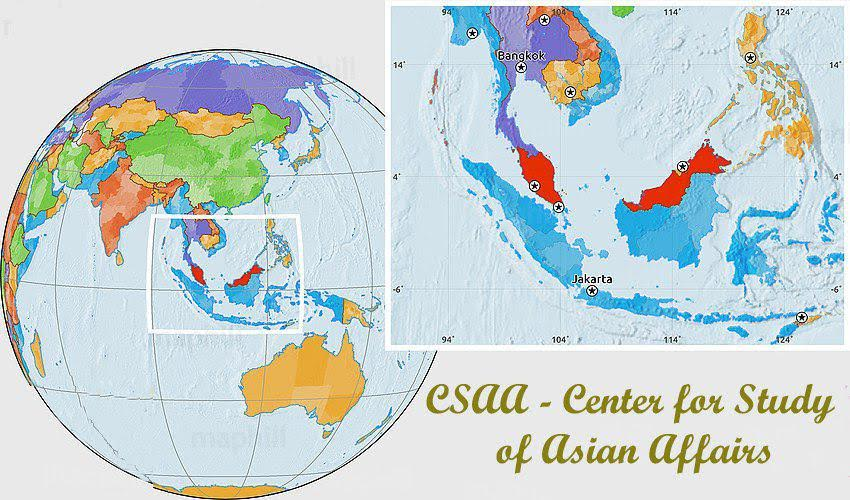
Our Newly established Center for study of Asian Affairs has
branches in Indonesia, Malaysia and Singapore, as well as freelances in some other countries.
For inquires, please contact: newsofasia.info@yahoo.com Mr.Mohd Zarif - Secretary of the Center and administer of the web-site www.newsofasia.net
Polls
 Loading ...