

Crisis in Bollywood or political nationalistic Hindu narrative is set on: Telugu film needs to be pan-India


Telugu cinema taught the rest of India what its content was capable of. Then, rather suddenly, it began struggling to get its own audience to look up from their television screens. That is the strange journey of Telugu cinema in the post-Baahubali (2015) era.
Films once identified mainly with their home market became some of the biggest theatrical spectacles in the country. Baahubali (2015), RRR (2022), Pushpa: The Rise (2021), Hanuman (2024), and Kalki 2898 AD (2024) gave the industry unprecedented national and global recognition. But that same push towards scale brought a new set of problems.

Films grew bigger, costlier, and more complicated, while release dates became increasingly unreliable. Schedules stretched, technical teams came under strain, and audiences grew comfortable simply waiting for films to arrive on streaming. The pan-India wave did not create all of this by itself, but it did change what a major Telugu film was expected to be, and the industry is still working through the consequences.
The question now is not whether Telugu cinema should have gone pan-India. That was an extraordinary opportunity, and one the industry has used well. The more interesting question is whether it is finally correcting what went wrong along the way, and there are reasons to think it might be.
When ambition outgrows the system
The first problem was never ambition. It was that the industry never built a system capable of supporting the speed at which it was growing, rather like a city that expands without the roads or drainage to support its new population.

At a pre-release event of the recent Telugu film Epic – First Semester (2026), actor Vijay Deverakonda described the current phase of the industry as “Operation TFI”: filmmakers attempting bigger stories, producers backing them, and actors investing fully. But he also named the problem plainly: “The cinema has gone super ahead with our ambition, but we are lagging behind in technical teams, setups, and efficiency.”

That may be the most useful explanation for the industry’s current predicament. Telugu cinema is not dreaming too big; its production ecosystem has simply not expanded at the same speed as its ambition, now that a film has to appeal across several languages, carry bigger action, and survive far more complicated post-production than before.
The release calendar makes the case on its own. Naming a major Telugu film from the past two years that reached theatres without delays or last-minute hurdles is nearly as hard as finding a multiplex-goer who checks the price of popcorn and still says “why not.” High-profile projects like Devara: Part 1 (2024), Pushpa 2: The Rule (2024), Game Changer (2025), Vishwambhara (2025), They Call Him OG (2025), The Raja Saab (2025), The Paradise (2026), Dragon(2027) and Swayambhu (2026) have all seen similar disruption.
The situation around Nani‘s The Paradise is revealing. Nani admitted the film took longer than expected, citing unforeseen circumstances and planning failures alike: “I think we mixed up on time management,” he said. High budgets, heavy VFX, and weak planning are the usual culprits, and a postponement is never just a new date on a poster—it means ballooning costs and mounting pressure on producers.
The industry has become very good at announcing enormous films, but it is still learning how to finish them. Producer Sudhakar Cherukuri put it more simply: “I am used to it. I am used to taking this pressure.” Actors point to infrastructure, producers point to delivery delays, but everyone is circling the same problem.
What happened to the Telugu audience
As Telugu cinema grew more visible across India, its relationship with its original audience grew more complicated. The pan-India race pushed filmmakers to think beyond Telugu-speaking markets: bigger worlds, bigger stars, and bigger spectacle. Finding a release that felt small, simple, or rooted in everyday life became genuinely difficult. Meanwhile, audiences had an easier option—they could just wait for streaming.
Pan-India cinema alone didn’t drive people from theatres. The pandemic accelerated the shift to streaming, ticket prices climbed, and audiences everywhere grew choosier about what deserved a cinema outing. But the industry’s fixation on scale played its part, and not every Telugu film felt like an unmissable theatrical event anymore. That is precisely why the shrinking middle tier matters.
The last-minute culture
The markets are sorted, the stars are sorted, and the budgets are sorted, but somehow, the calendar is still winning. Telugu cinema has developed a curious habit of rushing towards a release date and then postponing the film in the final weeks. At times, films are still being shot when the release is already around the corner.
The Paradise is a clear example of how this last-minute culture persists. Nani revealed that the film would not have a traditional trailer because several teams were still working on the footage and the schedule was extremely tight. Producer Naga Vamsi offered a similar glimpse during the Epic – First Semester pre-release event, noting that his hero and director still hadn’t delivered the overseas copy on time.
The industry knows the cracks
It would be premature to say Telugu cinema has fixed everything. Prabhas’ Fauzi, a period war drama directed by Hanu Raghavapudi, is among the major productions whose release has reportedly shifted amid an extended production process. Large-scale films continue to operate under enormous time pressure.
However, there is a difference between an industry that keeps facing a problem and one that refuses to acknowledge it. Vijay is talking openly about efficiency, Nani about planning failures, and producers about delivery pressure. Speaking at the Epic event, Vijay touched upon the physical toll behind this new scale: “I am coming from the sets of Ranabaali (2026), the release is nearing, I have to go onto the set quickly and finish the film. That is why you are seeing these injuries, because everyone is going all out at such levels. We are just levelling up.”
At the same time, filmmakers are looking beyond the biggest possible spectacle. More rooted stories and mid-budget films are beginning to find space again. Recent releases such as Maa Inti Bangaram, Irumudi, Vishwanath & Sons, Chennai Love Story, and Lenin are reminders that Telugu cinema does not have to exist only at the extremes. They prove that a viable space still exists between a small film and a massive event movie.
Pan-India isn’t the formula
Nani’s thinking about The Paradise offers perhaps the most encouraging sign yet: “We don’t want to call it a pan-India film, it’s an overused word. With Telugu, we are releasing in other languages, and Telugu is our prime target.”
That distinction could matter a great deal for the next phase. The industry has already proved a Telugu film can travel; it does not need every film designed around travelling. A film can be Telugu at its core, succeed with its home audience first, and find audiences elsewhere simply because the content connects. That takes real pressure off the idea that every major production must be a national event.
Perhaps that is the course correction the industry needs: not less ambition, but better calibrated ambition. Better planning, better infrastructure, more efficient production, and room left over for films operating at entirely different scales.
Is Telugu cinema fixing itself?
Not yet. Postponements are still happening, productions are still limping into their final stretch under pressure, and the middle tier still needs protecting. But there is reason for hope. The people making these films seem to understand, finally, where the problems lie and are working towards Operation TFI. The pan-India era taught Telugu cinema how far its films could travel. The next phase will have to teach it something less glamorous but just as important: how to make those films without constantly racing against the clock. Telugu cinema does not need to dream smaller. It needs machinery strong enough for the size of its dreams.

- Previous China: robots build new robot every 10 minutes
- Next Malaysia: Keretapi Sarong unites Malaysians in colours
You may also like...




Random news






About us
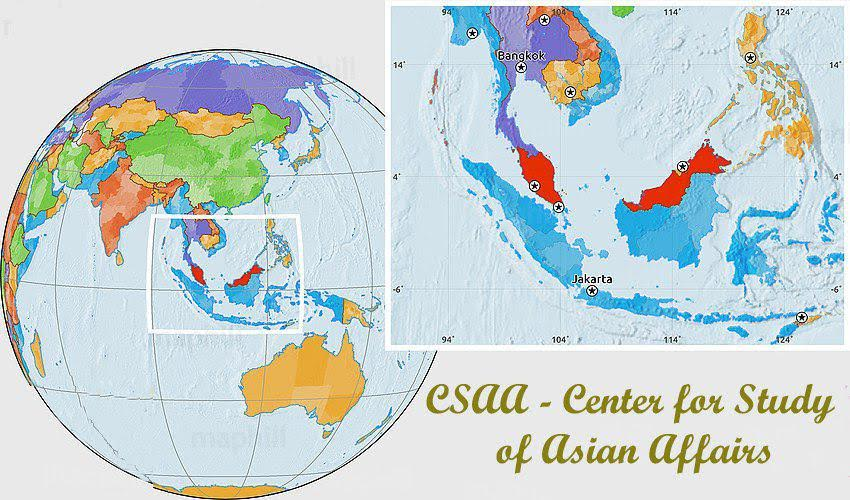
Our Newly established Center for study of Asian Affairs has
branches in Indonesia, Malaysia and Singapore, as well as freelances in some other countries.
For inquires, please contact: newsofasia.info@yahoo.com Mr.Mohd Zarif - Secretary of the Center and administer of the web-site www.newsofasia.net
Polls
 Loading ...