

India is furious: Why Azad Kashmir (Pakistani occupied part of the state) has a president, PM and flag? It’s a Pak marketing gimmick
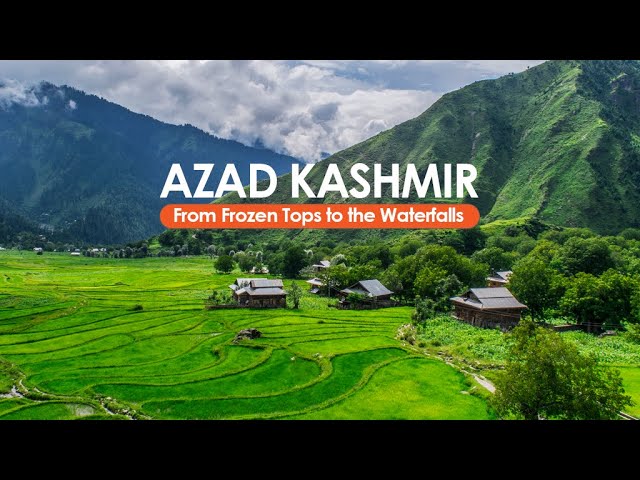
If Pakistan-occupied Kashmir (POK) is controlled by Pakistan, why does it have a separate president, PM and flag? This is Pakistan’s clever tactic, to fake autonomy while it keeps oppressing and killing Kashmiris in POK. Explained in details here.
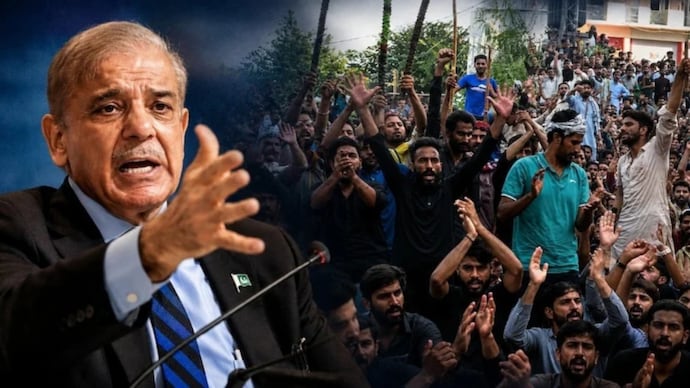
As the Pakistani establishment’s crackdown in Pakistan-occupied Kashmir (POK) led to a bloodbath, an aspect of the illegally occupied territory has come under scrutiny. Why does POK, despite being under Islamabad’s illegal control, have a Prime Minister, President, an Assembly and a flag? The existence of these institutions might surprise some. We will also tell you that they are all a sham.
With POK reeling from one of its deadliest bouts of unrest in recent years and fears of a major face-off between the Joint Awami Action Committee (JAAC) and Pakistan‘s establishment looming, the territory’s Prime Minister, Faisal Mumtaz Rathore, has called for a return to dialogue.
Even as he did so, over 1.5 lakh people participated in fresh protests days after the crackdown. Sedition cases have been slapped. Bounty of PKR 10 million has been placed.
These developments have drawn attention to a fundamental question. If POK is controlled by Pakistan, why does it look like a quasi-or-semi-independent state? Why does it have leaders with state-like titles? Why did Islamabad create a political system that resembles, at least superficially, the special constitutional arrangement that Jammu and Kashmir once enjoyed under Article 370?
Although Pakistan calls it “Azad Jammu and Kashmir”, for many there is little that is truly “azad” about it. Pakistan has long presented the territory’s status, its Prime Minister, President, Assembly and flag as symbols of autonomy. Instead, they have been instruments for masking Islamabad’s dominance over POK’s political and economic affairs. The protests in POK which led to the killing of at least 27 individuals, have brought the contradiction into focus.
This arrangement for POK was often compared to India’s now-scrapped Article 370, the constitutional provision that granted special status to Jammu and Kashmir before its abrogation in 2019. But while both regions had their own constitutions, flags and elected governments, POK’s autonomy has been criticised as largely symbolic.
The reason behind such an arrangement in POK is tied to the history of Kashmir, Pakistan’s diplomatic calculations, and a governance model that experts say grants a namesake autonomy in Muzaffarabad, while keeping real power in Rawalpindi and Islamabad. These two are the power centres of military and civilian establishments, respectively.
The administrative arrangement in the POK has gained relevance amid the agitation led by the JAAC in the illegally-occupied region. The group, which has for years led a movement against inflation, electricity tariffs and governance issues, has also challenged the political structure through which Pakistan administers the POK. This is the second time since POK saw massive protests and bloodshed.
Now, even as POK’s Prime Minister appeals for dialogue with the agitators, it is worth asking a fundamental question. If POK is “Azad” as Pakistan claims, why are its people repeatedly protesting against Islamabad’s interference in their affairs?
To understand that, we must go back to August 1947.
WHY DOES POK HAVE A PRIME MINISTER?
When British India was partitioned, the princely state of Jammu and Kashmir had not yet decided whether to join India or Pakistan. In October that year, mujahiddeen backed by Pakistan invaded the state. Facing the advance, Maharaja Hari Singh dialled up New Delhi and signed the Instrument of Accession with India. This legally acceded the princely state of Jammu and Kashmir to the Union of India. Indian troops were subsequently airlifted into Srinagar and the first India-Pakistan war followed.
The 1947 conflict ended with a ceasefire, leaving Pakistan in control of a portion of the erstwhile princely state.
India maintains that the entire territory of the former princely state, including POK, Gilgit Baltistan and the Shaksgam Valley are an integral part of India and says that Pakistan remains in illegal occupation of these regions.
Unlike Punjab, Sindh or Balochistan, POK can never formally be a province of Pakistan. This was not an accident, it was a calculated move.
While India considers the entire Jammu and Kashmir its integral part, Pakistan accorded “disputed” status to the area it came to occupy illegally in a cunning move. Islamabad wanted to preserve its claim on the entire Jammu and Kashmir so that the broader “Kashmir dispute” remained unresolved.
“Pakistan perceives that if it had declared Gilgit Baltistan, PoK or both, which are only a part of the territories of J&K, as legitimate provinces of Pakistan, it would weaken its case for the entire J&K and lead to legal complications,” Lt Gen Syed Ata Hasnain wrote in a piece in Rediff in 2020.
Islamabad has used these “autonomous-like” instruments to mask its control and dominance over POK’s political and economic affairs. It has done worse to Gilgit Baltistan.
It created a separate administrative and political structure for the territory, allowing it to project POK as a self-governing entity “that did not join India”. Pakistan’s federal government and the establishment continue to exercise significant influence over it. Over time, the POK got its own President, Prime Minister, Assembly and judiciary.
In 1949, the Karachi Agreement transferred key subjects such as defence, foreign affairs and communications to Pakistan. POK gradually got some of its own institutions, culminating in the 1974 Interim Constitution Act, which established the offices of the President and Prime Minister, a Legislative Assembly, and a judicial system. While these institutions gave POK the appearance of autonomy, Islamabad retained decisive control over many political, administrative and financial matters.
IS POK’s AUTONOMY SIMILAR TO INDIA’s NOW-SCRAPPED ARTICLE 370?
This arrangement in POK has often drawn comparisons with Article 370, the constitutional provision that granted special status to Jammu and Kashmir before its abrogation in 2019. Before August 2019, Jammu and Kashmir had its own constitution, its own flag and substantial autonomy in several areas of governance.
The similarities, however, are largely superficial.
Article 370 was embedded in the Constitution of India and flowed from the terms under which Jammu and Kashmir acceded to India. POK’s administrative structure emerged from Pakistan’s calculated decision to administer it as a separate disputed territory, without formally integrating it into the federation. It is a mechanism for governing the disputed territory while keeping the scope open to have a particular diplomatic position.
On paper, POK appears to enjoy considerable autonomy. The territory elects its legislators. It has a Prime Minister who heads the government and a President who is the titular head. It has courts, ministries and a bureaucracy. It also has a separate flag that is flown alongside Pakistan’s national flag.
Administrative power in POK is largely exercised by officials sent from Islamabad. These officials run much of the administration.
HOW MUCH POWER DO POK’S INSTITUTIONS REALLY HAVE?
And, that’s why there’s a gap between what appears and what’s real. This has long been a source of controversy and what the JAAC is looking to fix with its 38-point agenda. And the Pakistani establishment is hell-bent on opposing the same changes.
Islamabad has retained control over many of the most important levers of power. Historically, much of this influence flowed through the Kashmir Council, a powerful institution headed by Pakistan’s Prime Minister.
Although constitutional “reforms” in the 1970s altered parts of that framework, many contend that real authority over key matters continued to rest with Pakistan’s federal government and the establishment.
The Federal government’s dominance over POK has resurfaced. Several demands raised by the JAAC go beyond being economic in nature. The JAAC, therefore, has political representation and decision-making authority as important as demands.
One of the most contentious concerns the JAAC has highlighted, relates to the POK’s reserved Assembly seats for refugees.
These seats are elected not by residents living in POK but by people living in different parts of Pakistan who trace their origins to the erstwhile princely state of Jammu and Kashmir. According to a report in Karachi-based newspaper, The Express Tribune, their population is estimated at around 4.34 lakhs.
Experts and the JAAC argue that these seats give Islamabad and Rawalpindi an additional lever of influence over electoral outcomes in the territory. In a way, the POK Assembly, the Prime Minister and, of course, the President are all extensions of Islamabad’s writ under Pakistan’s hybrid regime. In effect, those living outside the territory were given political weight equal to those living inside it.
They all operate within the system of Pakistan’s civil-military establishment of Islamabad and Rawalpindi.
POK LEADERS, OFFICIALS HAVE TO TAKE AN OATH OF LOYALTY. WHY IS IT CONTROVERSIAL?
Another big flashpoint is the mandatory oath imposed on politicians, judges and constitutional office-bearers in POK. Unlike Pakistan’s provinces, where no such test to prove “ideological allegiance” exists, public representatives in POK must affirm support for Kashmir’s accession to Pakistan. It’s a requirement that bars alternative political views from entering the mainstream.
As a result, many in POK feel that their elected representatives lack the authority to address local concerns without approval from Islamabad. This disconnect is at the heart of the present unrest.
These facts, along with the grievances and protests, and the Pakistani establishment’s fierce crackdown have highlighted an irony, and it’s hard to miss. Pakistan’s creation of POK’s separate political structure has been used to demonstrate that the territory was distinct from Pakistan proper. But, decades later, the framework meant to symbolise autonomy has triggered the questions about how much autonomy actually exists in POK.
Even as the protests subside and POK’s PM pushes for dialogue, the contradiction remains. The territory might have a Prime Minister, a President and a flag, but Kashmiris know who is really governing POK, and the institutions are only a marketing gimmick.

- Previous Malaysian King strips Isa Samad of ‘Tan Sri’ title over 3 mln RM bribe
- Next Bollywood invents stories out of nowhere: Peddi vs Janhvi and Ram Charan?
You may also like...
Random news

About us
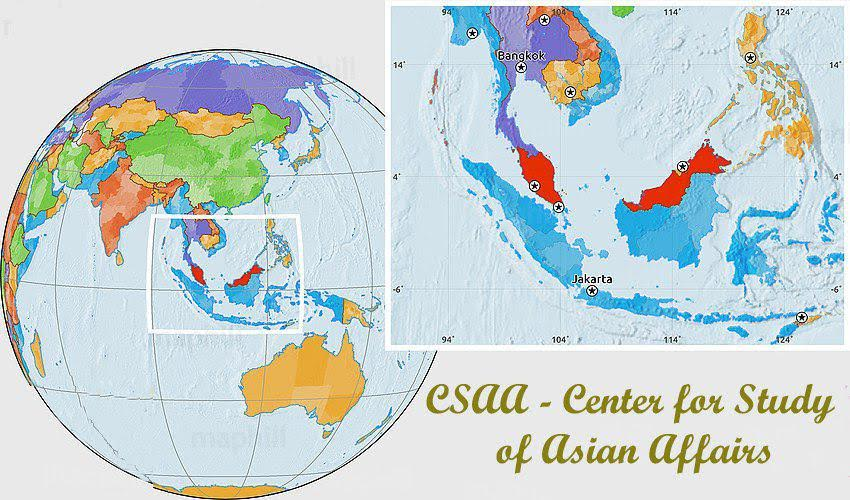
Our Newly established Center for study of Asian Affairs has
branches in Indonesia, Malaysia and Singapore, as well as freelances in some other countries.
For inquires, please contact: newsofasia.info@yahoo.com Mr.Mohd Zarif - Secretary of the Center and administer of the web-site www.newsofasia.net
Polls
 Loading ...