

India’s Quiet Return To Afghanistan As Pakistan-Taliban Ties Fray
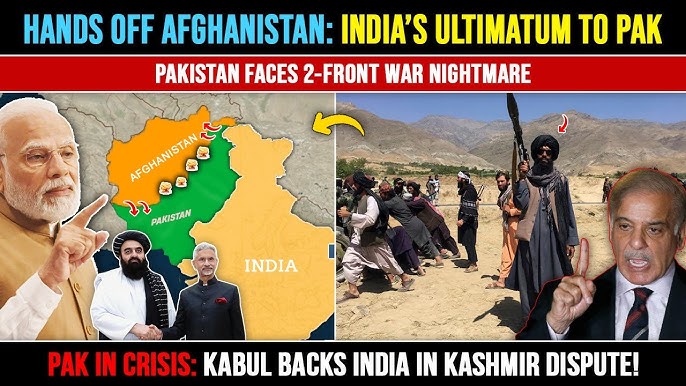

Instead of moving closer together, Pakistan and the Taliban government have experienced growing friction over security concerns, border management, and regional diplomacy. As relations between Kabul and Islamabad have become increasingly strained, India has quietly expanded its engagement with Afghanistan, creating a new dynamic that is reshaping regional calculations.
The result is not a dramatic geopolitical realignment, but a gradual shift in which India has regained relevance in a country where its future role once appeared uncertain.
From Strategic Expectations to Strategic Friction
One of the defining features of the post-2021 regional landscape has been the deterioration of Pakistan-Taliban relations. Many policymakers expected the Taliban’s return to power to strengthen cooperation between the two sides. Instead, disagreements surrounding the activities of Tehreek-e-Taliban Pakistan (TTP), cross-border security incidents, and border management have become persistent sources of tension.

Pakistan has repeatedly argued that TTP militants continue to operate from Afghan territory and pose a direct threat to its security. Taliban officials have rejected accusations that Afghanistan is responsible for Pakistan’s internal security challenges. The disagreement has periodically escalated into diplomatic confrontations and military action.
Relations reached a particularly difficult phase in October 2025, when tensions intensified following a series of security incidents and renewed accusations regarding militant sanctuaries. Relations reached a particularly difficult phase by February 2026 when Pakistan launched coordinated strikes against targets it identified as TTP and ISIS-K sanctuaries inside Afghanistan. Kabul condemned the operation as a violation of its sovereignty, and the resulting escalation further deepened mistrust between the two governments, underscoring the widening gap in their security priorities and strategic outlooks.
These developments have weakened assumptions that Pakistan would automatically retain privileged influence over Afghan decision-making. More importantly, they have encouraged Taliban leaders to diversify Afghanistan’s external partnerships and reduce dependence on any single regional actor. For Kabul, maintaining relations with a broader range of countries provides diplomatic flexibility at a time of economic hardship, declining foreign assistance, and continued international isolation.
For India, this changing environment has created an opportunity to re-establish influence through engagement rather than confrontation.
India’s Expanding Engagement with Kabul
India’s Afghanistan policy since 2021 has been characterized by caution and pragmatism. While New Delhi has refrained from formally recognizing the Taliban government, it has steadily expanded diplomatic contacts, humanitarian assistance, and development cooperation.
A significant step came in June 2022 when India reopened its technical mission in Kabul after withdrawing diplomatic personnel during the Taliban takeover. Since then, contacts between Indian and Taliban officials have gradually increased. Meetings involving Taliban Foreign Minister Amir Khan Muttaqi and senior Indian representatives have demonstrated a willingness on both sides to maintain dialogue despite political differences.
Humanitarian assistance has played a central role in India’s approach. Since 2021, India has supplied large quantities of wheat, medicines, vaccines, and emergency relief assistance to Afghanistan. New Delhi has also continued supporting selected development initiatives and infrastructure projects that were originally launched during previous Afghan governments.
India’s calculations are driven by several strategic considerations. Maintaining relevance in Afghanistan helps protect long-term investments, preserves access to Central Asia through Iran’s Chabahar Port, and prevents Afghanistan from becoming an arena dominated exclusively by rival powers. New Delhi is also aware that complete disengagement would leave it with limited influence over developments in a country that occupies an important position in the wider regional landscape.
For the Taliban leadership, engagement with India offers practical benefits. Afghanistan continues to face severe economic challenges, limited foreign investment, and declining international assistance. Expanding ties with regional actors such as India provides opportunities for economic cooperation, humanitarian support, and diplomatic diversification.
The growing interaction between New Delhi and Kabul does not necessarily indicate a strategic partnership. It does, however, reflect a shared recognition that engagement serves practical interests on both sides.
Regional Competition and Afghanistan’s Multi-Alignment Strategy
The changing relationship between India and Afghanistan has inevitably attracted attention in Pakistan. Islamabad remains focused on security concerns and continues to view developments inside Afghanistan through that lens. Consequently, India’s growing diplomatic visibility in Kabul is often interpreted within the broader context of regional strategic competition.
Adding another dimension to this evolving landscape is the continued influence of former Afghan President Hamid Karzai. Although he no longer occupies formal office, Karzai remains a respected political figure with extensive international contacts and longstanding ties to India developed during his presidency. His continued engagement with regional and international audiences reflects ongoing debates within Afghanistan regarding sovereignty, security, and the country’s future direction.
China’s role further complicates the picture. Beijing has maintained contacts with the Taliban government, explored economic opportunities, and expressed interest in expanding regional connectivity initiatives, including potential links between Afghanistan and the China-Pakistan Economic Corridor. At the same time, China remains concerned about security risks, extremist groups, and the overall stability of Afghanistan.
The result is that Afghanistan is increasingly engaging multiple regional powers simultaneously rather than aligning closely with any single one of them. India seeks influence through development cooperation and connectivity. China focuses on economic opportunities and stability. Pakistan remains deeply invested in security outcomes along its western border. Russia, Iran, and Gulf states are also pursuing their own interests.
This emerging pattern suggests that Afghanistan may be evolving into a multi-aligned state rather than becoming part of any single regional sphere of influence. For the Taliban, such an approach maximizes diplomatic flexibility and economic opportunities. For neighboring countries, it creates both opportunities and uncertainties.
The future trajectory of these relationships remains uncertain. Pakistan may yet rebuild trust with the Taliban through sustained engagement and security cooperation. India’s influence may expand further, or it may encounter limits imposed by Afghanistan’s complex political realities. China could increase its economic footprint if security conditions improve.
What is already clear, however, is that many of the assumptions that shaped regional thinking in 2021 no longer fully apply. The deterioration of Pakistan-Taliban relations has created diplomatic space that India has used to increase its visibility and engagement in Afghanistan. At the same time, Kabul’s outreach to multiple regional actors suggests a foreign policy that is more diversified than many observers anticipated after the Taliban’s return to power.
Afghanistan is once again becoming an arena of competitive regional diplomacy rather than the sphere of influence of any single power. If current trends continue, New Delhi’s quiet return to Kabul may prove to be one of the most consequential and least anticipated geopolitical developments in South Asia since the Taliban’s return to power.

- Previous The Amu Darya Stress Is a Test for Uzbekistan and Turkmenistan Agriculture
- Next Mongols and Turks to Cooperate in Defense
You may also like...


Random news

About us
Our Newly established Center for study of Asian Affairs has
branches in Indonesia, Malaysia and Singapore, as well as freelances in some other countries.
For inquires, please contact: newsofasia.info@yahoo.com Mr.Mohd Zarif - Secretary of the Center and administer of the web-site www.newsofasia.net
Polls
 Loading ...