

Water Stress of Summer of 2026 to Hit Central Asia
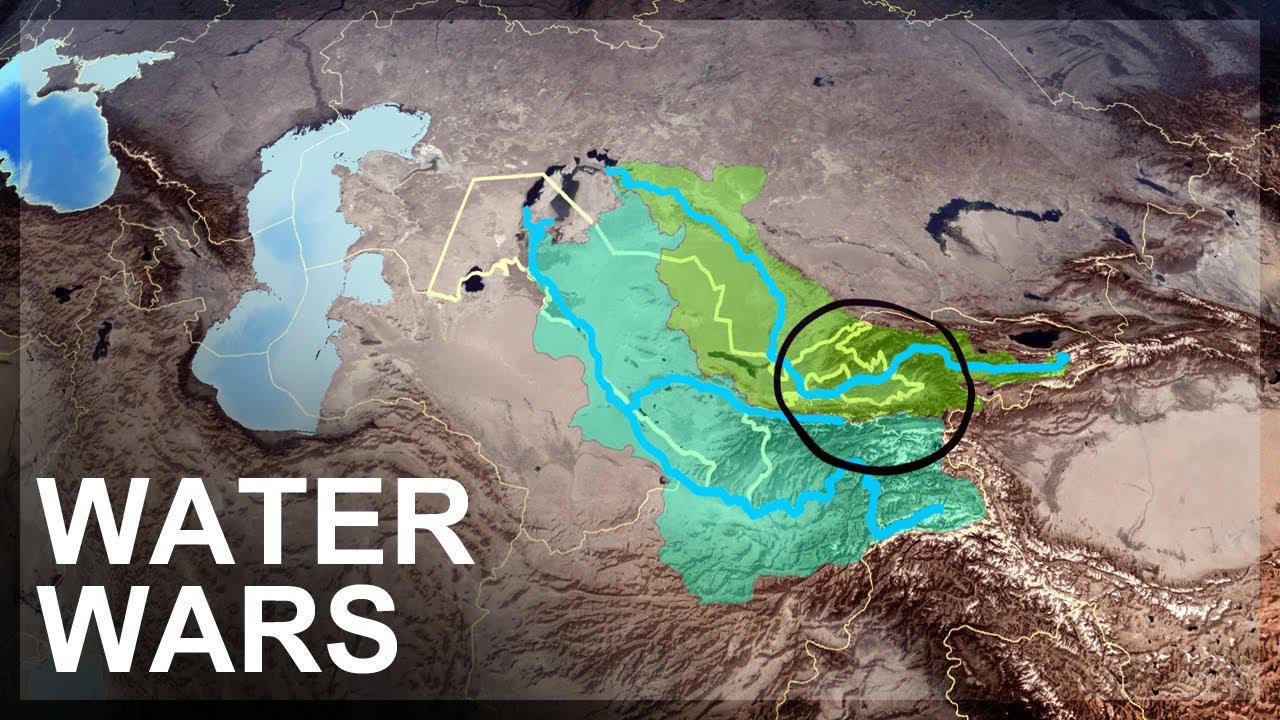


Image: TCA, Stephen M. Bland
The summer of 2026 is projected to be a critical and potentially decisive period for Central Asia in the context of water stress. The region is entering the growing season with significantly lower water reserves in its main river basins, the Amu Darya and Syr Darya, compared to previous years. The combined impact of climate change and rising consumption is expected to exacerbate irrigation shortages, threatening crop yields and food security.
A Region Under Pressure: Water as a Strategic Factor
For Kazakhstan, water is taking on an increasing strategic importance in 2026. The southern regions, Kyzylorda, Turkestan, and Zhambyl, have already entered a phase of persistent low water availability. Estimates suggest that the irrigation deficit could reach up to 1 billion cubic meters.
The situation in the Syr Darya basin remains critical. Inflows are expected to fall 3.2 billion cubic meters below normal, and by the start of the growing season, total water volume may reach only 1-2 billion cubic meters, far below demand. The Shardara Reservoir, a key regional storage facility, is currently at roughly half of its design capacity.
Uzbekistan faces an even more vulnerable position due to its high population density and large agricultural sector. The flow of the Amu Darya is projected to fall to 65% of its historical norm, putting food stability at risk. Tashkent is accelerating investments in canal reconstruction, as water losses during transport reach up to 40%.
Against this backdrop, tensions between upstream and downstream countries could become more pronounced. Kyrgyzstan, acting as the region’s “water tower,” faces a difficult trade-off between energy security and its obligations to downstream neighbors. Low accumulation levels in the Toktogul Reservoir have constrained hydropower generation, leading to winter energy shortages and reduced summer water releases, precisely when Kazakhstan and Uzbekistan require them for irrigation. This cyclical dependency turns each growing season into a complex round of “water-for-electricity” negotiations, with diminishing room for maneuver.
Tajikistan faces a similar situation in the Amu Darya basin. The Nurek Hydropower Plant is operating under strict conservation principles as reservoir levels remain several meters below previous norms. For Dushanbe, the priority remains fulfilling the Rogun project, which, under low-water conditions, raises justified concerns among downstream states. These tensions are compounded by the accelerated melting of Pamir glaciers, which currently increases water flows but poses a long-term risk of severe depletion.
Turkmenistan is also expected to experience acute water stress in 2026. In the Ahal and Mary regions, pasture degradation and limited irrigation are reducing livestock numbers and grain yields. The government is investing in dredging the Karakum Canal and constructing small desalination plants, but these measures only partially offset declining Amu Darya flows.
An additional destabilizing factor is Afghanistan’s Qosh-Tepa Canal project. By summer 2026, its impact on the Amu Darya basin is expected to become physically noticeable. Estimates state that unregulated water withdrawals could reduce downstream flows by 15-25%. Afghanistan’s absence from regional water-sharing agreements creates a legal vacuum that existing mechanisms cannot address.
As a result, Central Asia is approaching a threshold where traditional water management systems, largely reactive and based on Soviet-era quotas, are no longer effective. The creation of a unified water-energy strategy is therefore shifting from an option to a necessity. Without transparent digital monitoring at hydrological stations and the coordinated management of glaciers and reservoirs, the risk of localized water disputes in 2026 could reach its highest level in decades.
The Aral Sea: An Indicator of Crisis
The condition of the Aral Sea remains the clearest indicator of regional water stress. In 2025, the projected inflow to the Aral Sea region was 975 million cubic meters, while actual inflow measured at the Karateren hydropost was only 589 million cubic meters, 386 million cubic meters below projections.
The Northern (Small) Aral Sea, often cited as a partial recovery success, faces a serious test. Despite the Kokaral Dam, critically low Syr Darya inflows, less than 50 m³/s at the peak of the summer, cannot compensate for intense evaporation. By August, some experts expect water levels to fall by 50-70 cm, leading to shoreline retreat and increased salinity, threatening fisheries in Saryshyganak Bay.
The Southern (Large) Aral Sea in Uzbekistan continues its seemingly irreversible decline, fragmenting into hypersaline water bodies. The summer of 2026 is expected to be unusually hot, increasing the likelihood of severe salt storms from the dried seabed, now known as the Aralkum Desert. High-end projections suggest the possibility of 10-12 major dust events capable of transporting toxic salts and pesticide residues hundreds of kilometers, affecting not only Karakalpakstan but also Khorezm and even the foothills of the Tien Shan.
Public health impacts are already severe. The Aral region is experiencing rising rates of eye and respiratory diseases, as well as anemia and cancer. Since the 1960s, coronary heart disease has increased 18-fold, pneumonia 19-fold, and chronic bronchitis 30-fold. Poor drinking water quality has contributed to a 4.2-fold rise in kidney stone disease in rural Karakalpakstan. According to researchers, up to 46.4% of respiratory diseases in children and 38.9% in adults are linked to sulfate air pollution from dust storms.
The main large-scale mitigation measure remains afforestation of the dried seabed. By mid-2026, saxaul and other halophyte plantings in Kazakhstan and Uzbekistan are expected to cover 1.7-2 million hectares. Kazakhstan’s Ministry of Ecology and Natural Resources is also developing a forest nursery on the seabed with an annual capacity of 1.5 million seedlings.
These “green shields” help stabilize sand and salt, but their survival depends on groundwater levels, which are also declining.
Water Diplomacy and “Digital Trust”
At the same time, 2025-2026 has marked a shift toward more pragmatic regional cooperation. Kazakhstan, Kyrgyzstan, and Uzbekistan have signed agreements on water-energy exchange, whereby electricity is supplied in return for increased water releases during the growing season.
Parallel efforts are underway to introduce automated monitoring systems. Kazakhstan and Uzbekistan have begun installing digital measurement points along the Syr Darya to improve transparency and reduce disputes over water allocation.
A key upcoming event is the Regional Ecological Summit (RES), which will take place in Astana from April 22–24. The agenda includes joint programs for the Aral Sea basin, reforms to the International Fund for Saving the Aral Sea (IFAS), sustainable management of transboundary water resources, and the introduction of digital water accounting systems.
Further progress is also expected on President Kassym-Jomart Tokayev’s proposal to establish an International Water Organization within the UN, reflecting the growing importance of water governance amid global warming.
From Crisis to Management
The summer of 2026 may prove to be a turning point for Central Asia. The convergence of drought cycles with infrastructural and institutional weaknesses is making water the region’s primary risk factor.
Addressing this challenge will require a shift from reactive responses to systemic management. Key priorities include transparent allocation mechanisms, digital monitoring, infrastructure modernization, and alignment of long-term environmental and water-energy strategies. Without such measures, water could become not only scarce but a source of broader regional instability.


- Previous Kazakhstan Freezes out cooperation with Iran amid war
- Next Singaporian tycoon wants back $1.27 billion from banks over collapsed Australian firm
You may also like...






Random news





About us
Our Newly established Center for study of Asian Affairs has
branches in Indonesia, Malaysia and Singapore, as well as freelances in some other countries.
For inquires, please contact: newsofasia.info@yahoo.com Mr.Mohd Zarif - Secretary of the Center and administer of the web-site www.newsofasia.net
Polls
 Loading ...