

Beijing portrays its achievements: What US chip blockade brings to China
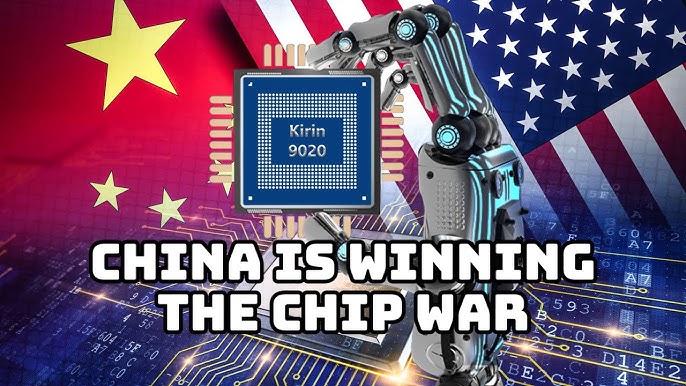
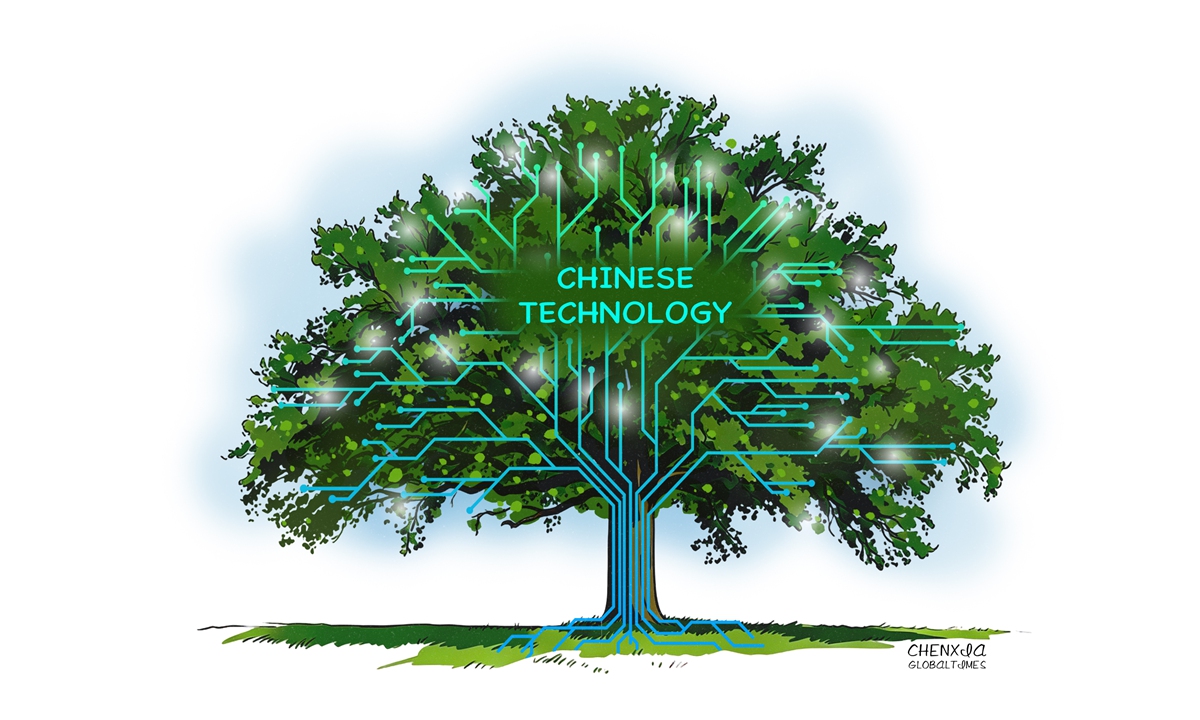
Illustration: Chen Xia/GT
Once again, the US is fortifying its technological walls, this time zeroing in on the foreign subsidiaries of Chinese firms to stop any last drops of advanced AI chips from slipping through. However, reality often refuses to go according to plan and pressure has an uncanny habit of turning into fuel for innovation.
On Sunday, the US Department of Commerce moved to close a potential loophole that may have led companies to export the world’s most advanced chips – like Nvidia’s most sophisticated Blackwell processors – to subsidiaries of Chinese companies located outside China, Reuters reported. According to the report, the unexpected guidance suggests that the US best AI chips may have been making their way to the subsidiaries of Chinese AI firms based in places such as Malaysia despite broader US efforts to starve Chinese firms of semiconductors needed to develop critical AI capabilities.
The new guidance does not change anything for Nvidia, Reuters quoted a company official as suggesting it could not ship the chips because the Commerce Department had clearly imposed a license requirement on Nvidia anyway.
For years, the US strategy has been built on a fantasy: If it could simply choke off China’s access to the most advanced chips, Beijing’s tech engine would eventually stall.

This latest move from the US reflects the exact same logic: It believes the remaining loophole lies with the overseas subsidiaries of Chinese companies. What’s conveniently overlooked is a more awkward truth – if US chips were still able to flood the Chinese market under such stringent restrictions, China would hardly have developed a series of breakthroughs in such a short span of time.
Every fresh round of restrictions ends up proving the same ironic lesson: You can disrupt supply chains, but you can’t put handcuffs on innovation. For China, pressure in, innovation out.
Anyone who follows semiconductors knows the old playbook: Moore’s Law ruled for decades – the number of components on a single silicon chip would double every two years, as they are gradually made smaller. But the industry has arrived at the physical ceiling. Then Huawei unveiled its “Tau Scaling Law” — shifting the focus from chasing tiny nanometers to reducing signal delays.
It’s reported that Huawei’s current Rotating Chairman and Deputy Chairman Xu Zhijun said during a recent interview that the company is thankful for the pressure that the US has applied on it and China. “If the US hadn’t forced our country, our companies, and our industry, we wouldn’t have done something like this,” Xu said. The door of traditional tech was slammed shut – and Huawei built a new one.
Western observers have offered mixed assessments of Huawei’s breakthrough, expressing both surprise and doubt, while warning that major challenges remain.
Fair enough. But Huawei’s real achievement isn’t instantly leapfrogging everyone – it’s proving that even under heavy constraints, a viable, sustainable alternative path exists. The road to the summit, it turns out, has never had just one lane.
Reports show that China’s AI chip self-sufficiency ratio has risen from about 10 percent in 2021 to 41 percent in 2026, a more than fourfold increase in just five years. Morgan Stanley projects this ratio will rise further to around 86 percent by 2030.
Time and again, China has shown that blockades breed breakthrough and suppression breeds creativity. Blocked from space cooperation? It built its own space station. Locked out of closed AI models? It doubled down on open-source. From the BeiDou Navigation Satellite’s global service to 5G leadership and now semiconductor rerouting — Chinese innovation consistently thrives under stress.
Science has no eternal frontrunner. The First Industrial Revolution was not the end of history, nor was the Second. Today we stand at the dawn of the AI revolution, yet it too will eventually give way to future innovations that we cannot yet imagine. Through collaboration, we are likely to see more new waves of progress. Those busy building walls, by contrast, may well end up with just one predictable outcome: stagnation.
The US’ own companies, for example, may quietly pay a price. No matter how brilliant their products, they remain locked out of the world’s largest growth market until the bureaucrats say yes. Self-limitation has rarely been a winning innovation strategy.

- Previous Beijing threatens Tokyo and Manila: Japan-Philippines ‘delimitation talks’ hype will only bring adverse consequences upon themselves!!!
- Next “To safeguarding national security” – the new tough rules set up by China for new outbound investment rules, starting July 1
You may also like...













About us
Our Newly established Center for study of Asian Affairs has
branches in Indonesia, Malaysia and Singapore, as well as freelances in some other countries.
For inquires, please contact: newsofasia.info@yahoo.com Mr.Mohd Zarif - Secretary of the Center and administer of the web-site www.newsofasia.net
Polls
 Loading ...