

Global brands and products taste and feel different in India
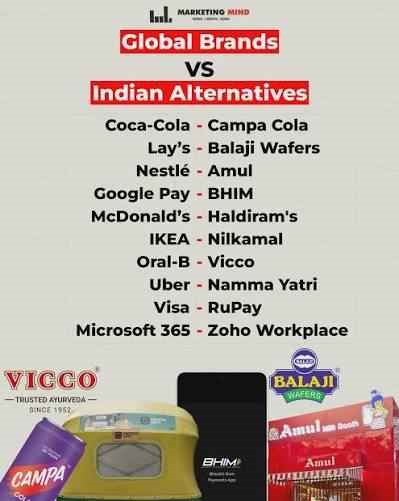
Indian consumers are discovering that global food, drink and personal care brands often sell different formulations here. Fanta tastes sweeter and the formula of Head & Shoulders is different. Here’s why products by the same brands taste, smell and feel different in India and abroad.
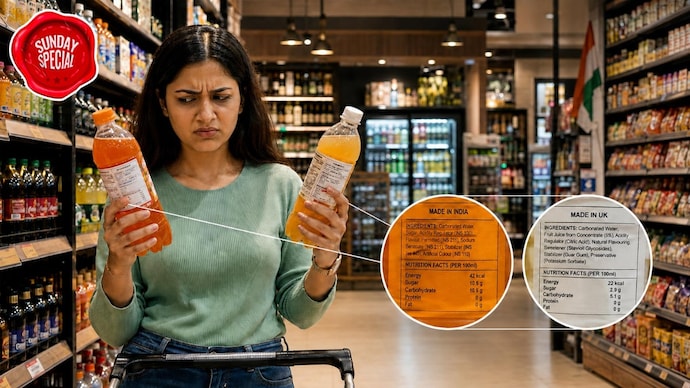
“There’s no rule that mandates companies to sell products with the same specifications in every market.” This observation from Mumbai-based food scientist Gauri Chemburkar explains a lot about a question that Indian consumers are asking right now — why do products by global brands that they buy in India taste and feel different from their foreign counterparts?
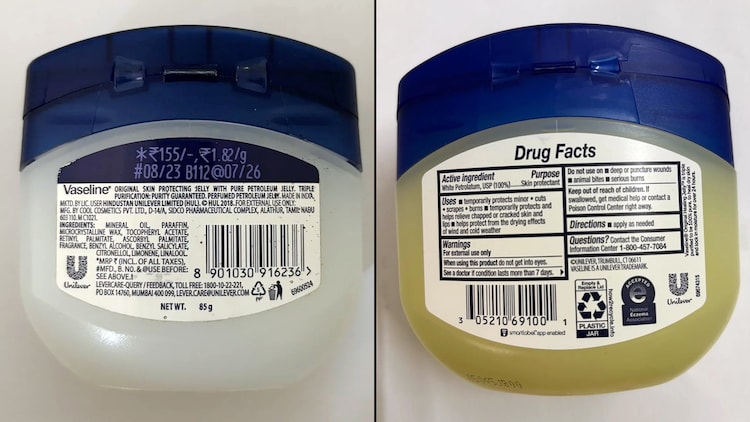
Many aerated drinks taste much sweeter in India. Vaseline, the petroleum jelly, sold in India has a different texture than the one in the US or the UK. Even shampoos and lotions from global consumer goods companies, though much cheaper in India, are also chemically different from those sold abroad under the same branding.
You don’t have to travel abroad to see the difference. Walk into a high-end supermarket which stocks imported products, and compare the labels of the same brands sold in India with their imported counterparts. The differences can be striking.
Social media is replete with accounts from consumers who were shocked to discover the products they had long assumed were identical to those sold abroad were, in fact, not just formulated differently, but were also of “lower quality”.
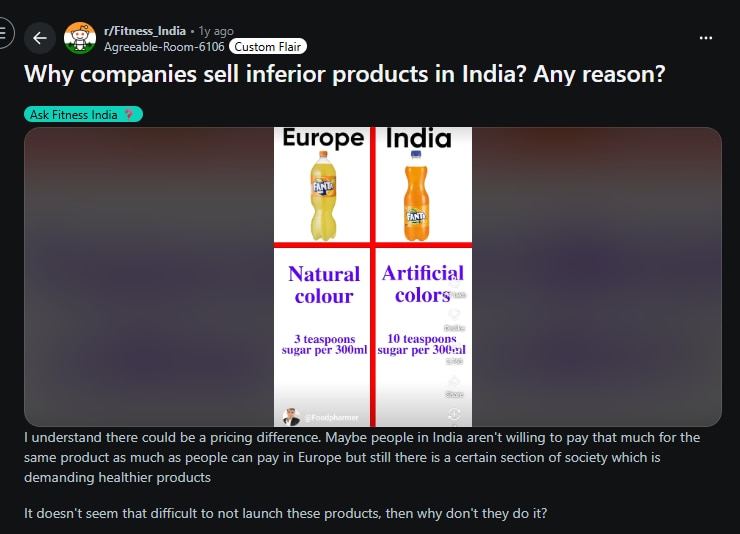
A recent report by Reuters highlighted this difference — Fanta, a soft drink by The Coca-Cola Company, sold in the UK contains significantly less sugar than the one sold in India. The Indian version of Fanta also contains an artificial colourant whose use in food products in Europe requires a prominent health warning.
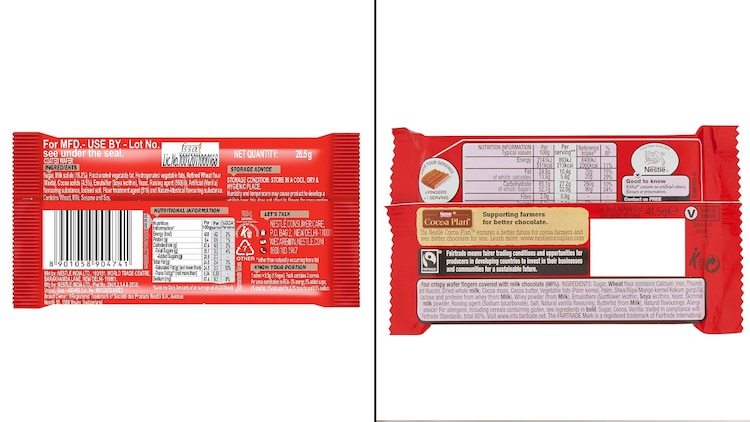
Similar differences have been flagged across categories, from chocolates and cereals to instant foods and even baby formula. Nutrition advocates have argued that Indian consumers end up with formulations containing more sugar, less cocoa or milk, and different fats or additives.
Speaking to Reuters on Friday (August 28), Maharashtra Food and Drugs Administration Commissioner, Tukaram Mundhe, questioned the ethics of global food and beverage giants that sell products with different nutritional standards in India and other countries.
But it isn’t simply a matter of one country’s product being “better” than another. Experts India Today Digital spoke to underlined that local regulations, ingredient sourcing, production costs and consumer preferences shape how a product is formulated.
India’s lower purchasing power is an important factor here. A formulation that can command a higher price in Western markets might not be as easily affordable to Indian consumers.
Companies also have to keep their own costs in check, and when an ingredient becomes too expensive, manufacturers look for cheaper substitutes that meet regulatory limits. Raw material availability, manufacturing processes and consumer preferences, particularly for personal care products, can be behind the differences in formulations.
When it comes to food and beverages, the country’s food regulator, the Food Safety and Standards Authority of India (FSSAI), plays an important role in determining what companies can put into products that are consumed by crores of people, and also how those products are presented to consumers.
This article deals with these two important aspects: what goes into a packaged product, and how consumers are informed about that by the brands.
India Today Digital reached out to FSSAI for its response on India’s nutritional standards and their enforcement, but did not receive a response. We also reached out to Procter & Gamble, Unilever and Nestle with specific questions for this report, but received no response.
While FSSAI sets the safety and labelling standards that companies must meet, questions remain over how stringent India’s nutritional standards are compared with other markets, and how those standards are enforced.
Big Food, however, has fought back. At a tense March meeting, industry executives challenged FSSAI’s proposed front-of-pack warning labels, arguing they would confuse consumers and do little to change eating habits, reported Reuters. The regulator ultimately backed away from colourful warnings. A senior business journalist covering food and health told India Today Digital that FSSAI officials are difficult to reach on such questions because they know they will be questioned about why the regulator allows such disparities in India.
Let’s have a closer look at what drives the differences in product and labelling, and whether an item that is legally compliant in India can still be considered inferior in quality.
WHY DO FMCG PRODUCTS DIFFER ACROSS COUNTRIES?
The differences can stem from local sourcing, manufacturing practices, regulations, costs and consumer choice.
“Markets differ when it comes to raw material and sourcing,” said Gauri Chemburkar, who has experience of food quality, product development, laboratory testing and quick-service restaurants in both India and the UK.
She said even basic ingredients can vary from one geography to another. “The honey that you get in temperate-zone countries like India or Brazil is different from the honey available in colder regions,” she explained.
Global food companies manufacturing products in different countries will often source ingredients locally to lower the cost. So, even before the manufacturing stage, the economics of a particular market can begin shaping a product’s formulation.
Chemburkar says because regulatory requirements of countries regarding raw materials vary, it is not always possible to produce in one place and ship to another country.
For a multinational company (MNC), therefore, making an identical formulation for every market is not the most efficient or most practical option.
THE CONSUMER PURCHASING POWER FACTOR
Economist Taniya Sah, an assistant professor at Vidyashilp University, Bengaluru, whose work focusses on value chains and agricultural markets in developing countries, explained how the economics of individual markets play a crucial role.
“Being the same brand does not necessarily mean that it’s going to be the same product,” Sah said. Formulation differences can arise not only due to regulation and consumer preferences, but also because of input costs, availability of ingredients and the purchasing power of consumers in a country.
“If we’re talking about good quality, which in most cases translates to a slightly higher premium in terms of price, then is that affordable or not for people coming from underdeveloped or developing countries?” she said.
That doesn’t mean companies deliberately make products inferior for poorer consumers, but it does mean that the price a product can command is an important consideration when ingredients and specifications are decided.
Chemburkar recalled that while working in Ireland, even a familiar brand such as Cadbury could feel considerably more expensive relative to everyday grocery spending. “I like the mouthfeel of European quality of Cadbury chocolates, especially the ones made in Switzerland,” she said, adding, “But I don’t like the price of European chocolates.”
In India, she said, she could pick up a Cadbury bar without thinking too much about its impact on her pocket. In Ireland, the higher price meant she was buying and consuming it less.
The same economics can work in reverse for manufacturers. If an ingredient becomes too expensive, companies can look for alternatives.
“In every company that I worked in, we always tried to match consumer expectations, but also keep the costs in check,” Chemburkar said.
So, manufacturers are constantly balancing the cost of inputs with the price consumers are willing to pay.
CAN REGULATIONS CHANGE PRODUCT FORMULATION?
Yes. And the effect is significant.
Chemburkar recalled working in Ireland, where companies had to factor in measures such as a sugar tax while developing products for the market.
“Depending on the Brix of your product, the tax on it is decided,” she said. Brix measures the dissolved sugar content of a liquid.
Companies, therefore, have a financial incentive to formulate products differently. “Even energy drink companies try to keep the Brix below that level in Europe,” Chemburkar said.
She also recalled working for a sauce company where the formulation was adjusted to avoid added sugar. Instead, the company used fruits containing naturally occurring sugars.
So, a difference in formulation cannot automatically be interpreted as a deliberate difference in quality. A company might alter a recipe because of taxes, ingredient availability, consumer taste or regulatory requirements.
Taniya Sah also pointed to the role of political economy and international trade in determining the availability of ingredients and the price. She used corn to explain that.
“The US is one of the largest producers and consumers of corn, much of which is processed into products such as corn syrup and other sweeteners used in beverages, desserts and packaged foods. Corn can also be diverted into other parts of the food chain, including animal feed. In India, where domestic availability, import costs and trade agreements can influence the price and supply of corn, the economics of sourcing and processing the commodity can consequently affect where and how it is used,” Sah said.
DOES A DIFFERENT FORMULATION MEAN LOWER QUALITY?
Not necessarily. This is perhaps the most important distinction. A product can be formulated differently without being an inferior product.
“A chocolate bar with more sugar, less cocoa or a different fat cannot automatically be labelled inferior,” Chemburkar said.
She breaks food quality into three broad aspects.
“When it comes to packaged food by global consumer brands, there are three different properties of a product which are very important,” she said. “One is the food-safety aspect, which always comes first. The second is the chemical composition — what manufacturers specify and what consumers see on the ingredient and nutrition labels. The third is sensory appeal: how a product tastes, smells and feels.”
The third aspect is where local preferences can matter enormously.
“A lot of products made abroad, which are low in salt or low in sugar, do not taste good from an Indian taste-palette point of view,” Chemburkar said.
Manufacturers conduct market research to understand these preferences. If consumers expect a sweeter drink or a particular texture, companies have a commercial incentive to formulate the product accordingly.
Sah made a similar point, that MNCs are competing with companies that have been developing products specifically for Indian consumers for decades, and these local brands might already have established supply chains, manufacturing networks and an understanding of local tastes.
“All these multinational brands also have to take into mind all these factors when they are coming up with a product,” Sah said.
CONSUMER PREFERENCES MATTER BEYOND FOOD
The same market-specific logic extends beyond food into personal care.
Global brands often adjust their formulations to meet local regulations, climate conditions, consumer preferences, hair and skin types, and the availability of ingredients in different markets.
Head & Shoulders shampoo by Procter & Gamble is a good example. The anti-dandruff shampoo does not have the same formulation worldwide.
In the US and several other markets, its main active ingredient is typically pyrithione zinc. But the European Union banned zinc pyrithione in cosmetic products in 2022 after regulators classified it as a reproductive toxicant.
As a result, Head & Shoulders products sold in the EU use other anti-dandruff ingredients, such as piroctone olamine.
The example shows how global brands change even a familiar everyday product to meet different regulations and consumer needs in different markets.
The same market-specific approach can also be seen in something as subjective as fragrance, where brands tailor scents to what consumers in different countries prefer.
Bioderma, a French skincare brand, and Cetaphil, an American skincare brand, have several products in Western markets that are fragrance-free or have little noticeable scent. Vaseline, which originated in the US, also sells relatively low-fragrance or fragrance-free variants in Western markets.
But in India, fragrance can be an important purchase driver across beauty and personal care categories, according to Mintel, a global market intelligence and research company, in its India Fragrance Trends in Beauty and Personal Care report.
So, consumers might encounter creams, face washes and moisturisers with more noticeable fragrance even when the brand name remains the same.
This, too, does not mean the Indian formulation is inferior. Fragrance forms part of the sensory experience of a product, and what consumers expect from a moisturiser, face wash or cream can vary considerably across markets.
Industry practice reflects this. Companies such as Unilever have invested in local fragrance innovation hubs in India precisely because scent preferences, cultural associations and climate conditions can influence consumer choice and product performance.
Equations change in food and beverages because the regulators have a direct say.
ROLE OF FOOD REGULATOR FSSAI IN WHAT WE EAT
The debate changes when the question is no longer why a formulation is different, but what companies are legally allowed to put into food sold in India.
FSSAI’s role is crucial here because, unlike a shampoo or lotion, food is consumed directly and regularly by millions. The regulator’s standards determine, among other things, what ingredients and additives can be used, what safety requirements companies must meet and what information must be disclosed to consumers.
Sah argues that India needs to look beyond food safety and pay greater attention to nutritional quality.
“Historically, FSSAI has been playing an important role in ensuring that the food items or the ingredients that go into cooking are not contaminated or adulterated,” she said. “But over time, we need to move from whether food is only safe to consume to what is the quality of that food we are consuming.”
That distinction matters particularly for ultra-processed foods (UPFs).
“Many products might comply with existing regulations while still contributing to poor dietary outcomes when consumed frequently,” said Sah, pointing to the growing burden of obesity and type-2 diabetes alongside nutritional deficiencies.
Sah believes FSSAI needs to “up its game”, particularly on nutritional standards and enforcement.
She argued that the debate often places too much responsibility on consumers. “Simply printing ingredient lists and calorie information on the back of a package does not necessarily mean consumers can easily understand what they are eating,” Sah said.
“The general tendency of companies, of the government, of FSSAI, of these regulatory bodies is to put the blame on the consumers,” she added.
Sachin Taparia, co-founder of LocalCircles, a community-based social media and governance platform, said the organisation’s original submission of a survey in 2022 led FSSAI to begin consultations on how Indian consumers are informed about what they eat.
According to Taparia, when FSSAI returned with a proposal in 2023 that favoured a star-rating system, LocalCircles pushed back, arguing for a more direct warning system.
Taparia told India Today Digital that following the intervention of the courts, FSSAI has now proposed to move towards red labelling for foods high in fat, sugar and salt (HFSS). In a LocalCircles survey, 94% of consumers said such red labels would help them make more informed food choices.
Reuters journalist Aditya Kalra recently highlighted the contrast between the same brand’s approach to food labelling in different markets.
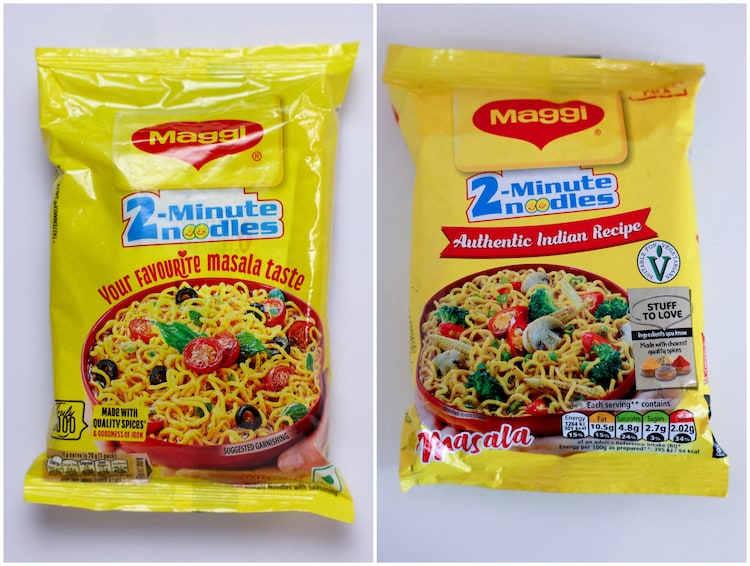
Many Maggi packets sold in Britain are made in India, yet carry red front-of-pack labels warning consumers about their high salt content. The labels are voluntary in the UK, and Nestle has used them on its packs since 2013.
In India, however, Nestle is a member of industry groups that have opposed proposals for mandatory front-of-pack warning labels.
BIG FOOD GIANTS ON FSSAI’S RADAR, BUT INDUSTRY PUSHBACK PERSISTS
The FSSAI recently issued more than 150 notices to food companies, including Nestle India, PepsiCo and Coca-Cola India, over alleged misleading advertisements, false claims and labelling non-compliances. The regulator said it had acted against several food business operators in recent months for violating food safety laws. The wider list includes Abbott India, Red Bull India, Danone India, Monster Energy India, Hell Energy and Mondelez India.
FSSAI has clashed with major food companies before. In 2015, it ordered Nestle to recall all nine approved variants of Maggi noodles, calling them “unsafe and hazardous” for human consumption.
The action shows that FSSAI has, at least on paper, been willing to take on some of the biggest names in the food and beverage industry.
But its record also points to the limits of that authority. Global and Indian food giants have considerable commercial stakes in India’s enormous consumer market, giving industry lobbies strong incentives, and considerable influence to push back when regulations threaten established practices.
That pushback has been visible in the fight over front-of-pack nutritional warnings, where industry executives challenged FSSAI’s proposed approach.
The regulator eventually softened its position, raising questions over whether an agency tasked with protecting consumers has the institutional heft to withstand sustained pressure from the very companies it regulates.
SHOULD INDIA SIMPLY COPY WESTERN MARKETS?
Both experts India Today Digital spoke to cautioned against making that the goal.
Chemburkar’s argument is that India should stop asking why its products do not look exactly like those sold elsewhere and instead ask whether Indian consumers are getting the best products that can reasonably be made using India’s own resources.
“If we have good milk sources, why are we not able to get milk solids in our chocolates and ice-cream?” she said, pointing to frozen desserts that are marketed as ice-cream alternatives.
Sah said India’s changing diet needs to be studied more closely. Government surveys have traditionally focussed heavily on staples such as wheat, rice and lentils, while consumption of products such as packaged snacks, instant noodles and sugary beverages can be harder to capture.
“More detailed dietary surveys could give policymakers a better understanding of how frequently such products are being consumed, particularly in rural areas where dietary habits are changing rapidly,” Sah said.
So, the differences in global FMCG products are not simply about “cheaper” or “inferior” versions.
In personal care, this can mean changing active ingredients, textures or fragrances to suit a market. In food and beverages, the stakes are higher because these formulations are consumed by millions. The real question, therefore, is not whether Indian products match Western ones, but whether Indian consumers are getting the best products possible, and enough information to make informed choices.

- Previous With Modi’s visit, India and Uzbekistan elevate their strategic ties
- Next PM Anvar unveils measures to tackle living costs and to support local businesses
You may also like...






Random news













About us
Our Newly established Center for study of Asian Affairs has
branches in Indonesia, Malaysia and Singapore, as well as freelances in some other countries.
For inquires, please contact: newsofasia.info@yahoo.com Mr.Mohd Zarif - Secretary of the Center and administer of the web-site www.newsofasia.net
Polls
 Loading ...