

Oil prices near $100 per barrel, Bab Al Mandeb straight closed

Oil surges past $95 as U.S. downplays Iran diplomacy and Houthis threaten second trade route
The price of oil surged nearly 5% Wednesday as U.S. officials talked down the chance of new peace talks after an 11th straight night of strikes on Iran and with major disruption now facing two of the world’s key
International Brent crude oil rose as much as 4.9% to more than $95 per barrel for the first time in almost six weeks. U.S. crude oil rose as much as nearly 5.1% to nearly $89 per barrel.

Those prices pulled back slightly by the afternoon. U.S. crude closed higher by 2.9%, at $86.83 per barrel while Brent closed up 3.4%, at $94.07 per barrel.
While Brent is widely considered the international oil benchmark, it also influences the retail cost of gas in the U.S.
Those pump prices rose again Wednesday, extending their climb above $4 per gallon. The national average price rose 4 cents overnight to $4.06 per gallon, according to motor club AAA data tracked by NBC News.
Treasury yields spiked, following oil’s latest jump and its likely impact on inflation. As of midmorning trading, the U.S. 10-year Treasury yield was hovering around 4.65%, its highest since May.
As a result, the average rate on a 30-year mortgage rose to 6.75% Wednesday, matching its highest level of the year.
Since the start of the month, oil prices have gained 25% and are now up more than 50% since the start of the year. That move has largely erased the drop in prices that came after the U.S. and Iran signed a memorandum of understanding in mid-June.
Rhetoric escalates tensions
President Donald Trump had declared that tentative deal, which was aimed at ending the war and reopening the Strait of Hormuz, “over” on July 8.
But on Wednesday, Trump ratcheted up the rhetoric once again.
“Any time the Islamic Republic of Iran shoots at a ship in the Strait of Hormuz, whether it be by Missile, Rocket, Drone, or any other device or weapon, the United States will bomb and destroy ONE BRIDGE OR POWER PLANT, including those located next to, or in, the Capital City of Tehran,” he posted on social media.
Overnight, Secretary of State Marco Rubio said that the U.S. remained open to diplomacy with Iran, “but right now they don’t seem to be serious about that.”
Rubio added that the U.S. would continue to try to protect commercial shipping.
But in the last two days, the U.K.’s Maritime Trade Organization has reported multiple attacks on vessels in the area. In at least two of those, said the maritime monitoring group, which is aligned with the British navy, crews were forced to abandon ship.
Those attacks are one reason traffic in the Strait of Hormuz remains extremely low.
On Monday, only 13 ships crossed the vital waterway, and on Tuesday that number was only nine, according to an analysis of ship movements by MarineTraffic.

“Iran is targeting global shipping in an international waterway and demanding to control which ships can go and which ones cannot,” Rubio added. “That just is unacceptable. We’re not going to accept that.”
A spokesperson for Iran’s Interior Ministry told a state-run news agency Wednesday that there are no negotiations ongoing at the moment, but added, “There may be exchanges of messages taking place.”
Shipping disruptions expand
The jump in prices also came shortly after Iranian-backed Houthi rebels in Yemen said they would seek to impose a maritime blockade on Saudi Arabia, a new front in a conflict that appears to be expanding.
As a result, the “Bab el-Mandeb risk picture is deteriorating,” an analyst at MarineTraffic said Wednesday, referring to the strait that is the gateway to the Red Sea.
Just like the Strait of Hormuz, the Bab el-Mandeb is a critical transit route for global oil supplies and any disruption, or even a serious threat of disruption, could unsettle markets again. It had been a key release valve for exports, particularly from Saudi Arabia, that could not pass through Hormuz.
MarineTraffic also reported “four verified U turns near the Gulf of Aden following heightened security threats.”
Still, traffic through the Bab el-Mandeb Strait remained steady with 73 ships passing Tuesday, although it was down slightly from Monday, the firm said.
“The traffic count should also be read alongside growing evidence of route hesitation around vessels approaching the Gulf of Aden and Bab el-Mandeb,” MarineTraffic analyst Dimitris Ampatzidis wrote.
“The Houthis’ announced maritime blockade on Saudi Arabia has shippers nervous, with several tankers moving to avoid the Bab el-Mandeb Strait,” ING commodities analysts added. “This would force tankers to enter and exit the Red Sea via the Suez Canal, adding significant time and expense to voyages to Asia.”
ING added that between the straits of Hormuz and Bab el-Mandeb, oil supply risks appear to be building once again.

- Previous Houties Hit Two Saudi Oil Tankers, Oil Prices Rise
- Next 13 Million Tourists Visit Kyrgyzstan: Central Asia’s Travel Boom Accelerates
You may also like...






Random news




About us
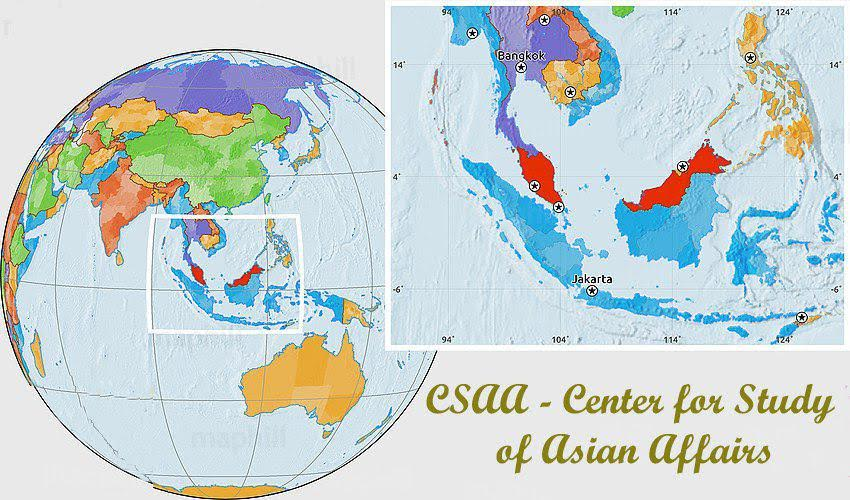
Our Newly established Center for study of Asian Affairs has
branches in Indonesia, Malaysia and Singapore, as well as freelances in some other countries.
For inquires, please contact: newsofasia.info@yahoo.com Mr.Mohd Zarif - Secretary of the Center and administer of the web-site www.newsofasia.net
Polls
 Loading ...