

“Uji Matcha” – The Japanese Tea Only: Japan to protect tea brand from overseas counterfeits

By SHO ITO/ Staff Writer
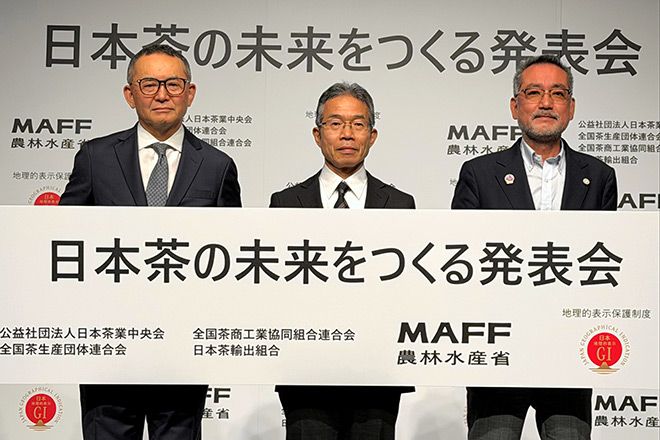 Sadami Suzuki, center, a senior executive of the Japan Tea Central Public Interest Incorporated Association, speaks at a press event in Tokyo on May 11. (Sho Ito)
Japan’s tea growers and traders are racing to protect the hard-won reputation of the Japanese beverage from being diluted by foreign copies.
The Japan Tea Central Public Interest Incorporated Association, which brings together organizations involved in tea production and trade, has filed an application to register Japanese tea for Geographical Indication status.
If approved, intellectual property protection would cover all green tea grown and processed in Japan for the first time.
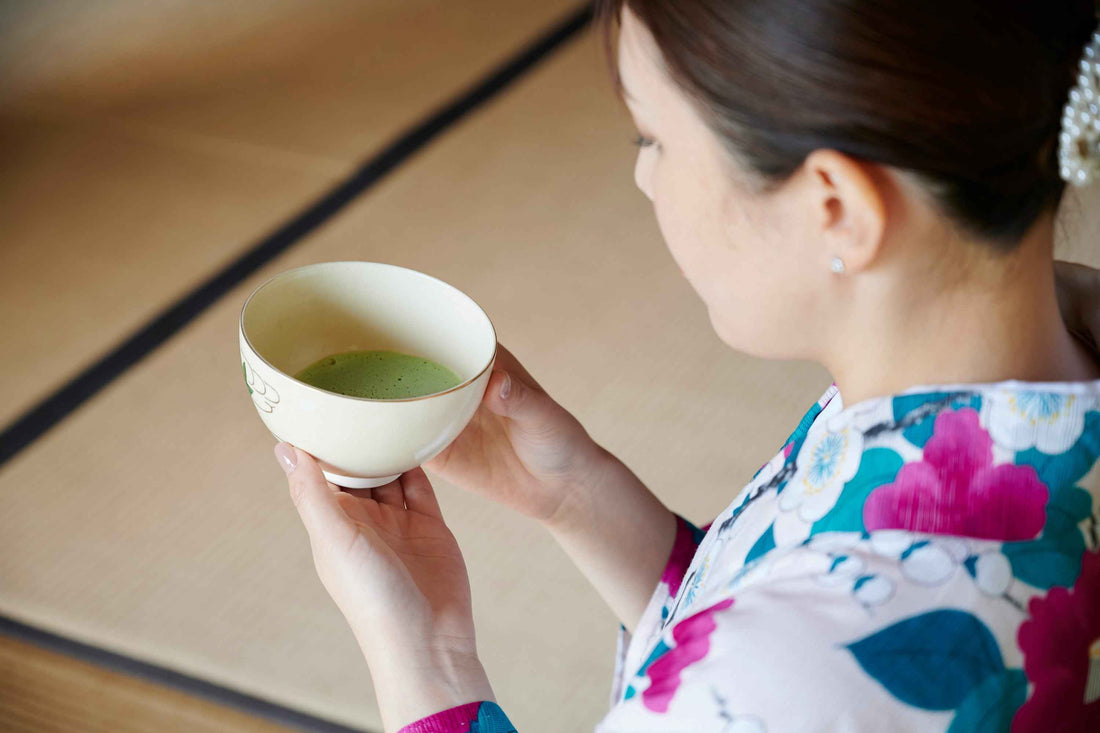
As sales of Japanese tea continue to soar, imitation products have proliferated overseas. Without a legal framework to distinguish authentic Japanese tea from foreign copies, producers fear the value of the Japanese tea name could be quietly eroded.
A Geographical Indication (GI) is a legal system that protects the name of a product closely linked to a particular place. Under such protection, Champagne, for instance, is not simply sparkling wine. It must come from the Champagne region of France and follow defined production rules.
Japan currently has 167 registered GI products. “Yubari Melon,” for example, may be used only for melons grown, harvested and shipped from Yubari in Hokkaido under strict production and quality standards.

Other examples include “Hidagyu,” beef produced in Gifu Prefecture, and two tea brands: “Fukamushi Kikugawacha,” a deep-steamed green tea produced in Kikugawa and surrounding areas of Shizuoka Prefecture, and “Yame Dentou Hongyokuro,” a traditional, hand-crafted, high-end gyokuro tea from Yame and nearby mountainous areas of Fukuoka Prefecture.
But Japanese tea as a broad category has not been registered with the entire country designated as its production zone.
The only product currently protected as a national-scale GI is “nihonshu,” or Japanese sake, which falls under the jurisdiction of the National Tax Agency.
FAKES FOLLOW GLOBAL MATCHA BOOM
The push to secure GI status for “nihoncha” comes amid a global matcha boom, fueled in part by growing health consciousness, that has lifted Japanese green tea exports to record levels.
In 2025, exports reached a record 12,612 tonnes, as demand surged across North America, Europe and beyond.
But that success has attracted imitators. Chinese-produced matcha marketed under labels such as “Uji Matcha”—evoking one of Japan’s most celebrated tea-growing regions—has led to legal disputes, and the industry says such cases show no sign of abating.
Producers argue that the problem is structural. Without a recognized international designation, there is little to prevent foreign manufacturers from appropriating the names, imagery and associations that give Japanese tea its value.
“When delivering authentic Japanese tea to the world, we want to attach a GI mark as a clear, easily understood label so that consumers can see exactly what they are choosing,” Sadami Suzuki, a senior executive at the Japan Tea Central Public Interest Incorporated Association, said at a May 11 news conference in Tokyo.
FARMS EMPTYING OUT
The boom in Japanese tea overseas is pushing the product upmarket, but the domestic foundations on which it rests are quietly weakening.
An aging farming population and a steady exodus from the industry have left Japan’s tea-growing sector on increasingly fragile footing.
The number of tea farmers in major producing prefectures such as Kagoshima and Shizuoka has fallen to less than a quarter of its 2000 level over the first two decades of this century.
The tea cultivation area has shrunk from 49,000 hectares in 2005 to 33,000 hectares in 2025, while total output has fallen from 100,000 tons to 75,000 tons.
Within that broader decline, another shift is under way.
Sencha, a familiar loose-leaf green tea, and matcha, a finely ground powder made from shade-grown tea leaves, require different cultivation methods and production processes.
Drawn by strong overseas demand for matcha, growing numbers of farmers in key tea-producing regions are shifting toward tencha, the shade-grown, unrolled green tea leaves used as the raw material for matcha.
As a result, sencha production is falling even faster than official figures suggest.
That matters because sencha remains the backbone of Japan’s domestic tea market, particularly for bottled green tea drinks, which continue to command a loyal following.
As the price of domestically grown tea rises, cheaper imported green tea has quickly filled the gap.
According to Finance Ministry trade statistics, imports of green tea reached 4,610 tons in 2025, up 50 percent from the previous year.
In the first quarter of 2026, cumulative imports were already 2.4 times the level recorded in the same period a year earlier.
If the current pace continues, annual imports could exceed 10,000 tons for the first time in roughly two decades.
PLAYING PROVENANCE CARD
The combination of a matcha-led production shift and growing dependence on imports has heightened the industry’s sense of alarm.
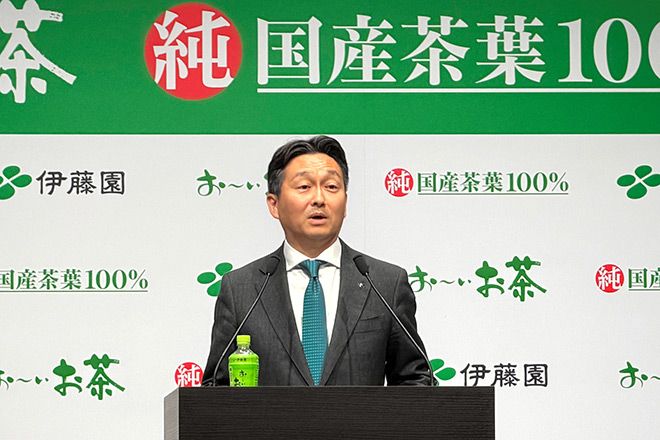
Ito En Ltd., one of Japan’s largest beverage companies, has responded with a pointed marketing move. Packaging of its flagship “Oi Ocha” unsweetened green tea have carried the label “100% pure domestic tea leaves” since its May 18 shipments.
The labels are intended to emphasize the Japanese origin, while reinforcing the broader brand value of Japanese tea.
The company is also pursuing a longer-term structural response. It is developing production lines for its contracted farmers that can handle both sencha and tencha. This will give growers who want to shift toward the more lucrative matcha supply chain the means to do so, while preserving the flexibility to switch back to sencha if market conditions change.
The goal is to keep Japan’s domestic production base intact rather than allow it to hollow out further.
“Unless the tea industry as a whole achieves healthy, sustainable growth, it will never become the kind of internationally celebrated sector that nihonshu and wagyu already are,” said Mitsumasa Shida, executive officer and general manager of Ito En’s Marketing Headquarters.

- Previous South Africa wins historic World Cup knockout over South Korea
- Next Takaichi plans growth strategy with 370 trillion yen (S2.29 trln.) investments for AI and Semiconductors
You may also like...






Random news













About us
Our Newly established Center for study of Asian Affairs has
branches in Indonesia, Malaysia and Singapore, as well as freelances in some other countries.
For inquires, please contact: newsofasia.info@yahoo.com Mr.Mohd Zarif - Secretary of the Center and administer of the web-site www.newsofasia.net
Polls
 Loading ...