

U.S. Bombings of Mashad Rail and Chabahar Port Put Central Asia’s Southern Routes Under Pressure
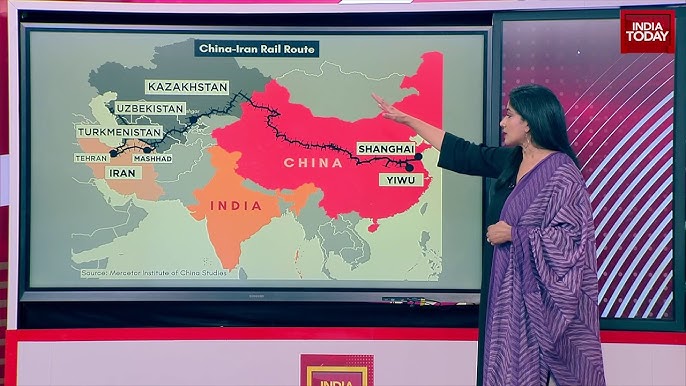
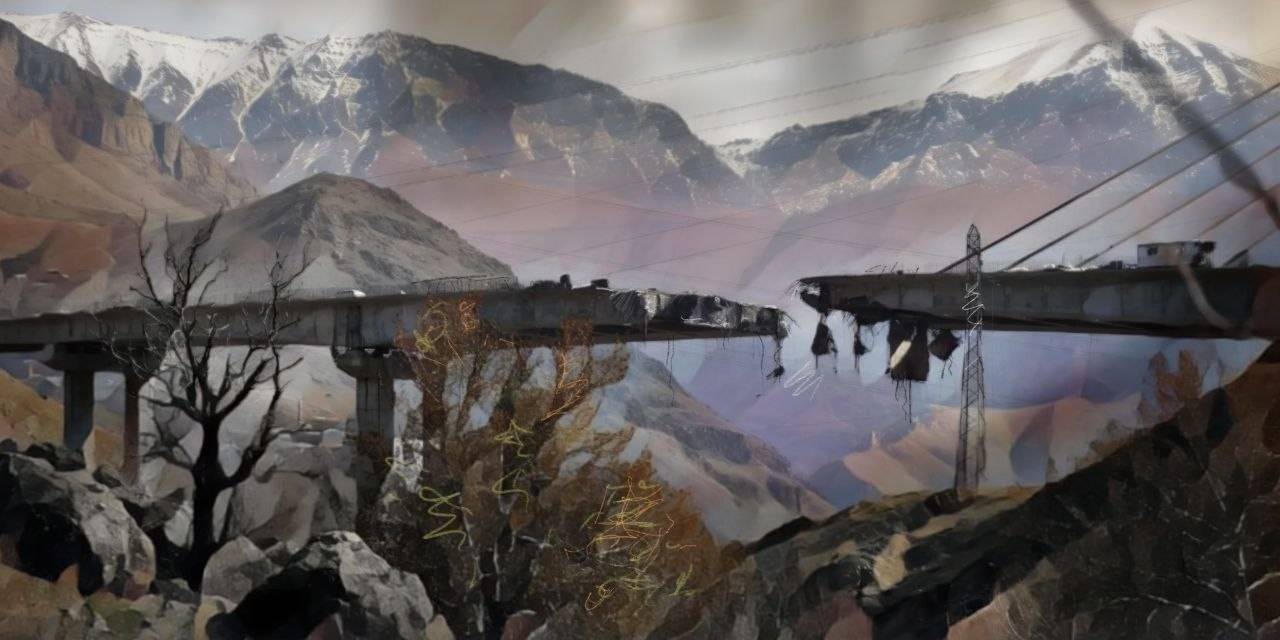
Image: TCA, Aleksandr Potolitsyn
U.S. strikes on Iranian rail and coastal infrastructure have put Central Asia’s southern transport plans under new pressure. Kazakhstan and Turkmenistan have spent years building routes through Iran to reach the Persian Gulf, the Gulf of Oman, and markets beyond Russia. Public statements so far do not show a confirmed halt in Central Asian freight, but bridge damage near Iran’s border with Turkmenistan and strikes along Iran’s southern coast have made the security picture more concrete.
Reports and a video posted on July 9 showed damage to the Aq Taqeh Khan railway bridge, on Iran’s rail link to Turkmenistan and Kazakhstan, after overnight U.S. strikes. Reuters said it verified the location by matching the bridge, riverbank, road, fields, and nearby town with satellite imagery, and found no earlier versions of the video online.
Iran’s Revolutionary Guard-linked Neynava Corps in Golestan said the area around the Aq Taqeh Khan railway bridge in Aq Qala County was targeted by U.S. cruise missiles early on July 9, with no casualties reported. The bridge sits on the Gorgan-Incheh Borun railway line, which reaches the Incheh Borun border crossing with Turkmenistan and links onward to Kazakhstan.
Head of the Islamic Republic of Iran Railways, Jabar-Ali Zakeri, said engineers had rebuilt one damaged track on the Mashhad route and returned it to service in less than 15 hours, according to Fars News Agency. He said work on a second damaged line was continuing and was expected to finish within hours. That statement concerned the Mashhad route, however, and does not confirm the status of the Gorgan-Incheh Borun line.
The route sits inside a wider transport effort that Kazakhstan, Turkmenistan, Iran, China, and Russia have all tried to expand. TCA has previously reported on a 2024 test container train on the China-Kazakhstan-Turkmenistan-Iran route, which ran from Xi’an to Tehran. It carried 45 forty-foot containers loaded with auto parts and cut the China-Iran delivery time to 15 days.
The Gorgan-Incheh Borun railroad was inaugurated in December 2014, linking Iran to Turkmenistan and Kazakhstan along the eastern side of the Caspian Sea. The wider Uzen-Bereket-Gorgan route runs for more than 900 kilometers from western Kazakhstan through Turkmenistan into northern Iran. It connects Kazakhstan and Turkmenistan’s rail networks to Iran’s system and onward to the Persian Gulf and Asian markets.
The U.S. military has framed the latest strikes as a response to Iranian attacks on commercial shipping. U.S. Central Command said on July 8 that its forces had struck about 90 Iranian military targets, including air defense systems, coastal surveillance assets, missile and drone storage sites, naval capabilities, and military logistics infrastructure along Iran’s coastline. CENTCOM said the operation was designed “to further degrade Iran’s ability to attack commercial shipping and innocent civilian mariners in the Strait of Hormuz.”
The coastal security picture also impacts Kazakhstan through Shahid Rajaee Port in Bandar Abbas. On June 28, Kazakhstan and Iran signed a 27-year Build-Operate-Transfer agreement for a Kazakh transport and logistics terminal there. The Kazakh embassy in Tehran said the deal grants Kazakhstan a land plot for the terminal, with two years for construction and 25 years of operation. Commercial operations are planned in the third year of the project.
On July 8, spokesperson for Kazakhstan’s Ministry of Trade and Integration Toigul Zhubanisova denied reports that the Kazakh site had been hit. “This information is untrue. While there were precision airstrikes in the area, none hit our site. We would like to note that Kazakhstan only recently acquired the land, and there is currently no infrastructure on the property,” she said.
The denial rules out damage to Kazakhstan’s leased site, but it does not settle the broader security question around Iranian ports. Eyewitness video carried by Reuters showed smoke rising from a port in Kuhestak, in Hormozgan Province, after U.S. strikes. The agency’s Connect service also carried satellite imagery showing damage to an Iranian port building in Sarkhur Tahruyi, also in Hormozgan, on July 9.
Chabahar gives Kazakhstan another reason to watch Iran’s coastal security closely. TCA reported in June that Iran had offered Kazakhstan the chance to operate at Chabahar, a deep-water port on the Gulf of Oman. Iranian officials described Chabahar as a node in the International North-South Transport Corridor, and said the Chabahar-Zahedan railway was more than 90% complete. Once finished, that railway is expected to connect Chabahar to wider regional cargo networks.
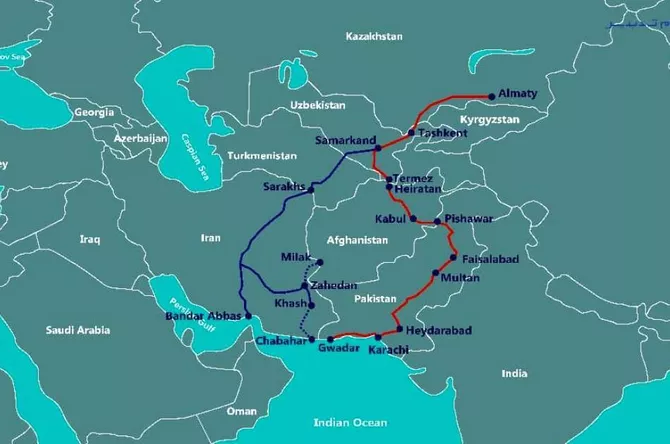
For Central Asia, the issue now reaches beyond the Strait of Hormuz. Kazakhstan and Turkmenistan want southern routes that reduce dependence on Russia, ease pressure on the Caspian, and give exporters access to Gulf and Indian Ocean markets. The Middle Corridor gives Kazakhstan access to Europe through the Caspian, Azerbaijan, Georgia, and Turkey, but Iran gives Kazakhstan and Turkmenistan a southern outlet toward the Gulf and South Asia.
Alua Korpebayeva, head of the Project Office for Transport and Logistics under Kazakhstan’s Presidential Administration, told TCA that the Middle Corridor is becoming “a foundation for stable and predictable supply chains in global trade.” She also said that geopolitical factors had increased business interest in alternative routes. The strikes in Iran show why that interest keeps growing, and why every alternative route carries its own exposure.
For now, the evidence points to heightened exposure rather than confirmed disruption. Kazakhstan has denied damage to its site at Shahid Rajaee Port, and no public KTZ statement has announced a suspension on the Kazakhstan-Turkmenistan-Iran route. For Astana and Ashgabat, the question is whether Iran can still serve as a reliable southern outlet if rail links, ports, and insurance costs continue to come under military pressure.


- Previous ASEAN top diplomats and Myanmar’s foreign minister meet in Bangkok
- Next Fmr. PM Sheikh Hasina to return to Bangladesh in December: “They might kill me”
You may also like...






Random news








About us
Our Newly established Center for study of Asian Affairs has
branches in Indonesia, Malaysia and Singapore, as well as freelances in some other countries.
For inquires, please contact: newsofasia.info@yahoo.com Mr.Mohd Zarif - Secretary of the Center and administer of the web-site www.newsofasia.net
Polls
 Loading ...