

Again! Defeat for Third Time? Trump says U.S. will win war “one way or the other” as Iran holds Khamenei’s funeral

What to know about the Iran war today:
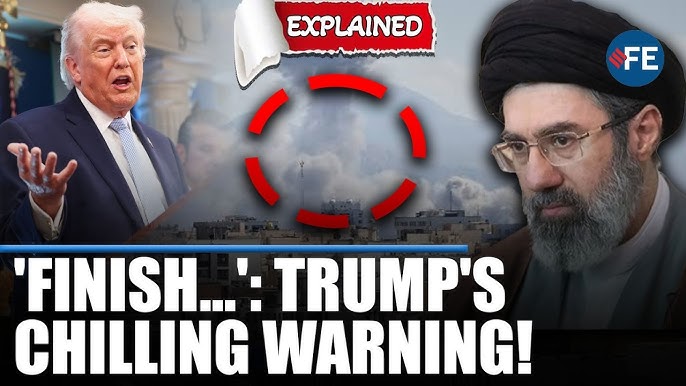
President Trump said Monday the U.S. will win the Iran war “one way or the other.” Speaking to reporters in the Oval Office, he said, “We’re either going to make a deal, or we’re going to finish the job. It won’t be tough to finish the job.”U.S.-Iran talks are paused for the multiday funeral of Iran’s slain Supreme Leader Ali Khamenei. Thousands of people gathered in Tehran’s streets and squares Monday, mostly dressed in black, with some carrying banners and pictures of the late leader.Three sons of the former Iranian supreme leader made a rare public appearance at his funeral on Sunday, but there was still no sign of their brother and his successor, Mojtaba Khamenei. Officials have said Khamenei was wounded in the airstrikes that killed his father but the severity of his injuries remains unclear. So far, he has only communicated through written statements.
Tanker in Strait of Hormuz reportedly hit by projectile
A tanker traveling off the coast of Oman in the Strait of Hormuz caught on fire early Tuesday morning after being struck by a projectile, the British military said.
The attack was the latest targeting a vessel moving through the narrow mouth of the Persian Gulf, through which a fifth of all oil and natural gas traded once passed in peacetime. Iranian state television said the liquefied natural gas tanker came under attack after ignoring warnings but did not directly claim the assault.
Tehran has repeatedly declared that only its approved route through the strait is safe and is suspected of attacking other ships that have used another route close to the Omani shore.
Tanker in Strait of Hormuz catches fire after being hit by projectile, U.K. military says
A tanker traveling off the coast of Oman in the Strait of Hormuz caught on fire early Tuesday morning after being struck by a projectile, the British military said.
The United Kingdom Maritime Trade Operations center said the tanker had been hit near Limah, Oman, in the strait.
It said the projectile hit the port side of the vessel while trying to travel south out of the strait toward the Gulf of Oman.
It said there was no environmental impact from the strike and that authorities were investigating.
No one immediately claimed responsibility for the attack, though Iran is suspected of attacking at least two other vessels in the strait traveling on a route near Oman in recent days.
Mourners call for the death of Trump at late supreme leader’s funeral
As the funeral has gone on, mourners have increasingly called for Supreme Leader Ali Khamenei’s death to be avenged. Mourners and the signs they carry have called for the killing of both President Trump and Israeli Prime Minister Benjamin Netanyahu. Such signs were seen again Monday along the procession’s route.
More in World
“We are here to show that his path will continue, and every single one of these people will continue down his path with clenched fists, and soon we will certainly avenge his death against the U.S and Israel,” said mourner Sahar Zaraatgar.
U.S. federal authorities have been tracking Iranian threats against the president and other administration officials for years, stemming from Mr. Trump’s ordering the 2020 killing of Soleimani, who led the elite Quds Force. Iran has repeatedly denied plotting to kill Mr. Trump, though hard-line propaganda footage long has suggested he was in Tehran’s crosshairs.
Mr. Trump, meanwhile, promised to destroy Iran’s civilization during the war, among other threats.
Speculation grows over Mojtaba Khamenei’s whereabouts after Tehran procession
Mojtaba Khamenei, the son of Iran’s late supreme leader and his successor, did not make a public appearance Monday as huge crowds filled Tehran for his father’s funeral procession. A sea of people filled the streets of the city for the commemoration, with authorities calling the turnout a display of the Islamic republic’s resilience.
But, as on previous days, there was still no sign of Khamenei, who was named the new supreme leader of Iran a week after his father was killed but has stayed out of the public eye. His absence Monday fueled speculation over his whereabouts and condition, as Iranian officials have said he was wounded in an airstrike. It remained unclear whether he would appear at subsequent ceremonies taking place later in the week.
CBS/AFP
4 killed in Israeli strike in southern Lebanon, state media says
Lebanese state media said an Israeli strike on a car in the country’s south on Monday killed four people, including three women, despite a ceasefire between Israel and Hezbollah.
Lebanon’s official National News Agency said a school principal, her mother, a foreign female domestic worker and a male Syrian worker were killed when an Israeli drone targeted their car as they returned from inspecting their family home in Nabatieh al-Fawqa.
The Israeli military said on Monday that it identified “four suspects” approaching the area its forces occupy in southern Lebanon who posed a threat and so “conducted a precise strike in order to remove the threat.”
Israel has kept up intermittent strikes on southern Lebanon, particularly in the Nabatieh area, despite the two-week-old truce, usually saying it is targeting Hezbollah sites and operatives.
Both sides accuse the other of violating the ceasefire.
A lawmaker for Hezbollah, Ihab Hamade, denounced Monday’s strike as “a heinous crime against civilians” and blamed it “first and foremost” on the Lebanese state.
His movement has been highly critical of an agreement signed last month by Lebanon and Israel aiming to pave the way for a permanent end to hostilities.
Lebanese state media reported further Israeli strikes on Monday afternoon.
Khamenei’s body arrives in Iranian city of Qom ahead of funeral procession
The body of Iran’s late supreme leader, Ayatollah Ali Khamenei, arrived in the holy city of Qom, south of the capital Tehran, on Monday evening, state media reported. The arrival preceded a funeral procession scheduled to take place the following day.
“The body of the martyred leader has arrived in Qom,” state television said on social media, alongside footage showing a helicopter carrying Khamenei’s body landing in the city.
Khamenei’s body will be transferred to Najaf and Karbala in Iraq after the procession in Qom. A final day of commemorations will take place on Thursday in Mashhad, where Khamenei will be buried.
CBS/AFP
Netanyahu urges U.S. not to sell F-35 fighter jets to Turkey
Israeli Prime Minister Benjamin Netanyahu on Monday urged the United States not to sell its F-35 fighter jets or components to Turkey, arguing it would “upset the power balance” in the region.
President Trump is traveling to Ankara for a NATO summit, and his visit could be seen as an opportunity to secure acquisition of dozens of jet engines and potential readmission to the F-35 fighter jet program.
The Israeli prime minister, however, warned it would be a mistake for Washington to reward Turkish President Recep Tayyip Erdogan, whom Netanyahu said “calls openly for the annihilation of Israel,” with advanced military technology.
“I don’t think they should be given F-35s or the engines for their fighter jets, because that’ll upset the power balance in the Middle East, which is ultimately guaranteed by Israeli air superiority and also by, I think, by America’s posture in the Middle East,” Netanyahu told Fox News’ “Fox & Friends.”
He pointed to multiple recent verbal attacks by Turkish officials against Israel, including by Foreign Minister Hakan Fidan, who during an interview with CNN Türk last week called Israel “the world’s problem” and said “these people have become a burden that humanity can no longer bear.”
As Netanyahu described it to Fox, Fidan “said that the Jewish state hasn’t a place among humanity – basically it has to be wiped out.”
Last month, Trump promised to make Erdogan “very happy” when asked about Turkey looking to secure F110 jet engines and regaining access to the F-35 program.
Trump says U.S. is “either going to make a deal, or we’re going to finish the job”
President Trump says the U.S. will either make a deal with Iran, or “we’re going to finish the job.”
“Look, we’re going to win one way or the other,” Mr. Trump told reporters in the Oval Office Monday.
“We’re either going to make a deal, or we’re going to finish the job. It won’t be tough to finish the job,” he said.
“I’d rather make a deal because I don’t want to affect 91 million people,” the president added.
“We can knock out their electricity and power-generating plants in … the small part of an afternoon,” he said. “And they know that.”
Mr. Trump was speaking as the U.S.-Iran talks are paused for the multi-day funeral of slain Supreme Leader Ali Khamenei, who is due to be buried in Mashhad on Thursday.
Lebanon president says Israeli occupation in south preventing army deployment
Lebanon’s president said Monday that Israel’s occupation of the south was preventing the Lebanese army’s deployment to the area, as the two sides prepare to implement a deal involving the deployment and gradual Israeli withdrawal.
According to a statement from his office, President Joseph Aoun emphasised the need to pressure Israel to withdraw its forces “because the persistence of the occupation undermines the legitimacy of the [Lebanese] state and prevents the army from deploying and the laying of the foundations for achieving a just and lasting peace.”
AFP
Iran will “never cease” in its pursuit of justice for the death of Ayatollah Ali Khamenei, says army chief
The head of Iran’s army has said the country will “never cease” in its pursuit of justice for the death of Ayatollah Ali Khamenei.
“Those who committed this crime must know that the nation of Iran and all of us will never cease in our pursuit of and demand for justice,” Major Gen. Amir Hatami said Sunday, in remarks reported by Iran’s state-owned Press TV. “We will not let go of them, and this is a definitive decision that we will follow through until we achieve results.”
The former supreme leader was killed in U.S.-Israeli strikes on the first day of the war, Feb. 28, alongside his daughter, son-in-law, daughter-in-law, granddaughter and several high-ranking military officials.
He is to be buried in Mashhad on Thursday after funeral processions in the Iranian cities of Tehran and Qom and in Iraq.
Crowd surge at previous leader’s funeral 37 years ago killed 10
Authorities have yet to give an official turnout figure but AFP images showed huge numbers stretching along major boulevards in the Iranian capital.
Authorities are hoping to avoid a repeat of the chaos that marred the 1989 funeral of Khamenei’s predecessor Ayatollah Ruhollah Khomeini, which drew an estimated 10 million people, according to state news agency IRNA.
Crowd surges during Khomeini’s farewell killed more than 10 people and injured over 10,000.
“If I am to compare this ceremony to that one, I can say they are not different at all. But the crowd this time seems more enthusiastic,” said Gholamreza Khanbabaei, 58, attending the procession.
At least 12 ships cross Strait of Hormuz early Monday
12 ships linked to Japan left the Persian Gulf through the Strait of Hormuz on Monday, according to data from MarineTraffic.com.
The tankers transited in a line through the route outlined by Iran’s Persian Gulf Strait Authority early Monday after being stuck in the Persian Gulf since the start of the conflict, the data showed. At least 6 of the ships were laden with crude oil bound for East Asia.
Some of the vessels managed by Japan’s Mitsui O.S.K. Lines while others were linked to Singapore. The Japanese chartering service said in March that it would suspend all transits through the Strait of Hormuz after a series of missile attacks on commercial vessels.
The British military’s United Kingdom Maritime Trade Operations Center said on Sunday that traffic flows through the Strait remained steady through both Iran’s route and the southern Oman corridor supported by the U.S., with the transits still far below their pre-war averages of 138 per day.
In pictures: Street procession for Iran’s slain leader and his family underway
Long procession through the streets of Tehran begins
Iran began a procession Monday through its capital, Tehran, for the funeral of the late Supreme Leader Ayatollah Ali Khamenei.
Khamenei’s flag-draped coffin, and those of his family killed Feb. 28 in an airstrike at the start of the war launched by Israel and the United States, sat on board a truck. Authorities decorated the truck’s side to resemble the ornamental grating that surrounds the shrine of an imam.
The coffins will be taken through the streets of Tehran on their way to Mehrabad International Airport over a 12-hour journey, said Revolutionary Guard Gen. Hasan Hasanzsdeh, who is overseeing the procession.
Authorities have shut down streets, airspace and daily life for the mourning, which began Saturday and will end Thursday as the 86-year-old Khamenei is buried at the Imam Reza shrine in Mashhad, his birthplace.
7 OPEC+ countries agree to expand monthly oil production as prices slide
A handful of countries in the OPEC+ oil-producing alliance plan to increase their outputs modestly next month, which would bring more oil online after fuel prices have fallen to levels not seen since before the U.S. and Israel’s war with Iran.
The Organization of the Petroleum Exporting Countries and its allies — collectively known as OPEC+ — announced on Sunday that seven countries would expand oil production by a combined total of 188,000 barrels per day in August. It was the fifth consecutive month OPEC+ agreed to raise oil outputs.
The participating countries in Sunday’s decision are Saudi Arabia, Russia, Iraq, Kuwait, Kazakhstan, Algeria and Oman.
“The countries will continue to monitor and assess market conditions, and in their continuous efforts to support market stability, they reaffirmed the importance of adopting a cautious approach,” the group of oil producers said in a statement.
Israel army chief vows to act “decisively” against Hezbollah
Israel’s military chief visited forces deployed around Beaufort Castle in southern Lebanon on Sunday, vowing to push ahead with the campaign against Hezbollah that he said was in line with the U.S.-brokered agreement between Israel and Lebanon. Hezbollah has rejected the agreement.
“The IDF will continue to operate decisively to remove threats from Lebanese territory and is prepared to transition rapidly to offensive operations should the ceasefire be violated,” Lieutenant General Eyal Zamir told soldiers during the visit, according to a statement issued by the military.
Zamir said that military activities in the area “are being carried out in accordance with the framework of the agreement and the mechanisms established under it,” referring to the recent agreement, which is intended to permanently halt hostilities. He added that “any threat directed at our troops or the Israeli civilians will be struck immediately and eliminated.”
“The Lebanese Armed Forces are required to fulfil their commitments under the historic agreement that was signed and act to clear the area of Hezbollah terrorists and terrorist infrastructure,” he said.
Israeli forces seized the crusader-era Beaufort castle and the area around it in June, giving the military a strategic toehold it previously occupied for nearly two decades. Israel says it uncovered a tunnel network beneath the castle, saying it was built to give fighters of Lebanese militant group Hezbollah a fortified strike hub just miles from Israeli territory.
Israel previously overran the fortress during its 1982 invasion of Lebanon, after a prolonged battle with the Palestinian fighters hidden in the castle’s maze of historic underground tunnels. The castle was damaged by violent bombardment in the process. Israel then used it as one of its main observation posts until its troops withdrew from the country in 2000.
Three of former supreme leader’s sons make rare appearance
Three sons of former Iranian supreme leader Ali Khamenei made a rare public appearance at his funeral on Sunday, but there was still no sign of their brother and his successor Mojtaba Khamenei.
Crowds of thousands for the second day in a row filled the Grand Mosalla religious complex in Tehran for the funeral ceremonies of Khamenei and four family members, who were killed in Israeli airstrikes based on U.S. intelligence in February.
Ali Khamenei’s eldest son Mostafa and the two younger siblings Masoud and Meysam, all clerics, attended the ceremonies Sunday. Their presence only further highlighted the absence of Mojtaba Khamenei, who was named supreme leader shortly after his father’s killing but has yet to appear in public.
Officials have said Mojtaba Khamenei was wounded in the airstrikes but the severity of his injuries remains unclear. So far, he has only communicated through written statements.
The remainder of the multi-day funeral will be closely watched to see if Mojtaba Khamenei attends. A funeral procession is to take place on Monday in Tehran, followed by similar events in the clerical hub of Qom on Tuesday and Iraq on Wednesday, culminating with the burial in Khamenei’s hometown of Mashhad in northeastern Iran on Thursday.
Mourners attending the funeral call for revenge
Ziba Naderi, a 42-year-old nurse attending the funeral Sunday, told The Associated Press Iran needed to follow whatever Mojtaba Khamenei commands in regards to the nation.
“I heard the call for revenge, but our leader should say what we need to do,” she said. “And we must listen to him.”
A far-larger crowd for the funeral than the day before attended Sunday. Mourners dressed in black walked to the site, carrying banners and flags honoring Khamenei and also calling for President Trump’s killing.
“I came here to shout and seek revenge,” said Gholamreza Sabooni, 29-year-old man who works in a grocery. “They killed our imam, we should kill their leader, Trump.”
Supreme leader’s brothers attend public funeral prayers
Iran’s top officials and the brothers of the country’s supreme leader emerged into public view Sunday to attend the funeral prayers for the late Ayatollah Ali Khamenei.
Their presence before hundreds of thousands of people in the capital Tehran would have been unthinkable during the Iran war, which saw airstrikes in its opening moments on Feb. 28 kill the 86-year-old Khamenei, his family members and other officials.
Israel also targeted others who appeared publicly during the war, in at least one case likely using their public appearance to fix their position for a strike.
But still unseen was Iran’s new supreme leader, Ayatollah Mojtaba Khamenei. He is believed to be in hiding after reportedly being wounded in the airstrike that killed his father. Israel has threatened to kill him as well as he leads a theocracy now negotiating with the United States over a permanent end to the war and over Iran strangling traffic through the Strait of Hormuz, disrupting global energy supplies.
Performer at funeral calls for death of President Trump
A performer at the funeral for Iran’s late Supreme Leader Ayatollah Ali Khamenei called for the death of President Trump before a crowd of hundreds of thousands of people Sunday in Tehran.
The comment represents the first, direct call for Trump’s death by an emcee at the funeral, which has seen posters and graffiti calling for the killing of Trump and Israeli Prime Minister Benjamin Netanyahu. That’s been a hard-line demand even as Tehran negotiates with the U.S. over a permanent end to the war that’s disrupted global energy supplies.
Mohammad Rasouli, a poet, drew calls of “Death to America!” and “Death to Israel!”
Speaking to the crowd over loudspeakers at the funeral, Rasouli asked, referring to Trump: “Why is the most bastard man in the world still alive?”
The question drew cheers from the crowd, and again when Rasouli said that “the world is no longer a good place for” Mr. Trump.
Prayers to be offered for Khamenei on second day of funeral ceremonies
Prayers were to be said over the casket of slain Iranian Supreme Leader Ayatollah Ali Khamenei on Sunday, the second day of marathon funeral ceremonies that have already drawn huge crowds to pay their final respects in Tehran.
Authorities have not announced whether a religious figure or a family member will lead the prayers for Khamenei. His son and successor, Mojtaba Khamenei, has not been seen in public since being named supreme leader, and is said to have been wounded in the same attack that killed his father.
Sunday has been declared a public holiday for the entire country, and in the evening, Khamenei’s body will leave the Grand Mosalla complex where it is lying in state in preparation for processions through the capital planned for Monday.
Hassan Hassanzadeh, in charge of the ceremonies as commander of the powerful Iranian Revolutionary Guards in Tehran, said that “prayers will be carried out over the holy body of the martyred leader” at 8 a.m. local time, according to state TV.
Iranian ambassador to China says friendly nations to get “special” Strait of Hormuz fee treatment
The Iranian ambassador to China insisted Saturday that new fees would be charged to ships transiting the Strait of Hormuz — an idea rejected by the U.S. — while assuring that “friendly” nations would receive special treatment.
The initial deal struck between Iran and the U.S. to end their war stipulated that commercial ships would transit the strait free of charge for 60 days, but it remains unclear what will be in place after that period.
Iranian Ambassador Abdolreza Rahmani Fazli told the World Peace Forum in Beijing that his country was working in “collaboration and cooperation” with Oman on “new arrangements” for the vital waterway.
“As a country where the Hormuz is part of its territorial waters, we will definitely charge service fees,” Azli said in translated remarks, while insisting such fees would not be a “toll.”
“These new arrangements will be concerning guaranteeing the security of passage through the Straits of Hormuz, supervision of the passage of the vessels… and also guaranteeing and dealing with the environmental consequences of the massive number of ships,” he said.
“We will definitely consider special treatment for the countries that were friendly to us and specially stood by us during the hard times,” he added.
Representatives from more than 70 countries arrive in Iran for funeral, official says
Representatives from more than seventy countries arrived in Iran for the funeral of Supreme Leader Ayatollah Ali Khamenei, Iranian Foreign Minister Seyed Abbas Araghchi said.
“This historic commemoration will remain an everlasting memory in the course of our shared relations,” Araghchi said on X Saturday.
Iranian officials said they expect some 15 to 20 million mourners to join the events for the slain leader, which would make it the biggest state funeral in Iran’s history.
5 killed in Lebanon since Thursday, as pace of Israeli strikes slows
Five people have been killed in the last two days in Lebanon as a marked decrease in casualties has been recorded since July 1, according to the Lebanese Ministry of Public Health.
A total of 4,303 people have been killed in Israeli strikes since the latest round of fighting began on March 2, according to the health ministry. Another 12,202 have been injured in the conflict, the agency said.
Just six people have died since July 1, while 19 people died on June 30 alone, according to Lebanese health officials. Another 21 people had died on June 29.
Israel and Lebanon agreed to a new ceasefire deal in late June, but the Iranian-backed militant group Hezbollah was not involved in the negotiations and promised to continue its fight against Israel. Israel’s departure from Lebanese territory remains a major sticking point in the negotiations between the U.S. and Iran.
The Israeli army on Thursday said it struck about 10 Hezbollah infrastructure sites in southern Lebanon, as well as striking “a Hezbollah terrorist cell transporting weapons in a truck near the Security Zone.”
Iran issues “serious warning” to France, U.K. after promise to protect Strait of Hormuz
Iranian Deputy Foreign Minister Kazem Gharibabadi issued a “serious warning” to France and the U.K. after the two countries promised to assist Oman “to ensure that its sovereign territorial waters are safe for navigation” in regards to the Strait of Hormuz.
“The Strait of Hormuz is not a theater for the military display of extra-regional powers,” Gharibabadi, who has been involved in the U.S.-Iran peace talks, wrote Saturday on X. “Iran, as the responsible power and guarantor of the Strait’s security, warns with sensitivity to any military movement in this waterway.”
Iran has insisted it will return to charging a fee for ships passing through the vital strait once the current 60-day pause expires. Iran, which borders the waterway to the north, and Oman, which borders it to the south, began talks this week about how the strait will be managed following the pause and in the long term.
Oman has so far agreed with the United States that passage through the Strait of Hormuz should be free. Iran’s intent on charging a fee has derailed negotiations before they’ve even reached discussions about Iran’s nuclear arsenal.
“The security of Hormuz lies with the coastal states; the crisis-makers will be held accountable for the consequences of their adventurism,” Gharibabadi said.
U.K., France promise to work with Oman to keep Strait of Hormuz free for navigation
France and the U.K. said they plan to work with Oman to keep the Strait of Hormuz safe for transit for all vessels, according to a joint statement between the two European powers.
“The Strait of Hormuz is a vital artery for the global economy. Restoring safe transit for ships of all nations through the Strait is a matter of global concern,” the countries said in the statement. “The Sultanate of Oman has agreed to work with the United Kingdom and France to ensure that its sovereign territorial waters are safe for navigation.”
Iran continues to insist it should control the strait, or at least work with Oman on an agreement to share control of the strait, and charge a fee for transit through the waterway. About 20% of the world’s oil supply travels through the strait and Iran’s targeting of vessels had essentially choked off all traffic.
Some ship traffic is now getting out of the Persian Gulf, with the U.S. and Iran’s memorandum of understanding in place, but it’s a tense ceasefire at best and the traffic is still well below pre-war levels.
“The United Kingdom and France reaffirm their shared commitment to regional stability, respect for the sovereignty of all States, and their willingness to maintain close cooperation with their partners in order to uphold global security, freedom of navigation and international law,” the U.K. and France wrote.
Crowds sprayed with mist as temperature rises in Tehran
With temperatures expected to reach 100 degrees in Tehran, crowds of mourners are being sprayed with mist to keep cool in the heat.
Thousands of people, segregated by gender, have filed into the Grand Mosalla complex Saturday morning to pay their respects to the slain supreme leader of Iran, with chants of “death to America” being heard in the venue.
Some carried pictures of Ali Khamenei’s face, others flags and banners, while crowds of men rhythmically beat their chests in mourning, which is a common practice at Shiite funerals.
In pictures: Thousands of mourners gather to pay their respects to slain ayatollah
Mourners chant for revenge
Mourners beat their chests and chanted “revenge, revenge” as thousands gathered in Tehran early Saturday for a final farewell to slain supreme leader Ayatollah Ali Khamenei.
His body lay in state on Saturday morning at the sprawling Grand Mosalla prayer complex in the Iranian capital, crowds filed in holding red flags, a symbol of revenge in Shiite Islam.
“We have come not for the funeral but for revenge,” a eulogist at the event chanted. “We’re never going to give up your blood, which is the reddest line.”
The mourners, some in tears, made their way through strict security towards the courtyard where Khamenei’s coffin was placed for people to pay their respects.
“We must rise up and, God willing, avenge the blood of our leader,” Hamidreza Shabani, an 18-year-old student, said.
Trump says he gave Iran “a week off” for the funeral of slain leader
President Trump said he gave Iran a “week off” for the funeral of slain Supreme Leader Ali Khamenei in a speech on the eve of July Fourth celebrations.
In his only mention of Iran during the patriotic speech, Mr. Trump said: “We knocked the hell out of Iran, they’re dying to settle.”
“They want to settle so badly,” the president said in his speech at Mount Rushmore. “We gave them a week off for a funeral because we’re nice.”
Talks between the U.S. and Iran are currently paused, according to Qatari and Pakistani mediators, and would be scheduled to resume after the funeral commemorations.
Iran officially begins several days of public funeral ceremonies for slain supreme leader
On Saturday morning local time, Iran officially began six days of public funeral ceremonies for late Supreme Leader Ayatollah Ali Khamenei, state television reported, with processions due to continue in Iraq before his burial.
Thousands of mourners carrying red banners, a symbol associated with calls for revenge, gathered in the courtyard of Tehran’s Grand Mosalla ahead of the arrival of Khamenei’s coffin, chanting “death to America” and “revenge, revenge”, according to an Agence France-Presse journalist at the venue.
Iranian officials said they expect between 15 and 20 million mourners to join the events, which would make it the biggest state funeral in Iran’s history.
CBS/AFP
Crowds enter Khamenei’s funeral venue ahead of processions
Thousands of mourners entered Tehran’s Grand Mosalla on Saturday morning local time for the funeral ceremonies of Iran’s late Supreme Leader Ayatollah Ali Khamenei, Agence France-Presse journalists witnessed, ahead of its official start.
The main courtyard of the vast complex was filled with people as authorities imposed extensive traffic restrictions across the capital. Another AFP journalist saw mourners walking several miles to reach the venue.
Ceremonies will be watched for signs of new supreme leader
As Iran mourns the late Supreme Leader Ayatollah Ali Khamenei, the coming days will be closely scrutinized for signs of his son and successor Mojtaba Khamenei, who was named supreme leader a week after the killing of his father but has yet to appear in public.
Mojtaba Khamenei has communicated only by written statements and is said to have been wounded in the same strikes that killed his father, though the extent of his injuries was never made clear.
Ali Khamenei appeared in 1989 at the funeral of Supreme Leader Ayatollah Ruhollah Khomeini, weeping visibly, as he began his journey to lead Iran for decades with an iron fist while confronting the West.
CBS/AFP/AP
Mourners warned of heat, crowd crushes ahead of Khamenei funeral
Ahead of funeral ceremonies for slain Iranian Supreme Leader Ali Khamenei, state television has been broadcasting frequent warnings on how to protect against the heat and prevent crowd crushes.
In 2020, more than 50 people died during the funeral of Gen. Qassem Soleimani, the last event comparable in terms of crowd size. Soleimani was killed in a U.S. drone strike in Iraq in January 2020.
“Coming here is the last and only thing one can do” for Khamenei, who “sacrificed his life” for Iran, said Fatemeh Nowdehi, a 25-year-old student from northern Iran who came to volunteer and assist other visitors.
“If they suffer from heatstroke or have any other problem, we will help them … with water or food,” she added, as temperatures were expected to exceed 35 degrees Celsius (95 degrees Fahrenheit) on Saturday.
CBS/AFP
Tight security around venue for Khamenei’s funeral
With riot police posted and barricades springing up, the venue for slain Iranian Supreme Leader Ali Khamenei’s funeral resembled a fortified camp Friday evening.
The complex’s walls are covered with large portraits of Khamenei, black flags of mourning, and red ones symbolizing martyrdom and vengeance.
Strict security checks are required to approach the funeral site, and no vehicles are permitted within a radius of more than a kilometer (approximately 0.62 miles).
All surrounding roads were closed in the evening several hours ahead of schedule, catching some motorists off guard.
Hundreds wait outside venue for Khamenei funeral ceremonies
Several hundred Iranians were already waiting Friday evening outside the venue for the funeral ceremonies of slain Supreme Leader Ali Khamenei ahead of its opening to the public the following morning at 6 a.m. local time, with vast crowds expected to attend.
“We want to say a final goodbye to our leader, which is why waiting like this isn’t painful or difficult for us,” Somayye Hamedi told AFP while waiting outside the Grand Mosalla religious complex in Tehran.
Khamenei’s coffin had been carried into the complex earlier — simply draped in a flag of the Islamic Republic and with his black turban placed on top.
Foreign leaders to pay last respects to Khamenei as mourners gather
Top foreign officials on Friday paid their final respects to the country’s slain supreme leader Ali Khamenei at the start of a week of funeral ceremonies, with allies and mourners converging on Tehran, where his body is lying in state.
Authorities expect public mourning and grand processions to attract millions before Khamenei’s burial next week, four months after he was killed aged 86 at his compound in the opening U.S.-Israeli salvo of the war.
Mourners carried his coffin aloft at the vast Grand Mosalla religious complex in the Iranian capital Friday, with the casket draped in the colours of the Islamic republic that he led for more than three decades.
Delegations from Palestinian militant group Hamas and Lebanese militant group Hezbollah joined the mourning, a day before a public ceremony was set to begin.
Representatives from around 30 countries are expected to attend the funeral, with other allies including China and Iran’s neighbors in the Caucasus region saying they would be sending representatives.
Ezzat Shoai, a 61-year-old teacher, told the AFP news agency her neighborhood had “prepared our houses to welcome those who come from outside the capital.”
“God willing … we will go together to say goodbye to our dear leader.”
Yemen’s Houthis threaten Saudi after alleged airspace intrusion
Yemen’s Iran-backed Houthis on Friday threatened Saudi Arabia’s airports and vital assets should Riyadh violate its airspace or attempt an attack, as the rebels accused the kingdom of an earlier airspace intrusion.
“At 5:20 AM this Friday morning, a formation of Saudi enemy warplanes violated the airspace of Yemeni governorates,” military spokesman Yahya Saree said in a video statement.
“We warn the criminal Saudi enemy against repeating any attempt to violate our airspace or any aggression targeting our country. Such actions will be met with a comprehensive response targeting its airports and vital interests on land and sea,” he added.
Netanyahu congratulates Trump on 250th anniversary, promises to meet “soon”
Israeli Prime Minister Benjamin Netanyahu offered his congratulations on the United States’ 250th anniversary in a phone call Friday with President Trump.
“Prime Minister Benjamin Netanyahu has now spoken with US President Donald Trump and congratulated him on the occasion of the 250th anniversary of the US Independence Day,” the prime minister’s office said in a statement.
“The Prime Minister said in their conversation that the US is a guarantor of global freedom, and Israel greatly values the close ties between nations,” it added.
The only news from the short press release was that Mr. Trump and Netanyahu agreed to hold a meeting in the U.S. “soon.” The statement offered no further specifics.
Netanyahu last visited the U.S. in mid-February, just a couple weeks before the two countries launched massive strikes on Iran and plunged the entire region into further conflict.
Former Russian President Medvedev pays respects to Khamenei, Iranian state TV shows
Former Russian President Dmitry Medvedev, whose country maintains close ties with Iran, paid his respects at the coffin of slain supreme leader Ali Khamenei in Tehran on Friday, Iranian state media reported.
Medvedev, described on state TV as a “special emissary of Russian President Vladimir Putin,” was received by Iranian President Masoud Pezeshkian and Foreign Minister Abbas Araghchi.
CBS/AFP
Europe has backfilled most gaps from U.S. cutbacks on military equipment, NATO commander says
European allies have filled most of the holes created by a U.S. decision to cut back military contributions in times of crisis, NATO’s top commander told The Associated Press on Friday.
U.S. Gen. Alex Grynkewich urged Europeans to make more equipment available after the U.S. signaled on June 3 that it would no longer supply an aircraft carrier and support ships, aerial refueling planes and dozens of fighter jets, among other assets, to the continent.
He also began weighing backup plans in case of an attack against Europe.
The so-called NATO Force Model is the alliance’s Plan A for making forces from the 32 member nations available in times of peace, crisis or war. It sets out the military assets commanders can call on in phases over the first six months of any conflict.
“In a matter of weeks, European Allies have largely filled the gaps left by U.S. reductions to the NATO Force Model,” Grynkewich said, days before President Donald Trump and his counterparts gather for a July 7 and 8 summit in Turkey, where force planning will be high on the agenda.
“And in those few areas where they haven’t, where they do not currently have a like capability to replace, we are looking at alternate capabilities with matching effect,” Grynkewich said. He provided no further details.
In a decision that took many allies by surprise, the Pentagon informed its NATO allies it would no longer provide as much as it focuses on potential threats elsewhere, notably from China in the Indo-Pacific region.
AP
Over 640,000 displaced Lebanese return home amid ceasefire, migration agency says
More than 640,000 displaced people in Lebanon have returned home as the war between Hezbollah and Israel has eased thanks to a regional ceasefire, according to the International Organization for Migration.
Lebanon was drawn into the Iran war on March 2 when Tehran-backed Hezbollah fired rockets at Israel to avenge the killing of Iran’s supreme leader in U.S.-Israeli strikes.
Israel responded with heavy airstrikes and an invasion of southern Lebanon, where its troops still occupy swathes of territory.
Israeli attacks have killed roughly 4,300 people and displaced over 1 million, particularly from southern Lebanon and Beirut’s southern suburbs, Lebanese authorities say.
In a report on Thursday, the International Organization for Migration said, “646,107 [internally displaced persons] have begun returning to their communities,” while about 500,000 other people remain displaced, based on data collected in coordination with local authorities since June 22.
It is still impossible to return to dozens of towns and villages near the southern border, many of which have suffered massive destruction.
An agreement signed by Tehran and Washington last month established a ceasefire in Lebanon starting June 21.
However, Israeli officials vow their forces will remain in a 6-mile-deep “security zone,” despite the ceasefire.
Last week, Lebanon and Israel concluded a U.S.-backed framework agreement aiming to pave the way for a permanent end to the war. The agreement calls for the disarmament of Hezbollah, a gradual Israeli withdrawal from southern Lebanon and the deployment of the Lebanese army there — starting with two “pilot” areas.
However, the agreement — rejected by Hezbollah — does not set a timetable for Israeli withdrawal. Instead, it makes Israeli withdrawal contingent on Hezbollah’s disarmament first, a tall order experts say the Lebanese state cannot meet.
CBS/AFP
Afghan FM pays respects to Khamenei, Iran state TV shows
Afghanistan’s foreign minister in the Taliban government paid his respects on Friday at the coffin of Iran’s slain supreme leader Ali Khamenei in Tehran, Iranian state television showed.
Amir Khan Muttaqi’s tribute came just hours after that of Ahmad Massoud, the head of a key anti-Taliban group, whose father was backed by Iran in the 1990s.
AFP
Pakistani prime minister pays respects at Khamenei’s coffin, Iran state TV shows
Pakistani Prime Minister Shehbaz Sharif paid his respects at the coffin of slain Iranian Supreme Leader Ali Khamenei on Friday, state TV footage showed.
Sharif, whose country has been mediating U.S.-Iran talks alongside Qatar to permanently end their conflict, was accompanied by army chief Asim Munir and a delegation as they visited the coffin.
CBS/AFP
Iranian Revolutionary Guard chief says Iran’s enemies will take the dream of Iran’s surrender “to your grave”
The head of Iran’s powerful Revolutionary Guard Corps, Ahmad Vahidi, who emerged from hiding Thursday, has said that the country’s enemies will take the dream of the country’s surrender to their graves.
Speaking Friday ahead of the dayslong public funeral for slain Ayatollah Ali Khamenei, Vahidi said of the former supreme leader: “His presence will remain everlasting for us, for our beloved Iran, and for the Islamic Ummah, and we will never deviate from his path.”
Addressing Iran’s “enemies,” Vahidi warned: “You will take to your grave the dream of seeing this nation surrender – a nation that, with the shedding of this pure blood, moves day by day closer to the peaks of power.”
Until Thursday, Vahidi hadn’t been seen in public since Feb. 8, three weeks before the Iran war began.
He is believed to be part of a small group in direct contact with Iran’s new Supreme Leader Ayatollah Mojtaba Khamenei, who remains in hiding after reportedly being wounded in the Feb. 28 Israeli strikes that killed his father, the elder Khamenei, and his wife, Zahra Haddad Adel.
Iran’s president pays respects at Khamenei’s remains, says state TV
Iranian President Masoud Pezeshkian on Friday paid his respects at the remains of slain supreme leader Ali Khamenei, alongside other officials including the country’s top negotiator Mohammad Bagher Ghalibaf.
State television showed Pezeshkian praying at Khamenei’s coffin, where a black turban had been placed, which is worn by clerics to signify descent from the Prophet Mohammed.
AFP
Iranian army chief vows to “avenge the blood” of the supreme leader
The commander-in-chief of Iran’s army, Major Gen. Amir Hatami, has vowed to “avenge the blood” of the slain supreme leader.
“Without a doubt, this martyrdom has strengthened our resolve,” he told state broadcaster IRIB. “Today, with even firmer determination, we tell the enemies of the Iranian nation – the criminal United States and the treacherous, criminal Zionist regime: We will avenge the blood of our martyred Imam and all of our martyrs.”
Slain supreme leader’s casket on display as Iran gears up for colossal public funeral
Iran has begun the first stage of funeral ceremonies for slain Supreme Leader Ayatollah Ali Khamenei, with foreign dignitaries, heads of states, religious leaders and members of Iran’s religious minorities paying their respects at Tehran’s Grand Mosalla.
The leader’s body was carried into the Grand Mosalla early Friday and placed in the main prayer hall ahead of a two-day public farewell ceremony.
Among the first foreign guests to pay tribute were religious scholars and cultural figures from Indonesia and Afghanistan.
The ceremony will also be attended by official representatives from several countries, including Turkmenistan, Iraq, China and Russia, alongside clerics and other religious figures.
Those spotted at the Mosalla today include the presidents of Iraq, Georgia and Tajikistan, and high-ranking officials from Turkey and Pakistan.
Shehbaz Sharif, Pakistan’s prime minister, has departed for Tehran to attend the funeral, which is expected to draw delegations from around the world over the two-day mourning period.
Iranian officials say they expect some 15-20 million mourners to join the events, which would make it the biggest state funeral in Iran’s history.
Khamenei’s coffin is on display next to those of his slain family members, including his 14-month-old granddaughter, Zahra Mohammadi Golpayegani.
Revolutionary Guard chief emerges from hiding ahead of slain ayatollah’s funeral
A powerful general who leads Iran’s paramilitary Revolutionary Guard emerged from hiding as Tehran prepared Friday for the dayslong funeral for the late Supreme Leader Ayatollah Ali Khamenei.
Photos published online by Iranian state media showed Gen. Ahmad Vahidi attending a meeting about the funeral of Khamenei, then sitting alongside his casket as Iran’s theocracy held a smaller service for him Thursday night near the supreme leader’s former home in downtown Tehran.
Vahidi has become a major player in formulating Iran’s tough stance in negotiating a possible permanent end to the war with the United States, experts say. He is believed to be part of a small clique in direct contact with Iran’s new Supreme Leader Ayatollah Mojtaba Khamenei, who remains in hiding after reportedly being wounded in the Feb. 28 Israeli strikes that killed his father, the elder Khamenei.
Vahidi hadn’t been seen publicly since Feb. 8, weeks before the Iran war began.
Beginning Saturday, Iran will hold a dayslong funeral for Khamenei, and his body will be transported to cities in both Iran and neighboring Iraq. Authorities plan to shut down streets, airspace and daily life in Tehran as mourners commemorate the life of Khamenei, who led Iran for decades with an iron fist while confronting the West.
Body of supreme leader arrives at Tehran religious complex for funeral
The body of Iran’s Supreme Leader Ali Khamenei, who was killed in U.S.-Israeli strikes in February, arrived at Tehran’s Grand Mosalla religious complex ahead of his funeral, state media reported early Friday local time.
“The body of the martyred Leader of the Islamic Revolution has arrived at the Imam Khomeini Grand Mosalla,” IRNA wrote on Telegram, using the complex’s official name.
It remains unknown if Khamenei’s son and successor Mojtaba Khamenei, who has not been seen in public since becoming supreme leader, will be present.
Peace talks between the U.S. and Iran have been paused for Khamenei’s funeral.
Trump: “This is not a war per se. This is the de-nuking of Iran.”
While discussing the war with Iran in a CNBC interview, President Trump said: “This is not a war per se. This is the de-nuking of Iran.”
At various points in recent months, Mr. Trump has avoided calling the conflict with Iran a war.
He also said of negotiations with Iran, “I think they’ve agreed to just about everything we need.”
Mr. Trump’s stated goal is to prevent Iran from obtaining a nuclear weapon, but the exact contours of any potential nuclear deal with Iran remain unclear. The president has said he wants Iran to give up all uranium enrichment, an ask that Iran has rejected in the past.
Iranian foreign minister implies U.S. Central Command has destabilized region
The foreign minister of Iran criticized the presence of the U.S. military in the region and said it was contributing to the region being less secure.
“Has CENTCOM brought security or insecurity to our region? The answer is clear,” Abbas Araghchi said on X.
Araghchi was replying to a post from CENTCOM on X discussing the meeting between Central Command Adm. Brad Cooper and senior military officials from Bahrain, Egypt, Jordan, Kuwait, Lebanon, Oman, Qatar, Saudi Arabia, Syria, the United Arab Emirates, and Yemen.
The headline on the U.S. post read: “CENTCOM Leads Regional Security Dialogue with 12 Nations in Bahrain.”
The comments from Araghchi, one of the top Iranian officials involved in the negotiations between the U.S. and Iran about a lasting peace, could be a sign talks are not going particularly well.
“Peace in our region can only be sustained when comprehensive and inclusive, with no outside interference,” Araghchi added in his post.
Ship traffic in Strait of Hormuz continues to rebound, experts say
At least 258 ships transited the waterway last week, a period that included Iranian strikes on two commercial vessels, according to marine data and analysis company Lloyd’s List Intelligence. That’s up from 138 ships the previous week.
Traffic has slowed since the Iranian strikes on June 25 and 27. At least 80 more ships passed the strait Monday through Wednesday, according to Lloyd’s and shipping data and analysis firm Windward.
Iran’s attacks “seem to have been forgotten,” Richard Meade, editor-in-chief at Lloyd’s, said Thursday during a webinar.
Ship traffic in the strait remains far below levels seen before the war, when about 130 vessels passed through daily.
U.S. should respect Iran’s authority over Strait of Hormuz, Iranian deputy parliament speaker says
The debate over who will control the Strait of Hormuz continues to prove problematic for a lasting peace between the U.S. and Iran.
Hamidreza Haji-Babai, deputy speaker of Iran’s parliament, said on Thursday the U.S. should respect Iran’s authority over the strait.
“The Strait of Hormuz is a symbol of the Islamic Republic of Iran’s authority, and the United States must respect the power of the Islamic Revolutionary Guard Corps in this strategic waterway,” he told the state-owned IRNA news agency.
The U.S. has repeatedly said Iran will not be allowed to charge tolls for use of the waterway. Oman, a U.S. ally, which has said it does not support tolls, began negotiations Monday with Iran about how to handle administration of the strait going forward.
Down-blending Iran’s highly enriched uranium “is not a solution,” analyst says
Down-blending Iran’s stockpile of about 900 pounds of highly enriched uranium, which will make it not as close to weapons grade, is listed as a “minimum methodology” to resolve that point in the Iran-U.S. memorandum of understanding.
The highly enriched uranium is believed by U.N. experts to be buried under Iran’s Isfahan nuclear facility, which was severely damaged by U.S. strikes in June 2025, so reaching it will be complicated.
If and when experts do access the material, Spencer Faragasso, a senior research fellow at the Institute for Science and International Security, said “down-blending the enriched material is not a solution” for the U.S.
“While it sets Iran back, it still leaves them with a long-term path to a nuclear weapons capability,” he said. “Removing all the enriched uranium from Iran is the only concrete solution, but we haven’t observed Iran concede on that point.”
Faragasso said there has been “no indication that major concessions by Iran on its nuclear program have been made.”
“We have observed continued construction at Pickaxe Mountain, a nuclear facility under construction just south of Natanz, which indicates that Iran is progressing with its plans at the facility and possibly using this future facility as a hedge in case negotiations collapse,” he said. “The facility is likely large enough to hold an enrichment plant.”
Meanwhile, he added, “Iran is currently earning potentially billions of dollars from its oil exports from waivers granted by the U.S. government.”
“It desperately needs this money to fill its coffers, rebuild its war industry, finance state security forces, and provide a much-needed cash injection to its proxy forces,” he said.

- Previous Dcelared dead, Iran Revolutionary Guard Corps Chief Ahmad Vahidi alive and well
- Next Central Asia Sends Governments Members to Join Mourning for Iran’s Late Supreme Leader
You may also like...




Random news


About us
Our Newly established Center for study of Asian Affairs has
branches in Indonesia, Malaysia and Singapore, as well as freelances in some other countries.
For inquires, please contact: newsofasia.info@yahoo.com Mr.Mohd Zarif - Secretary of the Center and administer of the web-site www.newsofasia.net
Polls
 Loading ...