

Airspace closed over Middle East, gold, oil spike as US, Israel strike Iran


Gold bullions and gold coins File photo: VCG
The spot price of gold surged past $5,278 per ounce, a notable increase amid escalating geopolitical tensions in the Middle East. Gold prices could hit new highs if the situation in the region intensifies, while crude oil could strengthen further due to worries over possible supply interruptions, analysts said, adding that in the short term, it is unlikely to have a substantial direct impact on China’s overall oil supply or consumption.
Gold prices will depend heavily on the intensity of Iran’s retaliation and the extent to which the conflict spreads. In the worst-case scenario, gold would become the “ultimate safe haven” for global capital, with prices potentially surging to new highs, Yang Delong, chief economist at Shenzhen-based First Seafront Fund, told the Global Times on Sunday.
Markets were closed over the weekend, but spot gold traded higher in electronic sessions, with analysts widely forecasting a “gap-up” opening on Monday, due to the heightened risk premium.
“The escalation in geopolitical tensions following the US-Israel strikes on Iran has heightened risk premiums ahead of the trading resumption on Monday. Markets are bracing for a classic risk-off response: Safe-haven investments such as gold and silver are poised for a potential upward gap at the open, while crude oil could strengthen further due to worries over possible supply interruptions,” Yang said.
Pre-strike gold prices were already elevated, with an all-time high near $5,608 in January, but the fresh escalation has amplified demand, Yang said.
Such demand for safe-haven assets could also be seen in gold futures, which reflect traders’ expectations for future consumption and supply.
Gold futures surged to $5,296.4 per ounce on the Chicago Mercantile Exchange (CME), as showed on the CME Group’s website.
“Going forward, investors need to closely monitor the situation. Should tensions deteriorate further, price volatility in crude oil, gold, and silver – as well as downward pressure on global stock markets – will likely intensify significantly,” Yang noted.
According to CCTV Finance, international oil prices rose last week, with Brent crude reaching its highest level in six months. In an extreme scenario, if Iran were to attack oil facilities in other Gulf countries and disrupt a significant portion of the roughly 18 million barrels of crude oil supplied daily from the region, international oil prices could experience a historic surge, potentially rising above $130 per barrel.
More than 14 million barrels per day flowed through the Strait of Hormuz in 2025, or one-third of the world’s total seaborne crude exports, according to data from energy consulting firm Kpler.
According to cnenergynews.cn, one-fifth of the global liquefied natural gas (LNG) shipping passes through the Strait of Hormuz.
Some oil majors and top trading houses suspended crude oil and fuel shipments via the Strait of Hormuz after the US and Israel attacked Iran, and Tehran said that it had closed navigation, four trading sources said on Saturday, Reuters reported.
“In the short term, tensions in the Strait are unlikely to have a substantial direct impact on China’s overall petroleum supply or consumption. However, heightened geopolitical risks will directly drive up international oil prices, leading to sustained short-term increases,” Lin Boqiang, director of the China Center for Energy Economics Research at Xiamen University, told the Global Times on Sunday, adding that oil prices will continue to surge at Monday’s market opening.
Approximately 40-50 percent of China’s crude oil imports and about 30 percent of its LNG imports pass through the Strait of Hormuz. While this Strait is not the only route for oil transportation – alternative paths exist – these detours involve significantly higher costs and logistical challenges, which is a primary reason for the waterway’s geopolitical sensitivity, said Lin.
However, Lin noted that the macroeconomic impact of crude oil imports on China is far less severe compared with the US and EU.
“As a net oil importer, China faces higher import costs from rising oil prices. Nevertheless, because petroleum represents a relatively small share of overall energy consumption, the broader macroeconomic effects remain manageable and controllable.”
According to official data, oil accounts for only about 18 percent of China’s total energy consumption, whereas oil and gas make up nearly 70 percent in the US and EU.
“Affected by the US-Israel attack on Iran, the A-share market may witness a short-term upward trend in the oil and gas exploration and oil service equipment sector, the gold and precious metals sector, the defense and military industry sector and the coal and coal chemical sector,” Fu Yifu, a researcher at Jiangsu Su Merchants Bank, said in an analysis note sent to the Global Times.

- Previous Iran attacks US aircraft carrier, Two oil tankers are hit and drowning
- Next Pakis never ending slide to abyss: Pakistan Declares “Open War” with Afghanistan
You may also like...





Random news













About us
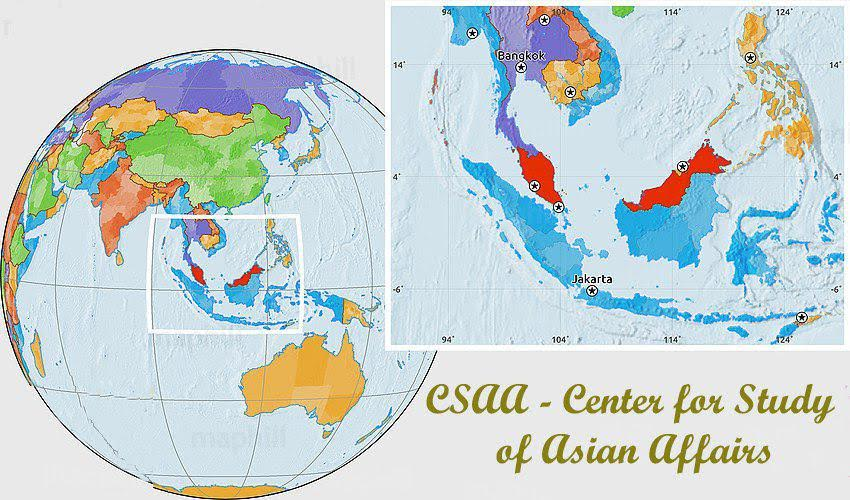
Our Newly established Center for study of Asian Affairs has
branches in Indonesia, Malaysia and Singapore, as well as freelances in some other countries.
For inquires, please contact: newsofasia.info@yahoo.com Mr.Mohd Zarif - Secretary of the Center and administer of the web-site www.newsofasia.net
Polls
 Loading ...